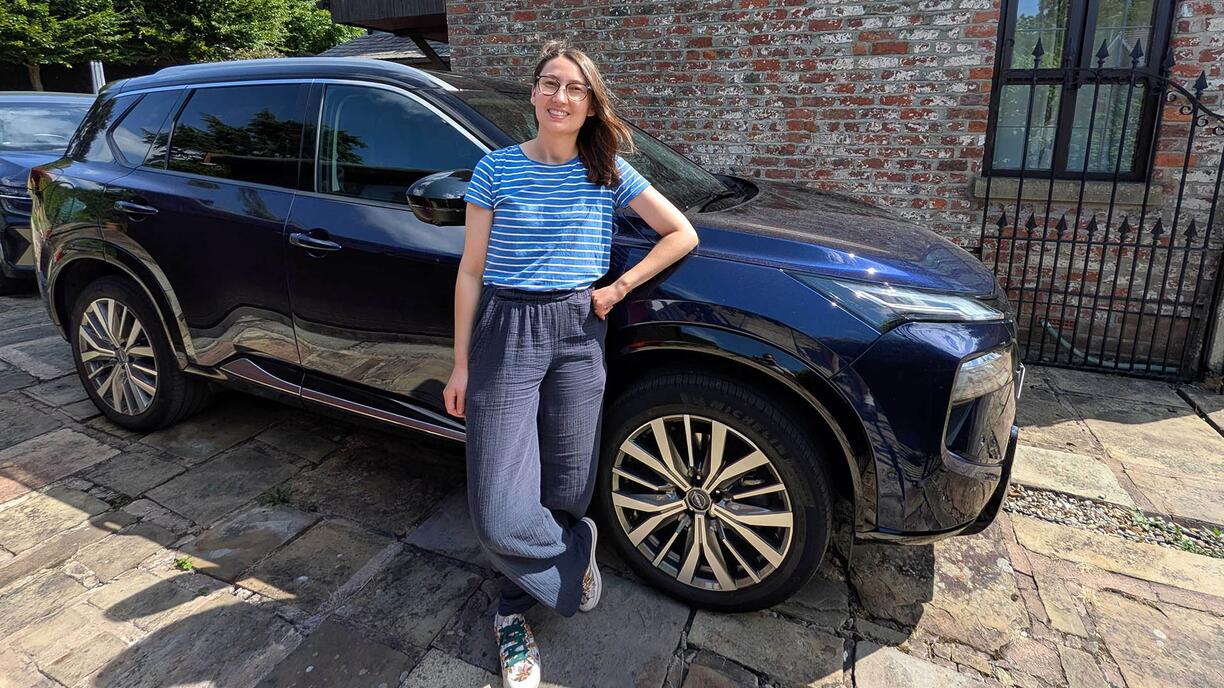
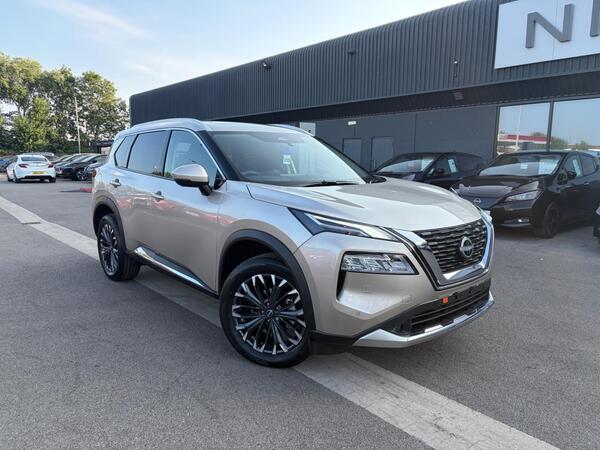
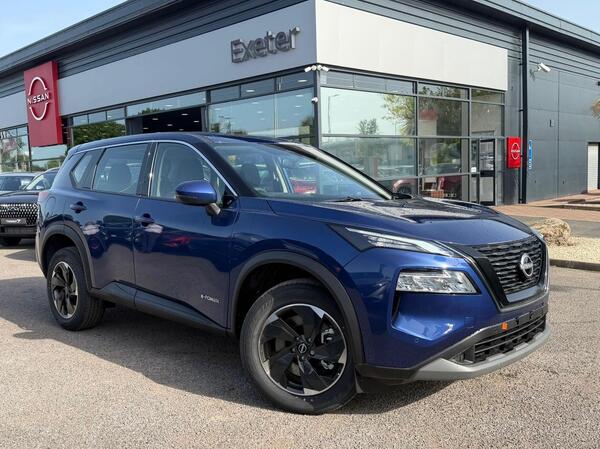
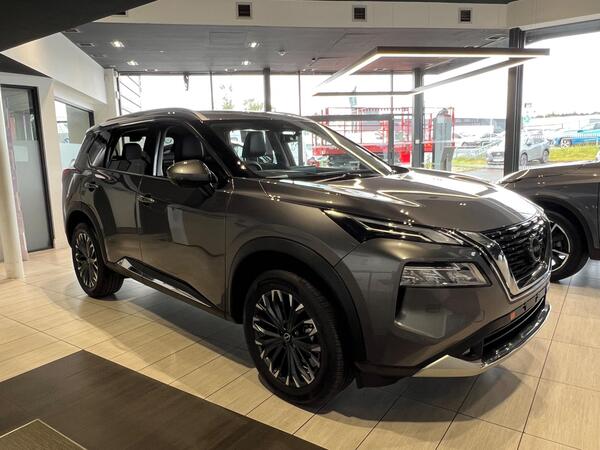
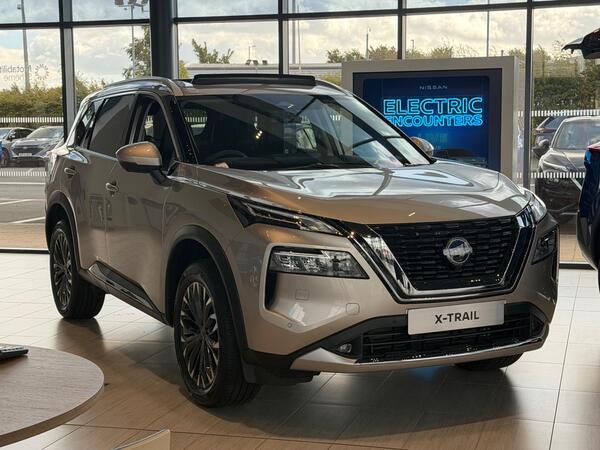
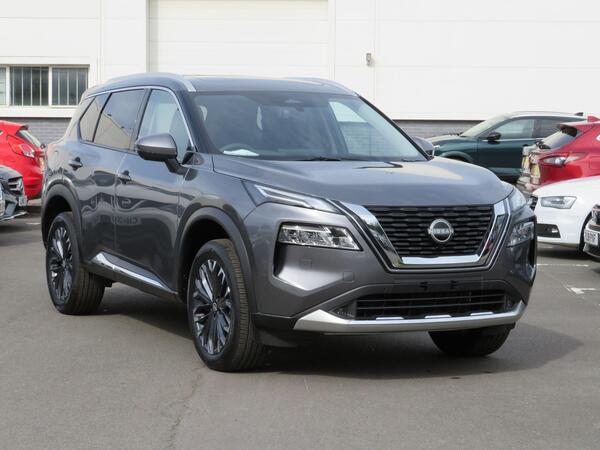
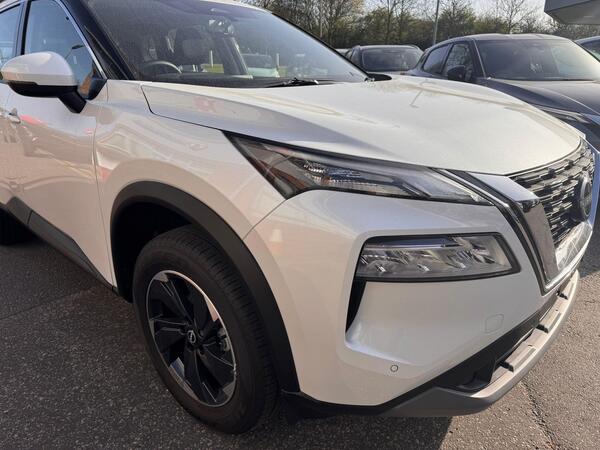
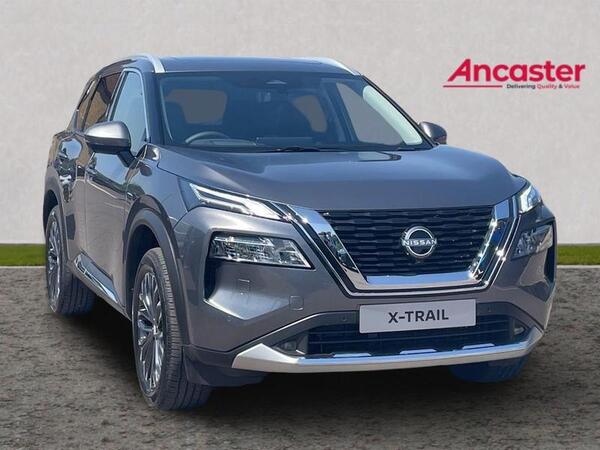
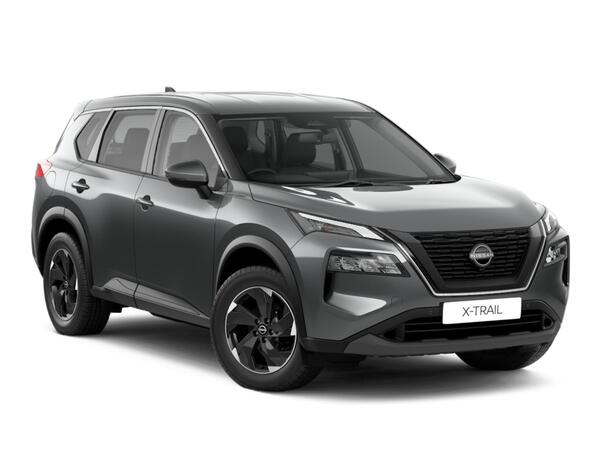
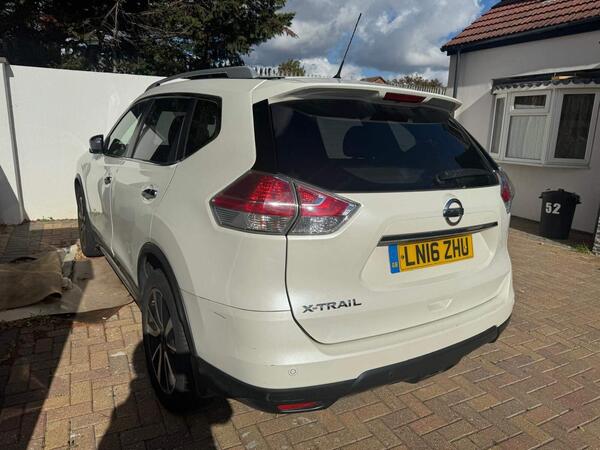
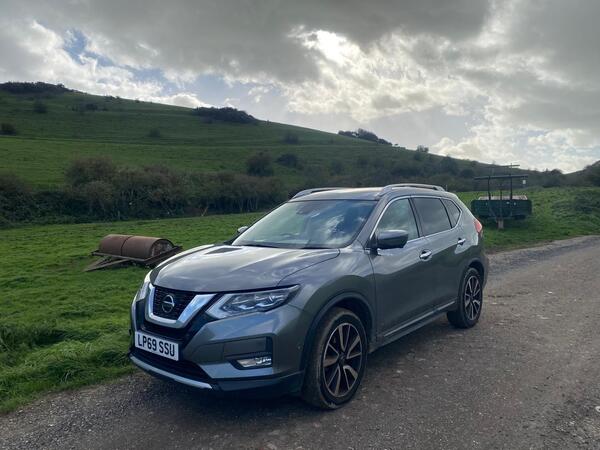
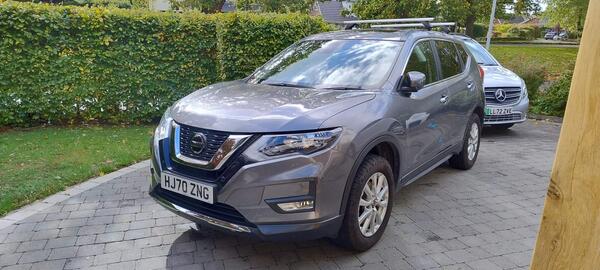
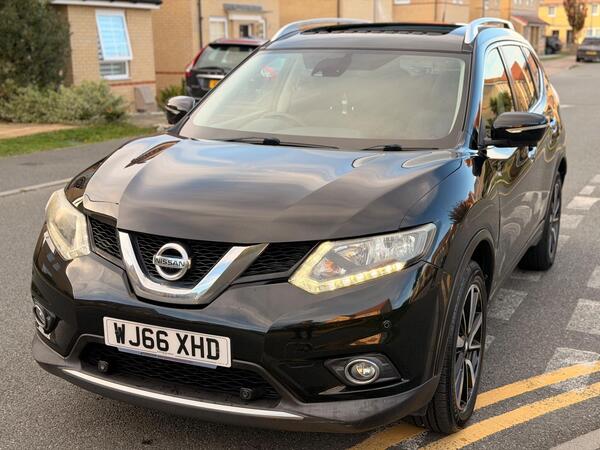
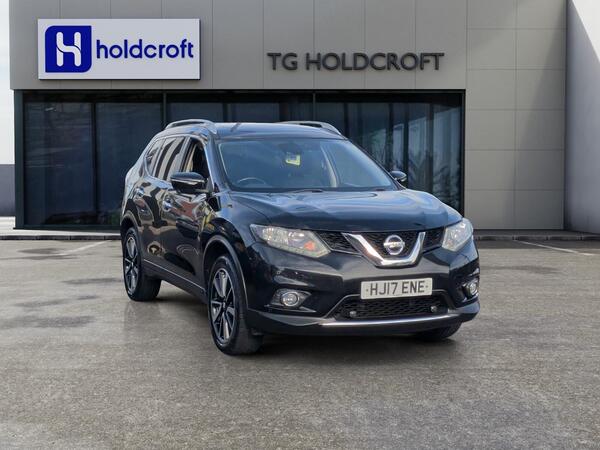
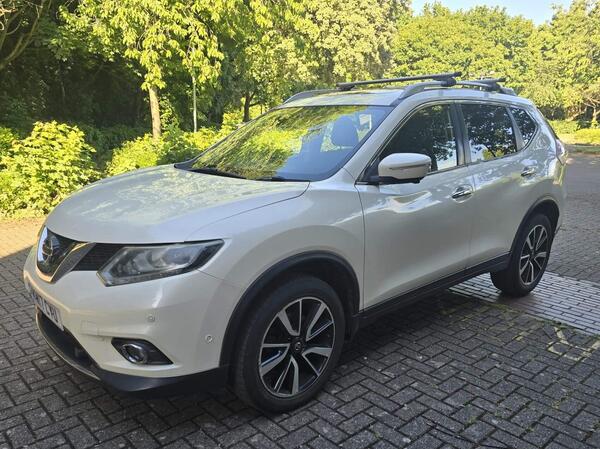
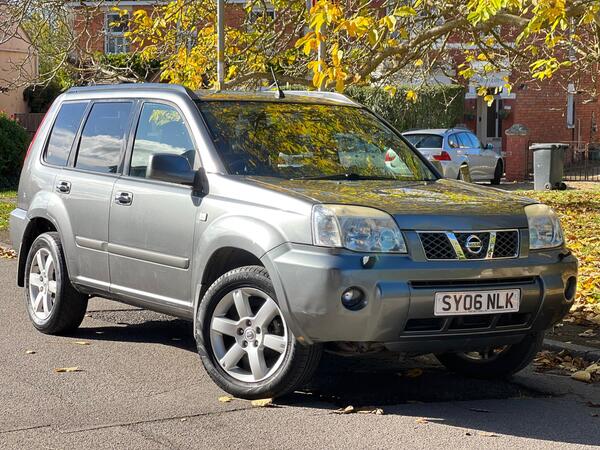
If you are after a sizeable SUV there’s never been more choice, so the recently updated X-Trail has its work cut out to stand out. How does it stack up against family-favourites like the Skoda Kodiaq and Peugeot 5008, Japanese alternatives like the Honda CR-V and Toyota RAV4, and value-focused newcomers like the Chery Tiggo 8? The X-Trail puts in a solid effort. It’s easy to drive, spacious, comfortable and well-equipped. It may not be flashy, but neither is it as utilitarian as it once was, and it still retains enough ruggedness to set itself apart from more fashion-conscious rivals. With a choice of two- or all-wheel drive, the option of up to seven seats, and an e-Power hybrid system promising an EV-like driving experience without needing to plug-in, the X-Trail has a lot to offer. However, higher trim levels do start to get pricey and, overall, the X-Trail just lacks a certain X factor.
All X-Trails now use Nissan’s e-Power system but in a large, heavy car the hybrid set-up isn’t as efficient as you might hope and there’s no plug-in option to off-set some of the dependence on petrol. As a global company Nissan is aiming to be carbon neutral by 2050, and it plans to cut lifecycle emissions from its vehicles by 30 per cent by 2030 compared to 2018. Closer to home Nissan manufactures the Leaf, Juke and Qashqai in Sunderland where it has set up its EV36Zero hub which is aiming for carbon neutrality by 2035. Currently the plant generates 20 per cent of its energy requirements from wind and solar energy and buys in the rest from net-zero energy providers.
Running costs for a Nissan X-Trail
The X-Trail is now only available with e-Power, Nissan’s unusual hybrid system where the engine isn’t connected directly to the wheels but instead works as a generator to power the motor and charge the battery. In theory this should improve fuel economy because the engine is under less strain. In reality, while the X-Trail is not as thirsty as it would be if there were no electrical assistance, it isn’t markedly more efficient than a regular hybrid. Our all-wheel drive test car averaged 40mpg, which is very similar to the Honda CR-V hybrid we’ve been living with on long-term test. The X-Trail is not a plug-in hybrid so there are no Benefit In Kind advantages for company car drivers and only the entry-level models avoid the ‘luxury car tax’ on top of your regular VED.
Move higher up the grades and the X-Trail does start to get expensive. However, Autotrader data suggests the X-Trail will hold more of its original value than a mild hybrid Peugeot 5008. The Honda CR-V hybrid depreciates less than the Nissan, though, and Skoda’s mild hybrid Kodiaq performs better still.
Expert rating: 3/5
Reliability of a Nissan X-Trail
Nissan has a reasonable reputation for reliability, though it hasn’t scored particularly well in recent consumer surveys. That said, the reported issues tended to be with the Juke and the Ariya rather than the X-Trail and, to add further reassurance, Nissan has been selling versions of the e-Power system in Japan for nearly a decade, which gives confidence the parts are tried and tested. For peace of mind Nissan offers an industry standard three-year/60,000-mile warranty, though this isn’t as generous as the seven-year cover you’ll get from Kia or Toyota’s offer of up to 10 years provided you get your car serviced at an approved location.
Expert rating: 3/5
Safety for a Nissan X-Trail
All X-Trails come packed with safety kit including emergency braking, traffic sign recognition and an array of airbags, plus you get the really useful stuff like front and rear parking sensors, a reversing camera, blind spot monitoring and adaptive cruise control as standard. Even so, you’ll want to move up a trim level to get Nissan’s fancier camera system, featuring a 360-degree view and a handy Invisible Hood mode showing exactly where your front wheels are so you can avoid those pesky kerbs. By upgrading you’ll also gain Nissan ProPILOT tech, which combines adaptive cruise control with lane keeping assistance so the car can effectively steer itself on the motorway. As with almost all new cars the X-Trail is very quick to scold you if you so much as think about going over the speed limit. However, you can disable this and any other systems you find overly intrusive by setting your preferred combination of safety aids and then pressing two buttons on the steering wheel.
Expert rating: 5/5
How comfortable is the Nissan X-Trail
The X-Trail is very comfortable place to be, provided you aren’t squeezed into the optional third row of seats. Even with the middle row slid forward, the rear most seats are very much for occasional use and best suited to smaller children. It’s worth considering carefully how often you think you’ll need the full seven seats as you do forego some storage space to make room for them, but the boot is still very practical – we loaded our test car up with four bags of compost with plenty of room to spare! The X-Trail has clearly been designed with families in mind as the rear doors open an impressive 90-degrees, making it easy fit child seats, although there are only two ISOFIX points located in the middle row. Up front it should be easy to find a good driving position and higher trim levels gain heated front seats, a heated steering wheel and electric front seats. While the build quality doesn’t feel solid or as premium as a Honda CR-V, the quality of finish in the X-Trail is still pretty good. Nissan has introduced new materials including optional quilted brown leather on range-topping Tekna trim and there’s an updated N-Trek trim which has more rugged design details, including red accents, a redesigned rear bumper, a unique wheel design and waterproof upholstery.
Expert rating: 4/5
Features of the Nissan X-Trail
Nissan says it has refreshed the front grille and bumper for 2026 though, if we are honest, we can’t really see what’s changed. However, much more notably from N-Connecta trim and above the X-Trail now has Google integrated into the infotainment, giving you Google Maps and a Google assistant straight out of the box. We love when Google is built-in as it is so familiar and easy to use but you can of course mirror your phone via Apple CarPlay or Android Auto instead if you prefer. All X-Trails come with wireless phone charging, a responsive 12.3-inch central touch-screen and a digital driver display and we like the traditional layout with a healthy dollop of physical controls for the temperature and fan speed. Moving through the grades you gain nice-to-haves like an electric tailgate, a head-up display and an electric sunroof. Additionally, if you need a car for towing, the five-seat, all-wheel drive version of the X-Trail can haul up to 1,800kg.
Expert rating: 4/5
Power for a Nissan X-Trail
Following the latest updates Nissan has dropped the previous mild hybrid set-up, so all X-Trails now come with Nissan's e-Power hybrid system. This uses a petrol engine solely as a generator, so an electric motor is always turning the wheels which creates a feeling akin to driving an electric car. This makes the X-Trail surprisingly nippy, despite being a large, heavy SUV. The steering is very light, which is great for manoeuvrability around town, though we think a bit more feel at higher speeds would be more confidence-inspiring. Mind you, the X-Trail is commendably good in the corners, so it gives the illusion of being a much smaller car than it is. It also doesn’t wallow around like the Jeep Compass and the X-Trail’s light footedness makes the Honda CR-V seem almost tank-like by comparison. There is a plethora of different driving modes, ranging from fully electric EV mode to the e-Pedal mode providing full ‘one-pedal’ driving. There’s also a B-mode which provides a less vigorous amount of regenerative braking. On top of this there’s Standard, Sport and Eco modes and all-wheel drive models gain extra off-roading options, too. This should cover every eventuality and more, but most of the time if you’re anything like us you’ll simply stick the X-Trail in drive and hit the road.