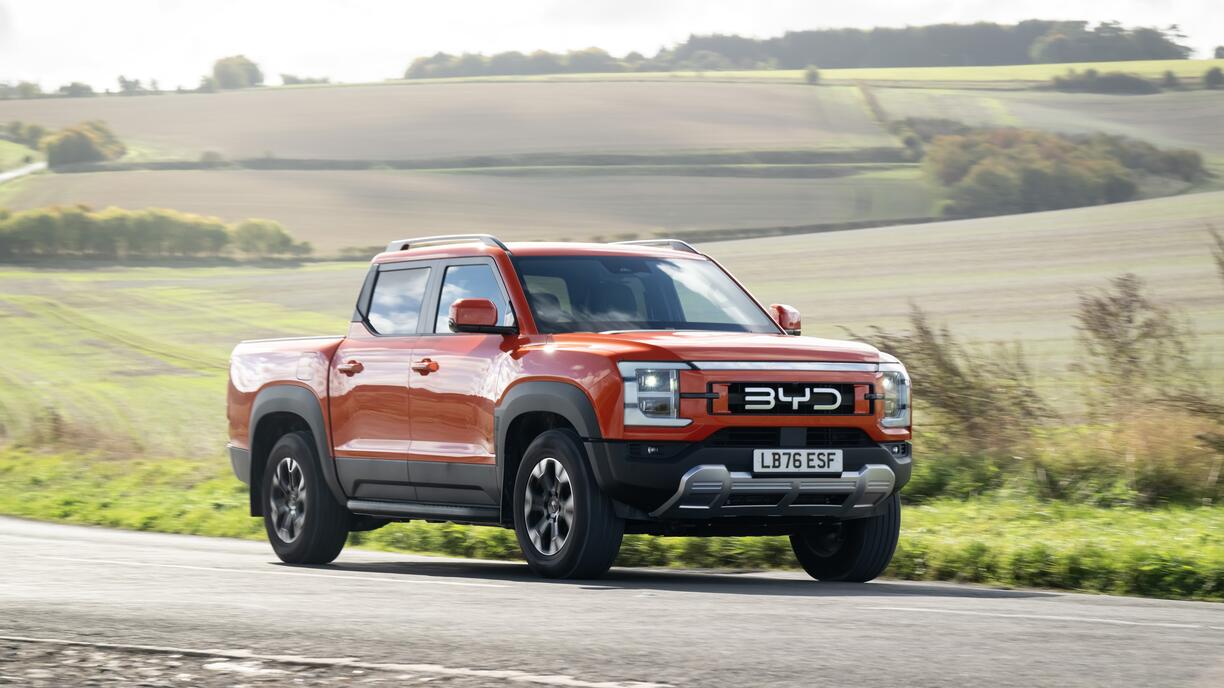
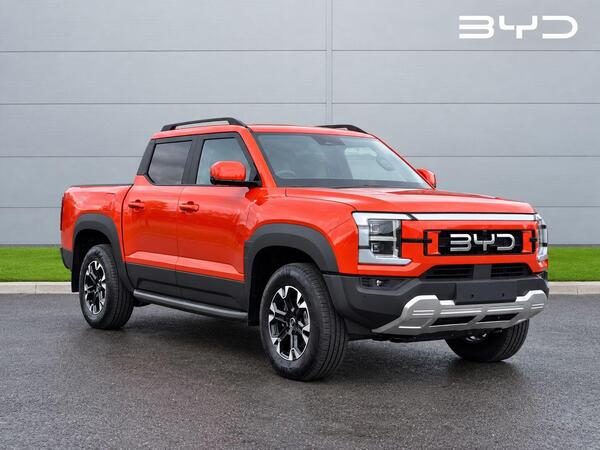
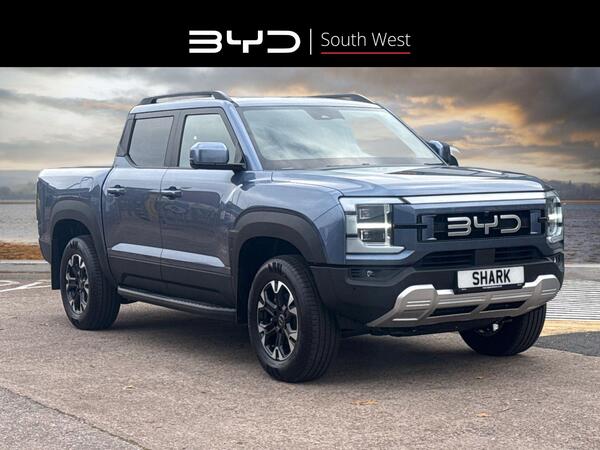
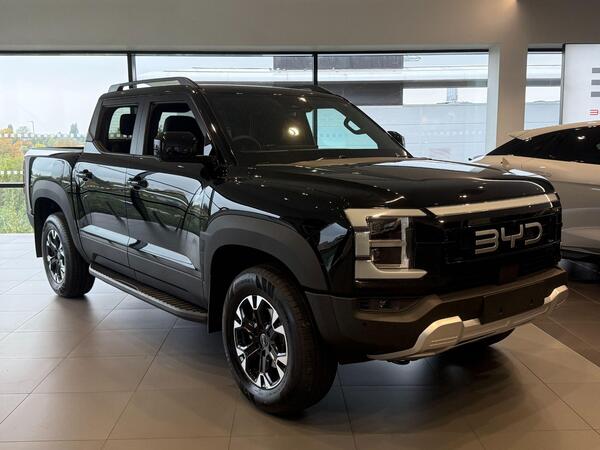
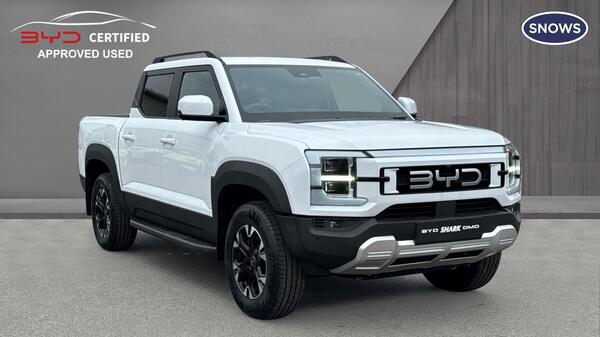
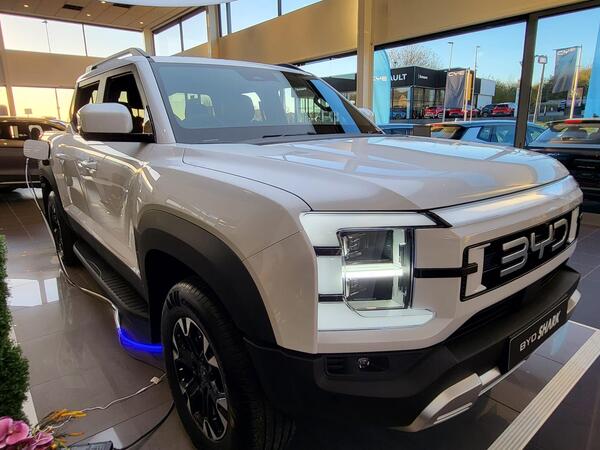
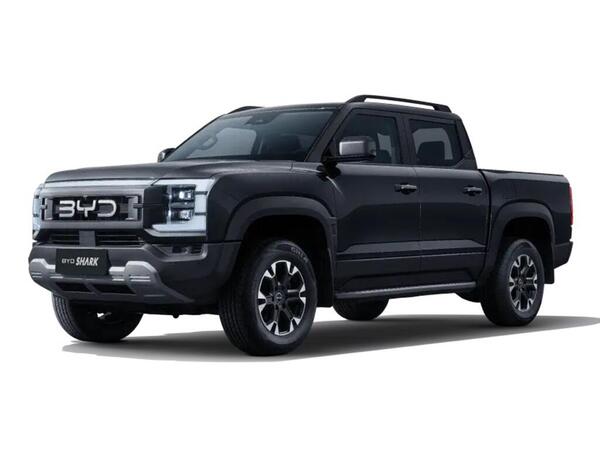
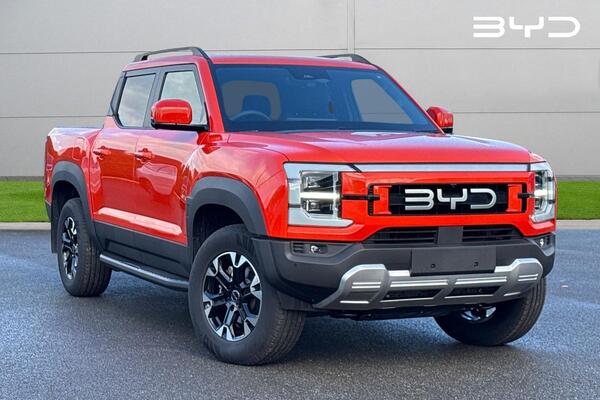
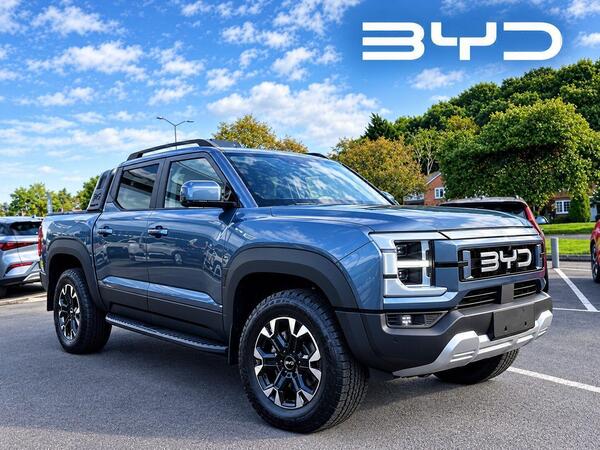
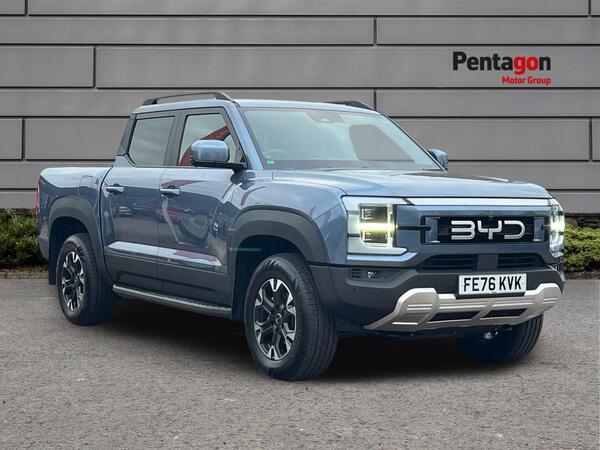
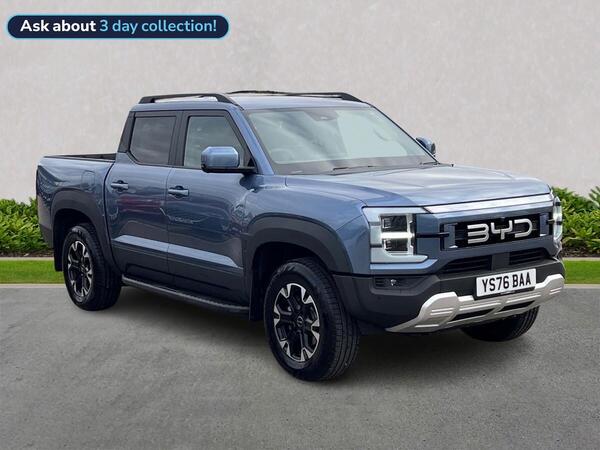
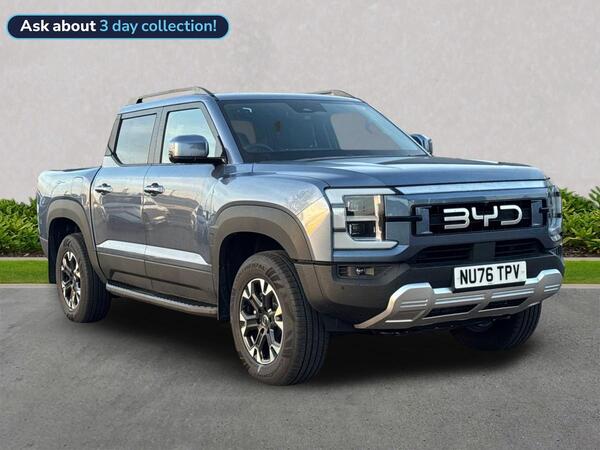
BYD wants the Shark to appeal to SUV and family drivers, AND those looking for a new commercial vehicle… and sometimes they’re the same people, sometimes not. The company appears to understand this, but that only makes the final product more confusing. On the one hand this is a very nice PHEV pick-up truck boasting a big cabin, loads of (actually quite good) tech, smooth and quiet driving manners, huge potential efficiency ratings, and a bold style. Sounds good, right? It’s everything you might want from an SUV or family vehicle. But the Shark does have limitations. For one, its claimed 80.7mpg is dependent on keeping the battery charged, and hard to achieve in the real world. For two, its towing capability is 2,500 kg while its most straight-shot competitor – the Ford Ranger PHEV – can tow 3,500 kg. And for three, it’s not a commercial vehicle… at least not from the tax man’s point of view. But you know what? Considering BYD’s popularity in the UK its limitations will be overlooked, and it now has a pick-up truck available in the UK when it could have just churned out another SUV or crossover like so many other brands.
BYD’s vehicle range is made up of fully electric and plug-in hybrids, and the fact it makes its own ‘Blade’ batteries noses it well ahead of competing brands, allowing it to produce zero- and low-emission vehicles quickly. However, BYD was light on the details when it answered our sustainability questionnaire. We want to hear more about how the company uses recycled materials and what its targets are to reduce water usage, for example. Anyway, the go-anywhere appeal of the Shark PHEV pick-up truck and 55 miles of all-electric range does mean its impact on the environment are less than non-hybrid pick-ups – but if you don’t keep the battery charged you’ll be burning more petrol. And it’s a pick-up truck, so it’s heavier and likely to drink more fuel! Run it properly otherwise it won’t be the green machine it could be.
Running costs for a BYD SHARK
“Like any PHEV, it’s critical to charge the Shark's battery to get anywhere near the big fuel efficiency figures”
For a pick-up truck costing over £47K its fuel economy had better be good, and the Shark is a plug-in hybrid electric vehicle (PHEV) so it is. Apparently, it can return just over 80mpg when the hybrid system is operating at peak efficiency. However, those figures drop to around 29mpg if you’re only using petrol power, and are probably difficult to achieve outside of test conditions. Therefore, like any other PHEV, it’s critical to charge the 55-mile battery – not just to get the big efficiency figures, but to enjoy its smoother and greener electric drive. And don’t worry about the purchase price, a good finance or lease deal will break that down. The only concerns related to running costs will hit those wanting to use it as a commercial vehicle – the tax man says it doesn't qualify because it’s a double cab that can only carry 790 kg in the load space. That means you can’t reclaim the VAT on it and it’s treated as a car for benefit-in-kind tax – although you do get the lower rate because it’s a hybrid. So, it’s swings and roundabouts… with well-maintained swings for those wanting an efficient big car, and roundabouts you fall off in front of your friends for those wanting to run the Shark as a commercial vehicle.
Expert rating: 3/5
Reliability of a BYD SHARK
“The eight-year battery and six-year vehicle warranties are way longer than the average lease length of two to five years”
The length of a vehicle’s warranty is always a good indication of a manufacturer’s confidence it will hold itself together, so it’s reassuring to a six-year vehicle warranty and eight-year battery and drive-unit warranty. Both packages are way longer than the average lease length (two to five years), which is encouraging and always a good selling point. However, the double-wishbone suspension setup on the front and rear axles is the question mark for me. That kind of suspension is great for improved handling and control, but is more vulnerable to wear and tear and down-the-road maintenance costs. One to watch, methinks.
Expert rating: 3/5
Safety for a BYD SHARK
“A few key functions are hidden in on-screen menus, but there are a fair few hard buttons to make life easier for you”
It’s a packed list on the Shark’s safety front, reinforced by its five-star Euro NCAP safety rating. You get a full complement of airbags and loads of driver assistance systems including intelligent cruise control, emergency lane keeping assist, blind spot detection, traffic alerts, driver fatigue monitoring, and more. There’s not a lot of binging and bonging to contend with, and I really liked the 360-degree rear-view camera’s crisp feed on the main screen. The snug seating and the huge number of grab handles in the cabin just added to how safe I felt driving the Shark on and off the road. However, unlike every other part of the 4x4 system which has its own hard button or selector switch on the central console, the hill descent control ‘button’ is hidden on the main screen’s swipe-down menu. I don’t like hiding functions on touch-screens, especially one so important to safe off-road driving.
Expert rating: 4/5
How comfortable is the BYD SHARK
“Heck, it was as comfortable to drive on-road as it was to drive off-road...”
BYD knows how to make a good car interior which is where the Shark’s identity crisis is most apparent. It feels like a premium SUV interior with black 'vegan leather' seats, red stitching, gold inlays and big screens. Pick-up truck interiors are nicer than they’ve ever been, and I’d go so far as saying the Shark’s is up there with the nicest. It’s very comfortable, spacious, and filled with storage and charging sockets. Heck, it was as comfortable to drive off-road as it was on-road…The double-wishbone suspension on the front and rear axles combined with the always-on all-wheel drive makes the vehicle feel planted – even when plunging into deep water or driving through staggered mud-filled potholes. I just wish we’d had more time to test the off-road system on open rough terrain. What little we did have on that kind of surface was great fun and impressively comfortable.
Expert rating: 4/5
Features of the BYD SHARK
“A packed equipment list is standard for BYD cars and the Shark gives you a lot, including a solid 4x4 system”
There’s a fair bit to get through here because you know how BYD goes with its equipment lists – cram it all in! Highlights include the big central 15.6-inch touch-screen infotainment display and 10.25-inch driver display behind the steering wheel. Apple CarPlay and Android Auto connectivity works but was a bit iffy, switching the view between both scenes occasionally without me asking it to, although you do get a wireless charging dock to sweeten the deal. The head-up display is easy to understand and very sharp in daylight. You can fit quite a bit of kit in the rear load space, but make sure you choose the right roller shutter or canopy to fit on the back… not all of them are water proof let alone water resistant. I did like the tailgate step that slides out of the drop-down panel, although the GWM Poer300 also has one so it lessened the impact BYD wanted it to have on me. Overall, there’s loads to like and BYD’s tech is better than a lot of other manufacturers can offer. The always on all-wheel-drive 4x4 system seems to be pretty good, despite our test on open rough terrain being VERY short. A toggle switch allows you to choose the terrain type you’re on and the truck adjusts everything for you. It’s not as clever as the Toyota Hilux BEV's fully-intelligent 4x4 system, but it’s close.
Expert rating: 4/5
Power for a BYD SHARK
“The power setup favours the front axle (just what you want for a heavier 4x4 vehicle) and you can feel there’s 430 horsepower at your disposal”
The Shark’s hybrid powertrain combines a 1.5-litre petrol engine with electric motors on the front and rear axles. The power setup slightly favours the front axle, which is what you want for a heavier 4x4 vehicle and you can feel there’s 430 horsepower at your disposal… but UK road restrictions and rough terrain won’t let you appreciate it. However, all that power helps you tow up to 2,500 kg on a braked trailer and carry nearly 800 kg in the load space. Which means the truck is heavier than it looks, because the Ford Ranger PHEV can carry over 1,000 kg in its load space and tow 3,500 kg on a braked trailer. It is what it is, and what it ISN'T is a commercial vehicle where more power and more weight-carrying capacity is critical. The Shark is a powerful family car for those looking for something more than just another SUV. I enjoyed my time with it, but BYD’s pick-up left me with a nagging question in my brain. If you’re a family that surfs or goes biking, why would you choose this when a kombi or double-cab van would likely be cheaper and more spacious? It’s a thought that continues to fester.