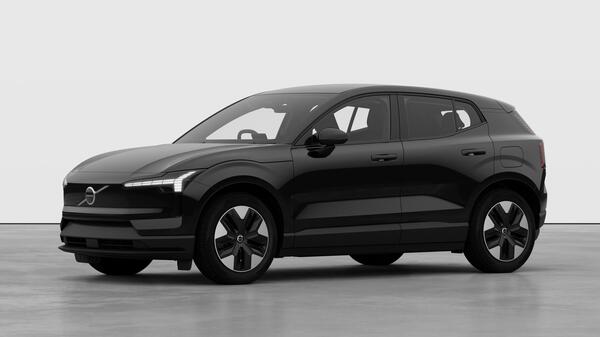
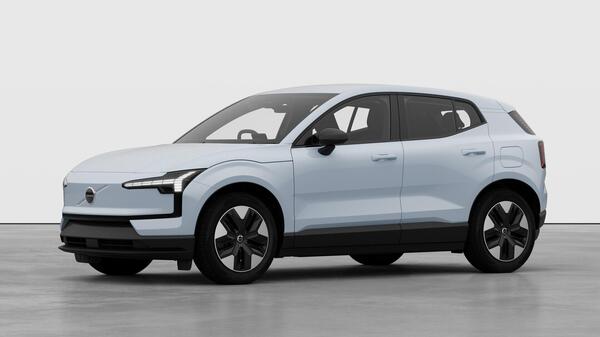
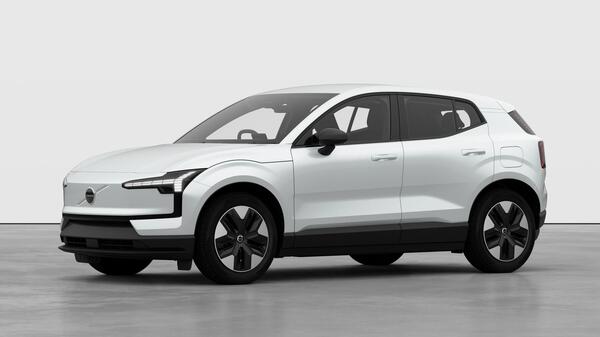
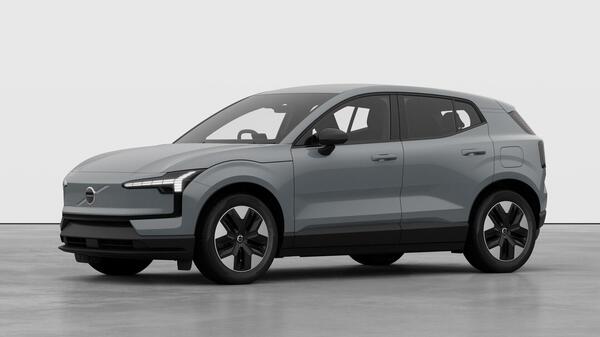
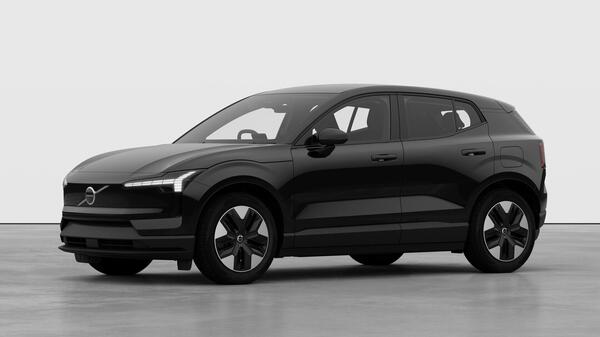
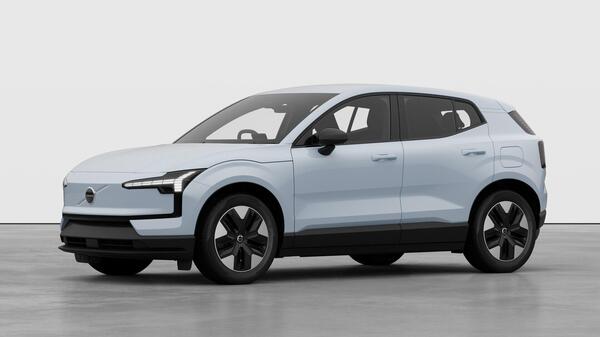
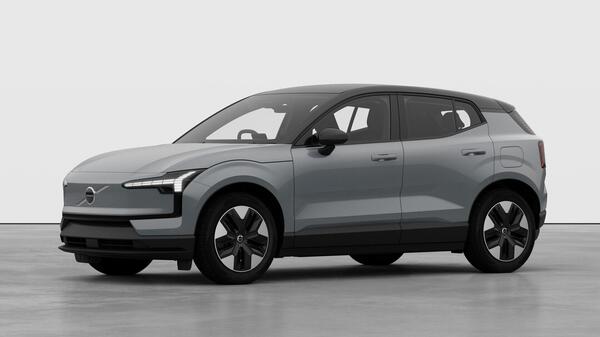
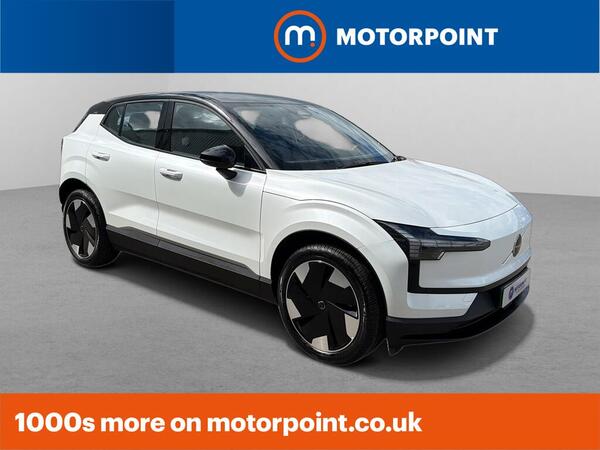
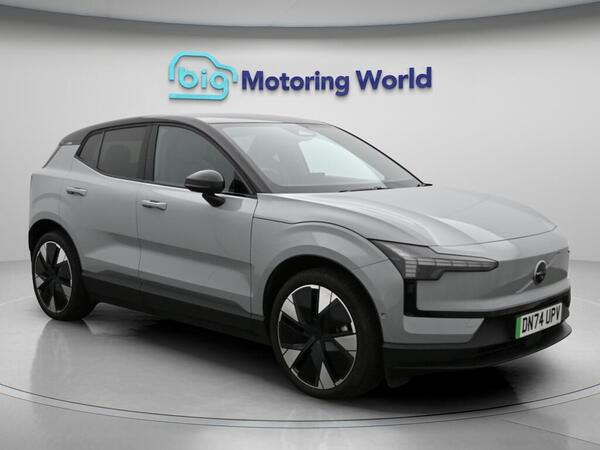
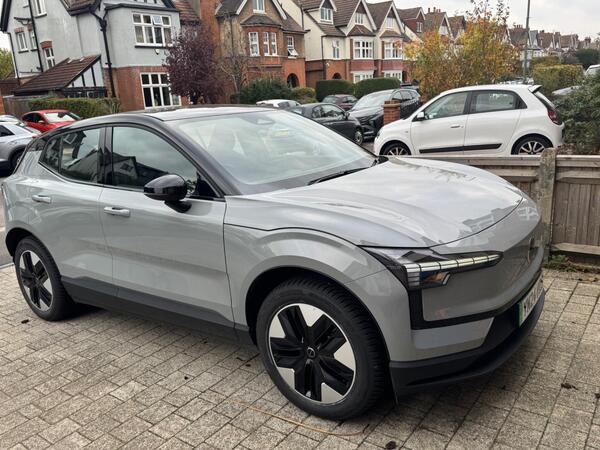
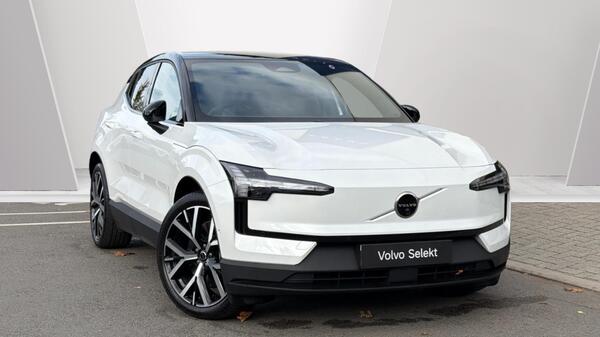
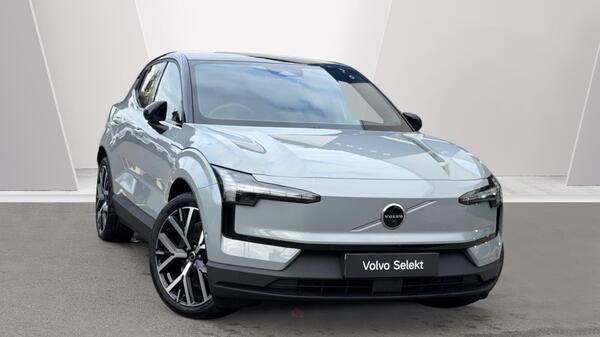
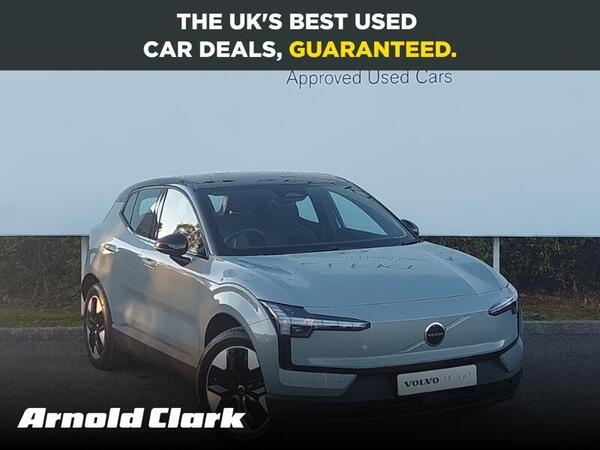
True to say my relationship with the Volvo EX30 didn’t get off to the best start. I drove the car on its launch and wanted to love it for the combination of compact size, Scandi style and surprising affordability. But couldn’t overlook the irritations of its fiddly screen-based interface and concerns about flaky driver assistance systems. There have been some reliability wobbles, too. We’ve since had something of a reconciliation, over-the-air updates to the Google-powered UX making it a lot more user-friendly and the car finally feeling like it’s doing justice to the looks. Sure, there are still some irritations. But it now feels the premium alternative to the likes of the Vauxhall Mokka Electric or Peugeot e-2008 it always should have been, even if it’s actually quite cheaply built. It disguises that well, though, and your neighbours will think it a lot more expensive than it actually is!
Volvos have always sold on safety but these days sustainability is just as important for the brand, and it’s been very open sharing the full details of its carbon performance in publicly available Life Cycle Analysis reports, or LCAs. By this measure the EX30 has the lowest lifetime carbon footprint of any Volvo to date – claimed as 60 per cent less than a petrol-powered XC40 – thanks to extensive use of recycled metals and plastics in its construction and Volvo working with battery suppliers to ensure their energy intensive production uses as much sustainable power as possible. Originally manufactured in China, since 2025 production for EX30s destined for the European market has shifted to Volvo’s factory in Belgium, shortening the supply chain and further improving its sustainability credentials. Which, if need reassurance it’s more than just ‘greenwashing’, you can read about in painstaking detail in model-specific LCAs, demonstrating Volvo’s impressive transparency on such matters.
Running costs for a Volvo EX30
“The EX30 is a lot more affordable to buy, without necessarily looking cheap”
Compared with other Volvos the EX30 is a lot more affordable to buy, without necessarily looking cheap. Which is a neat trick, and credit to Volvo’s design skills and premium vibe. Where there are some cheaper materials and cost-cutting inside the EX30 cleverly makes a virtue out of it, the overall look and feel making it seem a lot posher than many of the cars it’s up against in this increasingly competitive sector. In terms of running costs it's the usual story for electric cars, Volvo’s target audience apparently more likely than most to have off-street parking and facility to install a home charge point if they haven’t already. And therefore able to charge on cheap off-peak domestic electricity rates. Even if you can’t do that the decent range means integrating a single public charging session into your regular routine should do you for a week’s worth of school run duties, or an average commute.
Expert rating: 5/5
Reliability of a Volvo EX30
“Certain versions of the EX30 have been afflicted with a battery fault necessitating a wide-ranging recall”
Economies of scale through sharing a battery, motors and other tech with the Smart #1 and Zeekr X from the wider Geely family of which Volvo is now a part should have been a point in its favour. Sadly, certain versions of the EX30 have been afflicted with a battery fault necessitating a wide-ranging recall currently being enacted on cars already on the road and charging restrictions while owners await the call from the supplying dealer. In further bad news for Volvo another recall has been confirmed, this time off the back of US safety tests revealing the headrests could detach in an impact. This off the back of an additional one for a weak attachment of manually adjustable seats. In all cases these will have been resolved in any new EX30 you’re buying and if you’re an owner or looking to buy one secondhand you can contact your local Volvo dealership to see if yours is affected, or has had the necessary corrective work. See the government’s DVSA recall page for more info.
Expert rating: 2/5
Safety for a Volvo EX30
“An extensive over-the-air update means clearer menus and ability to put shortcuts to important functions like foglights on the screen’s homepage”
This was my biggest complaint with the EX30 last time I drove it, the insistence on screen control for even basic functions seemingly contrary to Volvo’s traditional safety focus given it demanded too much time with eyes off the road. The good news? An extensive over-the-air update means clearer menus and ability to put shortcuts to important functions like foglights on the screen’s homepage for one-touch access. I’d still like a speed read-out in my line of sight rather than a central screen and the need to delve into menus and use repurposed steering wheel controls to do something as basic as adjust the mirrors remains annoying. The supposedly automated lane changes in the Pilot Assist system remain pointless as well, given they can’t be trusted to ‘catch’ you once the move is complete. I’ll be sticking with the traditional mirror-signal-manoeuvre, thanks. In regular use the lane-keeping at least feels a lot more predictable now, and my faith in the many and various driver aids Volvo includes as standard has been restored.
Expert rating: 4/5
How comfortable is the Volvo EX30
“For driver and front seat passenger, meanwhile, Volvo seats have always been among the most comfortable”
Compared with the related Smart #1 and Zeekr X it’s interesting to see how Volvo has made its own mark on the shared foundations. While the Smart in particular puts rear legroom before boot space Volvo has gone the other way, and while there’s room for an adult to sit behind an averaged sized driver you’ll find your legs against the back of the seat. The trade-off is a boot big enough to carry a pushchair and the weekly shop, while a compartment under what would normally be the bonnet has space to stash your charging cables. For driver and front seat passenger, meanwhile, Volvo seats have always been among the most comfortable and, while they’re mounted close to the floor to make room for the batteries, both driving position and visibility are good. Whether it was the placebo effect of a smoother screen interface or something different about this test car the previously reported bounciness in the suspension felt more resolved in this car, even when being chucked around on twisty Welsh back lanes.
Expert rating: 4/5
Features of the Volvo EX30
“Fancy bits like a panoramic roof and the lovely wool seat fabric probably helped on that score”
With some, if admittedly not all, of the frustrations with the screen-heavy interface resolved it was pleasing this time around to be able to enjoy some of the more positive aspects of the EX30’s interior, which successfully translates a sense of the Scandi cool of more expensive Volvos to a much more attainable price point. The fact my test car was a top of the range Ultra trim with all the fancy bits like a panoramic roof and the lovely wool seat fabric probably helped on that score. But even with some cost cutting to hit the price point the bits you interact with all the time have a sense of quality, one example being metal door releases where most cars at this level have plastic ones. A small detail, but one that just helps the EX30 feel that bit more premium. Of the three trim levels I’d probably be fine saving a bit of cash with the mid-level Pulse for the fact it has most of the good stuff like the booming Harman Kardon sound bar, wireless phone charging, additional USB-C sockets in the back and snazzier looking contrasting roof though it would mean missing out on the wool upholstery, which I did appreciate. Decisions, decisions! One bit of tech I could live without is the ‘digital key’ letting you access the car from your phone. A nice idea, but it’s a bit over-sensitive and the car would unlock itself on the driveway any time I was in the kitchen with my phone on me, which feels a bit of a security risk.
Expert rating: 4/5
Power for a Volvo EX30
“The 272 horsepower of the P5 single motor Long Range version I drove felt more than adequate”
There are three levels of motor and battery in the EX30, the base version getting a simpler and more affordable powerpack with range of just over 200 miles. The Single Motor Extended Range and Twin Motor Performance models get a fancier battery good for just shy of a 300 miles by Volvo’s claims, the efficiency I scored suggesting you’d be lucky to get much more than 200 miles in more representative real-world driving conditions. Which is, in fairness, typical for most electric cars. It feels weird to be complaining about there being too much power but the 272 horsepower of the P5 single motor Long Range version I drove felt more than adequate, to the point where the traction control sometimes felt a little late to the party on wet roads and it’s all too easy to spin the wheels before the systems cut in. True, the twin-motor P8 version has all-wheel drive but no way on earth does a small family crossover like this need over 400 horsepower and 0-62mph in 3.6 seconds so my money would be on the P5 for its more sensible performance and the extra 20 miles or so of usable range.