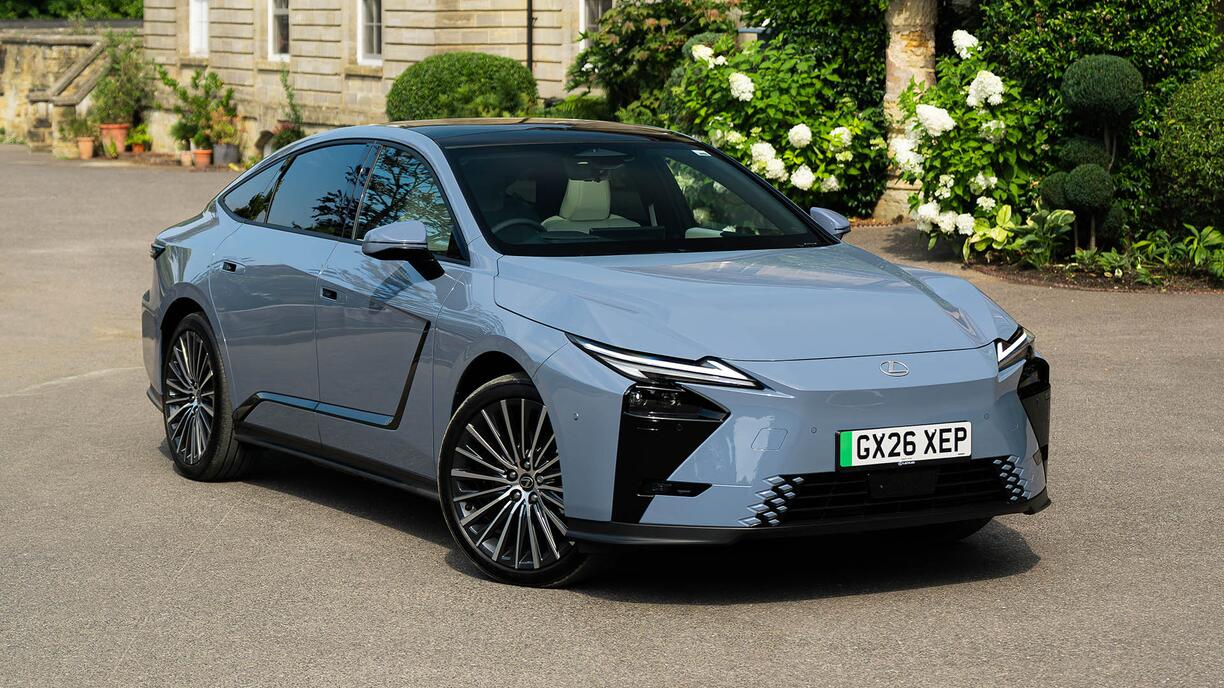
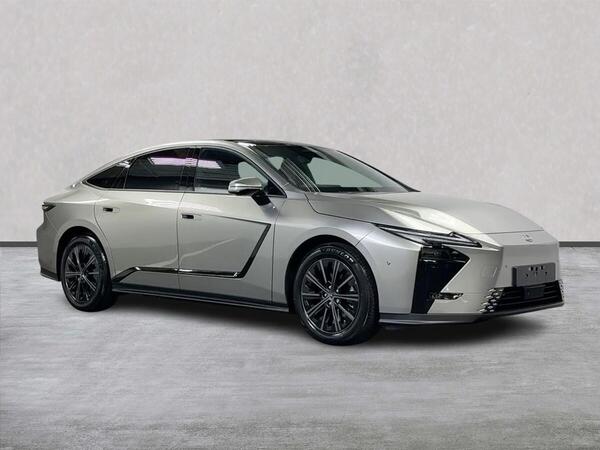
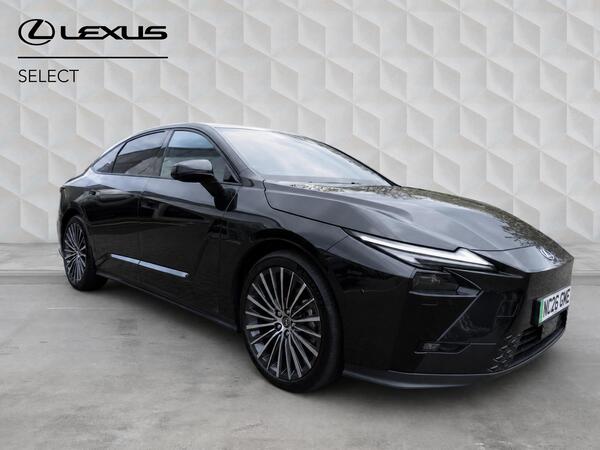
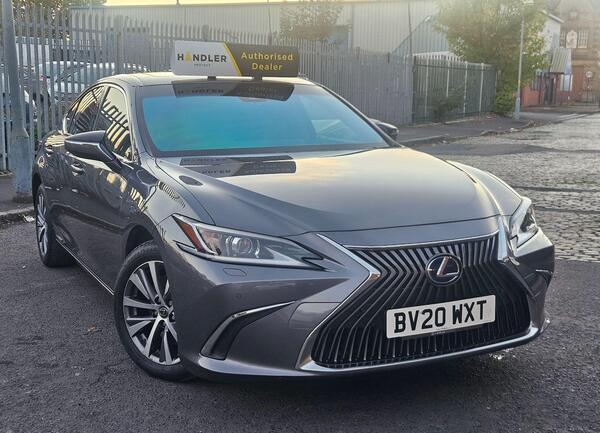
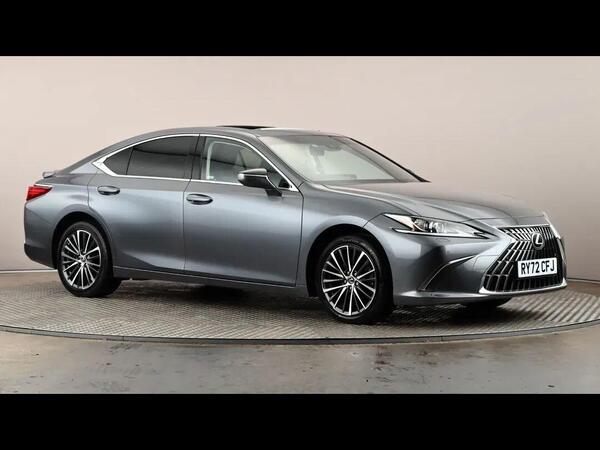
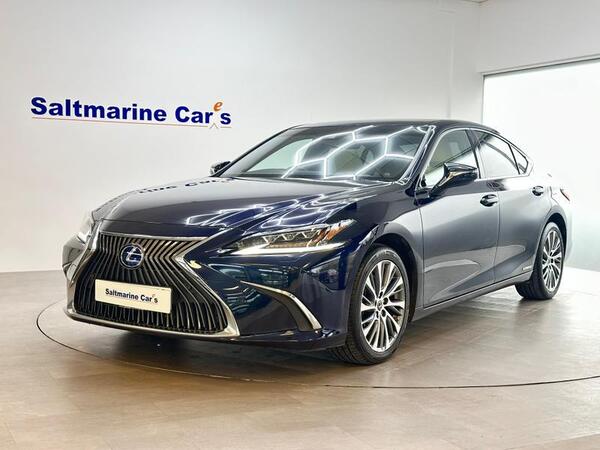
Lexus switches the new ES to electric power only – so is it a success?
Words by: Autotrader
Published on 31 July 2026 | 0 min read
Share
The Autotrader expert verdict:
3.5
Rating: 3.5 out of 5 stars
Available new from £59,345
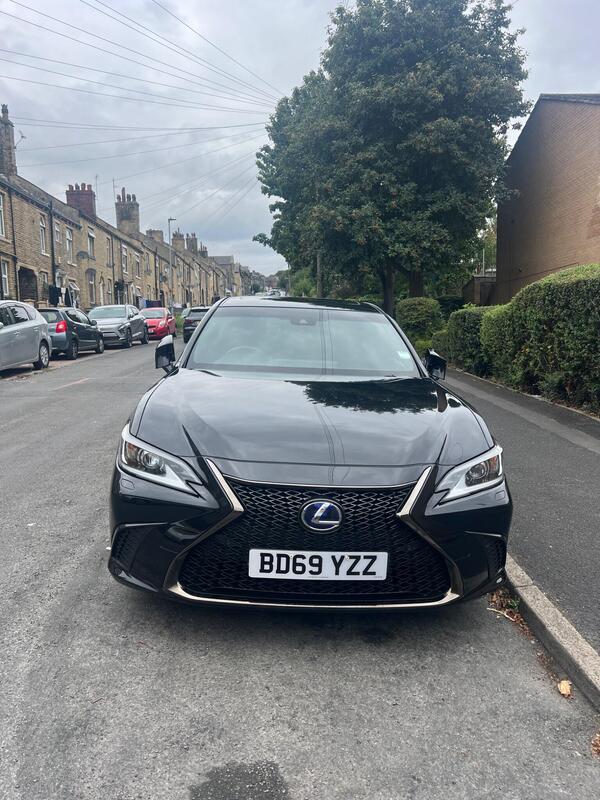
In our part of the world, the Lexus ES is a relatively new nameplate – it first appeared back in 2019. However, the model is in fact one of the oldest in Lexus’s portfolio, dating back to 1989 and the launch of the brand by owner Toyota. For this latest version, a seismic shift has occurred as the ES has dropped its former hybrid power in favour of becoming a pure electric vehicle (EV). Looking to tempt upmarket customers and business types out of the likes of the Audi A6 e-tron, BMW i5 and Volvo ES90, has Lexus done enough with the new ES 350e to clamber its way to the top of the pile?
The ES itself is a relatively environmentally sound machine, using recycled plastics within for much of the surfacing, coming only as a zero-tailpipe-emissions car in this generation and using sustainable materials like bamboo for some of its glitzier trim applications. Meanwhile, the Lexus and its parent firm, Toyota, have long adopted a mission statement to go carbon neutral by 2050. However, other manufacturers have set themselves a 2040 deadline and at the time of writing only 28 per cent of Toyota’s energy for global factories comes from renewable sources. Meanwhile, Lexus and Toyota’s aim to reduce its worldwide water usage by three per cent per vehicle compared to the levels of 2013 could be more ambitious.
Running costs for a Lexus ES
“Utilisation of a home wallbox for charging will see the running costs of the ES kept to a bare minimum”
Although this version of the Lexus ES will be sold with hybrid power elsewhere in the world, here in the UK it is being offered as an EV only. That brings with it the best possible tax benefits, whether you’re a private or business user, while utilisation of a home wallbox for charging will see the running costs of the ES kept to a bare minimum via means of cheap overnight energy tariffs. Better yet, the standard Lexus warranty is for three years or 60,000 miles, but as long as you have the car serviced every year at a centre approved by Lexus, you can extend the cover until the ES is either ten years old or has covered 100,000 miles – bringing plenty of peace of mind.
Expert rating: 4/5
Reliability of a Lexus ES
“Lexus frequently tops customer satisfaction surveys, while many of its older cars have proven to be exceptionally dependable and trouble-free”
There’s a persuasive argument to be made that Lexus cars are the most reliable vehicles on the planet. Lexus frequently tops customer satisfaction surveys, while many of its older cars have proven to be exceptionally dependable and trouble-free. The ES should continue this fine tradition and even improve upon it, given that it’s an EV and so there are fewer moving components on it that can potentially go wrong.
Expert rating: 5/5
Safety for a Lexus ES
“The latest Toyota Camry – with which the ES shares so much – has been assessed by a related body. The good news is that the Camry picked up the full five-star award”
Although independent crash-testing body Euro NCAP hasn’t yet subjected the Lexus ES to its stringent examinations, the latest Toyota Camry – with which the ES shares so much – has been assessed by a related body which serves markets in the eastern hemisphere. The good news is that the Camry picked up the full five-star award, so we’d fully expect the ES to do the same thing once it is put through its paces.
Expert rating: 5/5
How comfortable is the Lexus ES
“There’s no doubt the Lexus is a smooth-riding vehicle, while the seats in the front are wonderfully supportive and plush, and there’s acres of legroom in the back”
For a long time now, the hallmarks of a good Lexus have been that it is supremely quiet and comfortable to travel in. By replacing the engine and gearbox of the old hybrid predecessor for a purely electric powertrain (a move that normally boosts refinement levels), we were hoping for great things from the new ES. The reality is not as impressive as we expected, however. There’s no doubt the Lexus is a smooth-riding vehicle, while the seats in the front are wonderfully supportive and plush, and there’s acres of legroom in the back. But if you’re of a taller physique, you might find the passenger seats slightly too high – a more notable trait in the back, where your hair can brush the headlining. And while it’s generally a smooth, elegant and cultured operator on the move, proving better on the smaller 19-inch wheels than the huge optional 21s, there are still a few too many occasions where the wheels thump through larger imperfections in the road’s surface. There are also instances of the body of the ES getting out of sync with its suspension and becoming bouncy on undulating back roads, while there’s too much wind noise from the panoramic roof and tyre roar on rougher tarmac when you’re travelling at speed.
Expert rating: 3/5
Features of the Lexus ES
“A Premium Plus adds the epic 17-speaker Mark Levinson audio array, while a Takumi layers in the luxury – its star feature being reclining ‘ottoman’ rear seats”
As ever with a Lexus, the ES EV has plenty of standard equipment on all three trims of the range – Premium, Premium Plus and Takumi. Even the first of these comes with heated and ventilated front seats, two large digital displays on the dashboard, a 10-speaker sound system, metallic paint, 19-inch alloy wheels and a panoramic roof from the off, among much more. A Premium Plus adds the epic 17-speaker Mark Levinson audio array, as well as semi-aniline leather, soft-close doors and illuminated bamboo interior trim as some of the highlights, while a Takumi layers in the luxury – its star feature being reclining ‘ottoman’ rear seats. But while the bounteous kit is one thing, the Lexus isn’t much cheaper at entry level than its direct Audi, BMW and Volvo rivals, and the grandest specs are expensive. This wouldn’t be a problem, if it weren’t for the fact the powertrain, charging speeds and performance of the Lexus all feel like a significant step down from what you’d get in many of its top-end European competitors.
Expert rating: 4/5
Power for a Lexus ES
“As the Lexus ES places the emphasis firmly on comfort over speed, the power it serves up is perfectly adequate”
There’s no need for an EV to have supercar-like performance, we understand that. Furthermore, as the Lexus ES places the emphasis firmly on comfort over speed, the power it serves up is perfectly adequate; it’ll do 0-62mph in eight seconds, for instance. But the ES 350e has just one electric motor driving the front wheels and it’s shared with the Toyota bZ4X SUV – so it’s not that powerful. The result is that the heavy 350e never has the sort of effortless performance and acceleration that you might want from an expensive, premium car like this. In fact, it’s markedly slow at trying to pick up speed from 40mph onwards. There’s a certain luxury experience in having lots of electric power at your disposal, even if you never fully use it, but the Lexus singularly lacks for such abilities.
It’s also not brilliant for range or charging: a peak of 361 miles is OK but you need to avoid big alloys and fancy specs to get that, and its battery isn’t the largest in the world – yet the DC rapid charging speed is only average, meaning a 10-80 per cent top-up will still require a minimum of 28 minutes at a public charging station.