News
Green Machines | Carbon capture, biofuel and BMW sets new climate targets – sustainability news December 2025
Mazda stores CO2 from exhaust gasses and BMW aims to cut emissions, but will biofuel save the car industry?

Words by: Catherine Kent
Published on 4 December 2025 | 0 min read
Renewable fuels are often raised in the debate surrounding how to decarbonise the transport industry, and the European Union is currently consulting on its plans. Currently the EU has set 2035 as the date when the sale of new petrol and diesel engine vehicles will be banned, but it has previously pledged to consider e-fuels – which are manufactured from water and carbon dioxide using sustainable energy – in future emission regulations. Many industry bodies claim this doesn’t go far enough and are calling for biofuels made from organic material like crops or animal waste to also be considered.
However, European lobbying group Transport & Environment has consistently warned against the car industry using biofuels as a way to reduce carbon dioxide emissions and it has reportedly described the idea as a “disaster”. It believes emissions would in fact increase by 23 per cent by 2035. This is because the EU imports most of its biofuel from other countries and the limited supply would be diverted away from shipping and aviation which have fewer decarbonisation options.
However, European lobbying group Transport & Environment has consistently warned against the car industry using biofuels as a way to reduce carbon dioxide emissions and it has reportedly described the idea as a “disaster”. It believes emissions would in fact increase by 23 per cent by 2035. This is because the EU imports most of its biofuel from other countries and the limited supply would be diverted away from shipping and aviation which have fewer decarbonisation options.

Biofuel is also controversial because crops grown specifically for biofuel can lead to deforestation and repurposed land can impact food supplies. The EU already limits these crop-based fuels but even biofuels from waste material have limitations. According to the Transport & Environment group the EU already imports 80 per cent of its used cooking oil for biofuels from other countries in Asia and it would have to increase imports from elsewhere to keep up with demand. It also claims these biofuels are not carbon neutral and only have a maximum CO2 saving of 80 per cent.
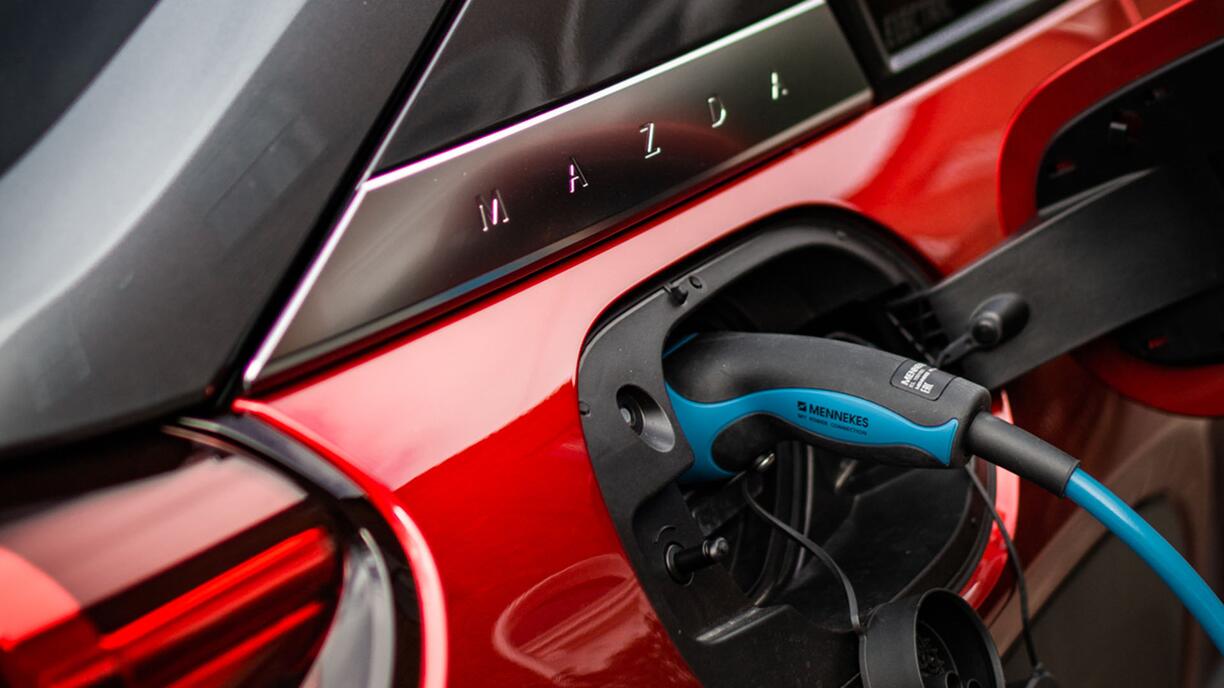
The Transport & Environment group does concede e-fuels would have less of an impact, but it still has concerns around production costs. Yet, despite this many car brands are keen to continue down the path of carbon-neutral fuels and Mazda is a strong proponent. At the Japan Mobility Show in Tokyo this year Mazda revealed its Vision X-Coupe which showcased its latest tech. The Vision X-Coupe combines a rotary engine with a motor and battery to create a plug-in hybrid – an unusual approach and typically Mazda in its uniqueness. Mazda says the Vision X-Concept can run on biofuel derived from microalgae. To further reduce carbon emissions the car has been fitted with ‘Mazda Mobile Carbon Capture’ technology which can filter and store carbon dioxide from exhaust gases. Captured carbon could then be reused on crops or in carbon-based materials. This is still in the prototype phase of development, but Mazda says it would like to bring this tech to market, so it will be testing it in out on a biodiesel powered Mazda3 used for endurance racing in Japan.
The Transport & Environment group does concede e-fuels would have less of an impact, but it still has concerns around production costs. Yet, despite this many car brands are keen to continue down the path of carbon-neutral fuels and Mazda is a strong proponent. At the Japan Mobility Show in Tokyo this year Mazda revealed its Vision X-Coupe which showcased its latest tech. The Vision X-Coupe combines a rotary engine with a motor and battery to create a plug-in hybrid – an unusual approach and typically Mazda in its uniqueness. Mazda says the Vision X-Concept can run on biofuel derived from microalgae. To further reduce carbon emissions the car has been fitted with ‘Mazda Mobile Carbon Capture’ technology which can filter and store carbon dioxide from exhaust gases. Captured carbon could then be reused on crops or in carbon-based materials. This is still in the prototype phase of development, but Mazda says it would like to bring this tech to market, so it will be testing it in out on a biodiesel powered Mazda3 used for endurance racing in Japan.

Along with pursuing biofuel technology, Mazda has also signed up to the eFuel Alliance which promotes the use of synthetic fuels and has a range of members including BMW. BMW has also been vocal about the need for the EU to include renewable fuels in its regulations, particularly those surrounding rental and company car fleets. In addition to this BMW has set itself new climate targets for 2035 to increasing its carbon dioxide equivalent greenhouse gas emissions by at least 60 million metric tons compared to 2019. This builds on the previous target which only went up to 2030. BMW plans to achieve this by increasing the use of renewable energy in its supply chain, using more secondary raw materials from waste and recycling and, increasing electrification of its vehicles. The brand highlights customer EV demand alone will not achieve these targets, so it need to look at the whole lifecycle.
The new iX3 is an example of BWM’s latest approach. Not only is the iX3 absolutely packed with the latest technology, but it’s also built at BMW’s first factory which uses no oil and gas in standard operations. All well and good, but what’s the iX3 like to drive and is it really a game changer? Read our review here to find out.
The new iX3 is an example of BWM’s latest approach. Not only is the iX3 absolutely packed with the latest technology, but it’s also built at BMW’s first factory which uses no oil and gas in standard operations. All well and good, but what’s the iX3 like to drive and is it really a game changer? Read our review here to find out.

Previous Sustainability Newsletters:
• Sustainability newsletter – November 2025 | Are criminals a growing threat to EV charging, which electric cars have we driven this month and what do battery passports look like?
• Sustainability newsletter – October 2025 | September’s new car registrations, more renewable energy and Chinese brands for the win • Sustainability newsletter – September 2025 | SUVs in the crosshairs but can BMW’s sustainable new iX3 help counter the stereotype? • Sustainability newsletter – August 2025 | Volvo talks carbon footprints, Vauxhall campaigns for accessible on-road charging and the SMMT calls for energy grid reform • Sustainability newsletter – July 2025 | Kia helps clean up the oceans, BMW’s natural ‘carbon fibre’ and Volvo commits to using recycled steel • Sustainability newsletter – June 2025 | Reusing old electric car batteries, the antithesis of the Tesla Cybertruck and applications open for Edie’s Net-Zero Awards • Sustainability newsletter – May 2025 | Reducing emissions, creating a circular economy and the King’s Award for Enterprise, but are commercial vehicles being left behind? • Sustainability newsletter – April 2025 | Car brands fined for hiding data on recyclable material in their vehicles and a potential upside to American tariffs • Sustainability newsletter – March 2025 | Climate crisis, policy proposals and big changes at Bentley – is it too late for the car industry to become more sustainable? • Sustainability newsletter – March 2025 | Climate crisis, policy proposals and big changes at Bentley – is it too late for the car industry to become more sustainable? • Sustainability newsletter – February 2025 | Transatlantic divide on sustainability grows, UK charging and battery manufacturing gets a boost and Audi in a muddle • Sustainability newsletter – January 2025 | 2025 looks set to be the year of the affordable EV
• Sustainability newsletter – October 2025 | September’s new car registrations, more renewable energy and Chinese brands for the win • Sustainability newsletter – September 2025 | SUVs in the crosshairs but can BMW’s sustainable new iX3 help counter the stereotype? • Sustainability newsletter – August 2025 | Volvo talks carbon footprints, Vauxhall campaigns for accessible on-road charging and the SMMT calls for energy grid reform • Sustainability newsletter – July 2025 | Kia helps clean up the oceans, BMW’s natural ‘carbon fibre’ and Volvo commits to using recycled steel • Sustainability newsletter – June 2025 | Reusing old electric car batteries, the antithesis of the Tesla Cybertruck and applications open for Edie’s Net-Zero Awards • Sustainability newsletter – May 2025 | Reducing emissions, creating a circular economy and the King’s Award for Enterprise, but are commercial vehicles being left behind? • Sustainability newsletter – April 2025 | Car brands fined for hiding data on recyclable material in their vehicles and a potential upside to American tariffs • Sustainability newsletter – March 2025 | Climate crisis, policy proposals and big changes at Bentley – is it too late for the car industry to become more sustainable? • Sustainability newsletter – March 2025 | Climate crisis, policy proposals and big changes at Bentley – is it too late for the car industry to become more sustainable? • Sustainability newsletter – February 2025 | Transatlantic divide on sustainability grows, UK charging and battery manufacturing gets a boost and Audi in a muddle • Sustainability newsletter – January 2025 | 2025 looks set to be the year of the affordable EV