Screens ‘less safe’ than switches – it’s official!
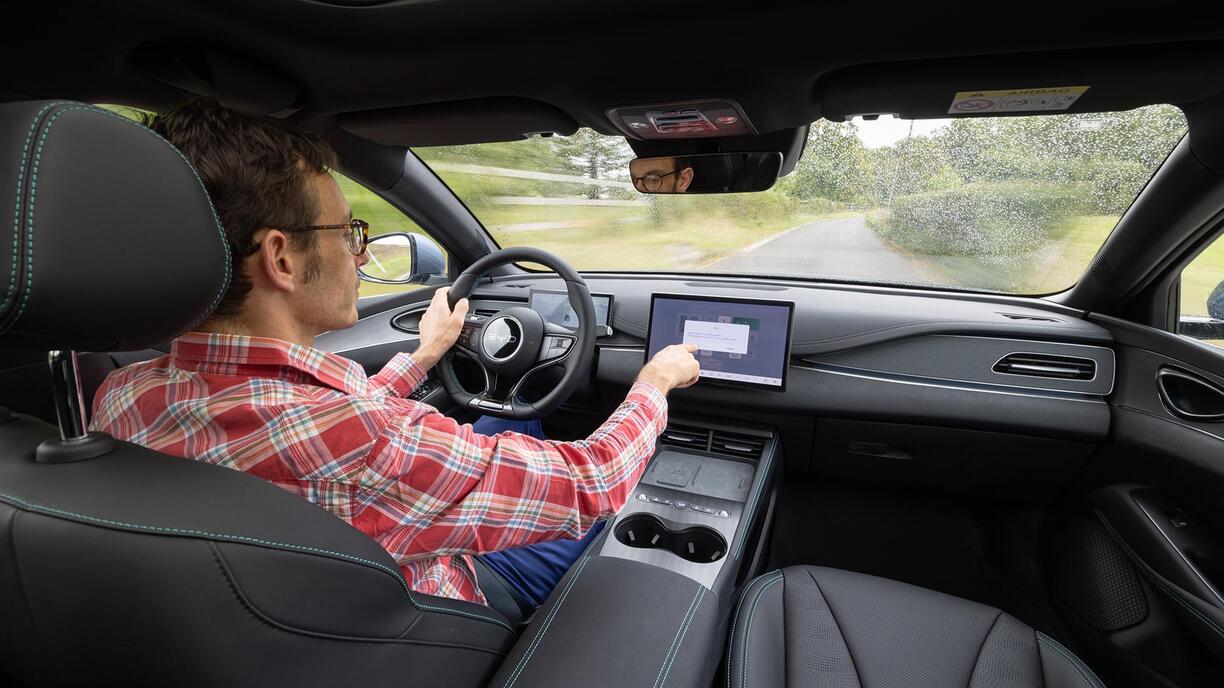
Safety body NCAP slams fiddly touch-screen interfaces, singling out Chinese manufacturers for particular criticism

Words by: Dan Trent
Published on 16 October 2026 | 0 min read
Hate to say we told you so…
NCAP star ratings are an important consideration for many car buyers, and something we often cite in the safety section of our Expert Reviews. But while a useful comparison they can be a crude measure. In simple terms, when it comes to Advanced Driver Assistance Systems (ADAS) NCAP has traditionally rewarded manufacturers for simply fitting the tech, without necessarily assessing whether or not it’s beneficial in real-world driving situations.
Which is why in our reviews we’ll always call out fiddly touch-screens demanding too much time with your eyes off the road, regardless of the car’s overall NCAP score. See also intrusive lane-keeping aids, distracting speed limit warnings that call it wrong all the time and automatic emergency braking systems slamming on the anchors of their own accord.

Europe versus Chinese manufacturers
While some may reasonably frame it as pushback from a European car industry fearful of incoming Chinese brands NCAP’s specific criticism of their touch-screen tech is unequivocal, data-driven and stinging.
“Of the cars already tested by Euro NCAP in 2026, there are clear differences between European manufacturers and Chinese carmakers,” it says in a recent press release, though it’s worth pointing out it’s an industry-wide issue not confined to cars from one particular region. Tesla is of course one example, and a highly influential one at that.

How is safety tech tested?
For its part NCAP has updated the way it assesses safety tech, the new protocol introduced this year claimed as the biggest shake-up to its scores since they were first introduced in 2009.
This now grades Safe Driving, which is to say the now compulsory driver attention monitoring and its ability to detect impairment through tiredness, drinking or drugs through head position and eye-tracking. This is linked to the score for Crash Avoidance, which are the ADAS powered lane-keeping interventions, speed warnings and emergency braking systems with a more extensive testing regime around vulnerable road users.
Crash protection – also known as passive safety – scores more traditional features like rollover protection, seatbelts and airbags. NCAP now also assesses Post-Crash Safety, considering factors like flush door handles and battery isolation to protect occupants and first responders alike.

How can I make sense of safety scores?
You’ll often hear reference to the overall NCAP safety score, graded out of five stars. These days it’s rare for a car to score less than full marks, making more nuanced comparisons difficult for consumers.
For instance, the Aion UT is a five-star car. But digging into the data sheet you’ll see it only gets 20 per cent for its Driving Controls, 60 per cent for Comfort and Infotainment and 38 per cent for the accuracy of its speed limit information.
You can download the full data sheet for any car NCAP has tested, and use it for a detailed comparison when choosing which car to buy with safety in mind. Or read our Expert Reviews, where our experience of driving all the latest models in real-world conditions informs our own ratings in a more digestible format!

Winners and losers
In its latest round of tests NCAP praises the Audi Q7 for addressing previous criticisms of the VW Group of which it is a part for its policy of swapping buttons for touch control. The Audi goes the other way, NCAP praising its “intuitive” switchgear and the sophistication of the lane-keeping system, which works with the attention monitor to leave engaged drivers alone and only kick in if you’re not looking where you’re going. The good news being this isn’t confined to the premium models in the group, our recent test of the VW ID. Polo also celebrating the return of physical switches and controls.
At the other end of the scale are more confusing scores, like the Leapmotor B05 earning a five-star rating but zero per cent for its Driving Controls. Something we’d concur with having lived with the related B10 crossover from the same brand.

Conclusions
NCAP’s very public shaming of car manufacturers getting it wrong with in-car tech is impressively blunt, and shines a light on an important topic in a time of fast-moving innovation. From our own experiences we’d celebrate the return of more physical controls and switchgear in our cars, too.
The good news is cars are getting safer, and the technology is improving at an astonishing rate. Over-the-air updates mean manufacturers can even make improvements based on customer feedback, as has happened with the Volvo EX30 we’ve been testing recently after an initially poor showing on its safety tech. That said, we’ll continue to call out those doing it badly. And if safety is a priority when choosing your next car the information you need will be there in our Expert Reviews!
