Green Machines | Behind the scenes with BMW’s sustainability drive
Can making cars ever REALLY be sustainable? We take a tour round BMW’s factory to try and find out

Words by: Dan Trent
Published on 9 October 2026 | 0 min read
I think it’s a shame more drivers don’t get the opportunity to tour the factories in which their cars are built, and see first-hand just what goes into building a modern vehicle. Because the sheer complexity in an object we interact with every day without second thought is genuinely mind-blowing. If nothing else, it’ll give you a sense of where some of the money leaving your account every month on that finance or lease deal is spent!
While the main reason for the trip was to see the new 3 Series and learn more about the brand’s wider sustainability drive this was my main takeaway after a two-day trip visiting BMW’s factories in and around its Bavarian homeland. In that time we sat through a lot of presentations and workshops on how sustainability is front and centre of its thinking. Here’s what I learned along the way…

Can building cars EVER be sustainable?
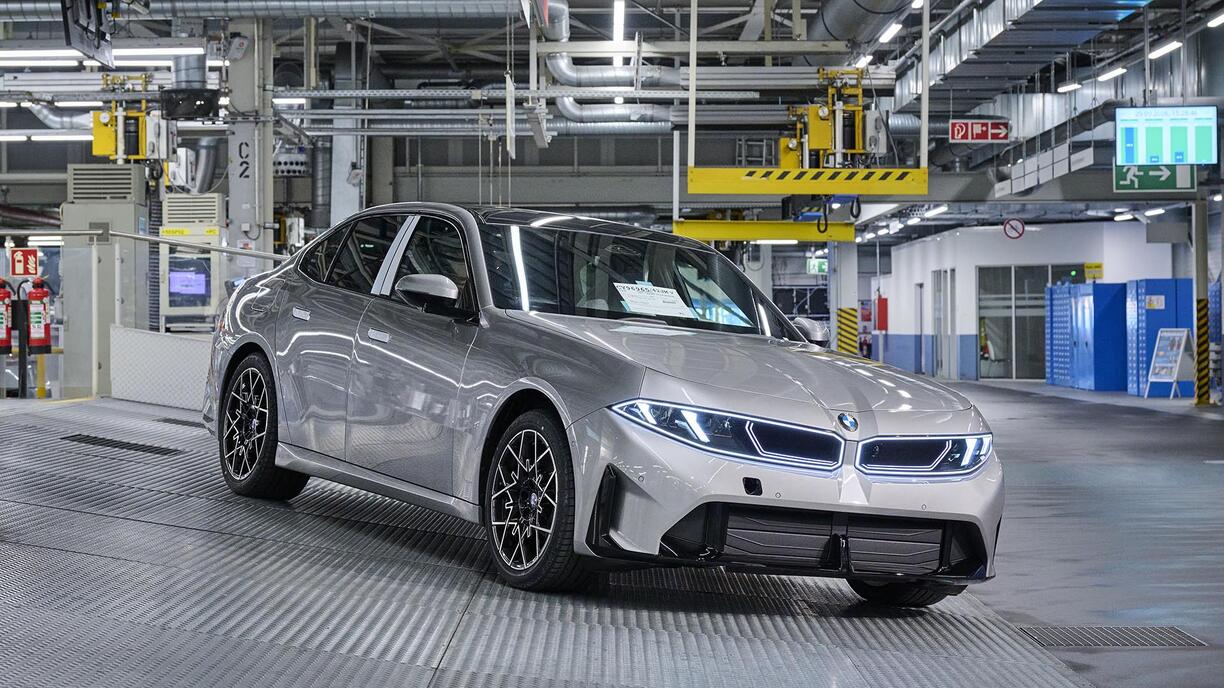
When you walk onto a site where 18,000 people (and quite a few robots) build 1,350 luxury cars every day for export all over the world you wonder how manufacturers like BMW keep a straight face when talking sustainability. Just one of several factories in and around BMW’s Munich hometown, Plant Dingolfing builds cars like the iX, 7 Series and 3 Series, feeding off a huge supply chain of parts. All of which have to be built somewhere, shipped to the factory, bolted together and then delivered as finished products to customers the world over.
That, obviously, demands huge amounts of energy, raw materials, logistics and more. Like all European-based manufacturers BMW has had to scrutinse all these processes to try and make them greener. And more efficient. The latter also helping the bottom line, as well as the environment.

The power to change
Let’s look at something relatively easy to comprehend, like the energy to power the plant. All of which – BMW says – comes from renewable sources, whether bought in, generated by the solar cells on the factory roof or from the on-site biomass heating plant.
The supply chain of parts and raw materials is another area BMW uses as a ‘lever’ for reducing the manufacturing CO2 ‘embedded’ in every car leaving the line. To those ends a quarter of the metal used for the new 3 Series and nearly a third of that in the i3 (built down the road in Munich) is recycled material, the batteries for the latter using a ‘proportion’ of secondary materials for the cobalt, lithium and nickel in their construction.
With its ‘local for local’ production ideology, and by keeping its plants within what it calls the ‘Bavarian production cluster’, BMW can also decarbonise its logistics, the short distances between plants meaning it can use electric trucks to move parts between them. Further afield that means overseas factories in places like China and the US to shorten the supply chains to their respective markets – the ‘food miles’ in automotive terms, basically.

Local batteries for local people
While the cells going into the batteries for Neue Klasse cars like the iX3 and new i3 still come from a Chinese supplier the design is BMW’s, meaning it has the right to demand raw materials are from accredited and responsibly mined origins.
My trip to Germany also included a visit to the brand-new Irlbach-Strasskirchen battery assembly plant, gearing up for its official opening while I was there. Given growing controversy about AI datacentre construction from people concerned about their local environmental impact I was keen to ask our BMW guides how they sold the project to the population of the two small villages the plant is named after, especially given it was built on green field agricultural land.
The official line is locals voted overwhelmingly in favour when asked, the fact BMW is such an important local employer likely a big factor there. My spokesperson also pointed out battery assembly is a lot less demanding of energy and water than a data centre, the new factory bringing around 1,600 jobs to the area. Sustainability is about more than the environment as well, the fact many of these are young people taking up apprenticeships at the start of their careers also building BMW’s pool of local talent to ensure it can keep building cars in its home region.

The before and after
BMW can clean up its production and, at the end of the car’s life, the recycling of the precious raw materials that went into it. Indeed, to those ends another of our tours took in a facility designed to do just that when the battery packs in electric BMWs like the ones we saw leaving the line as brand-new cars reach the end of their working lives some years hence.
The bit in between is down to us as owners, an electric model like the i3 ‘paying back’ the increased carbon in its manufacturing through the fact it doesn’t create any while being driven. True, the source of the energy used to charge it has to be factored in and varies greatly according to where in the world you live. But it’s still greener than a combustion or hybrid car, which adds to its carbon footprint any time it turns a wheel.
Mindful of that, the hybrid 3 Series seeks to further improve the lower embedded CO2 in its manufacturing through increased use of ‘secondary’ materials, and reducing the number of different plastics used in parts like bumpers and interior trim to make them easier to recycle at the end of the car’s life. Independently accredited reports on the CO2 from building its cars and their likely lifetime carbon footprint across various different ownership cycles are, meanwhile, published on BMW’s corporate landing page, helping consumers make informed choices about the most sustainable type of vehicle for their needs and location. Volvo is another manufacturer making this information readily available to consumers, and one of the considerations we factor in for the new green ratings on our Expert Reviews.
This is just one manufacturer, in one corner of Europe. But BMW talks a good game, and if the rest of the industry can match it there may be hope yet!
