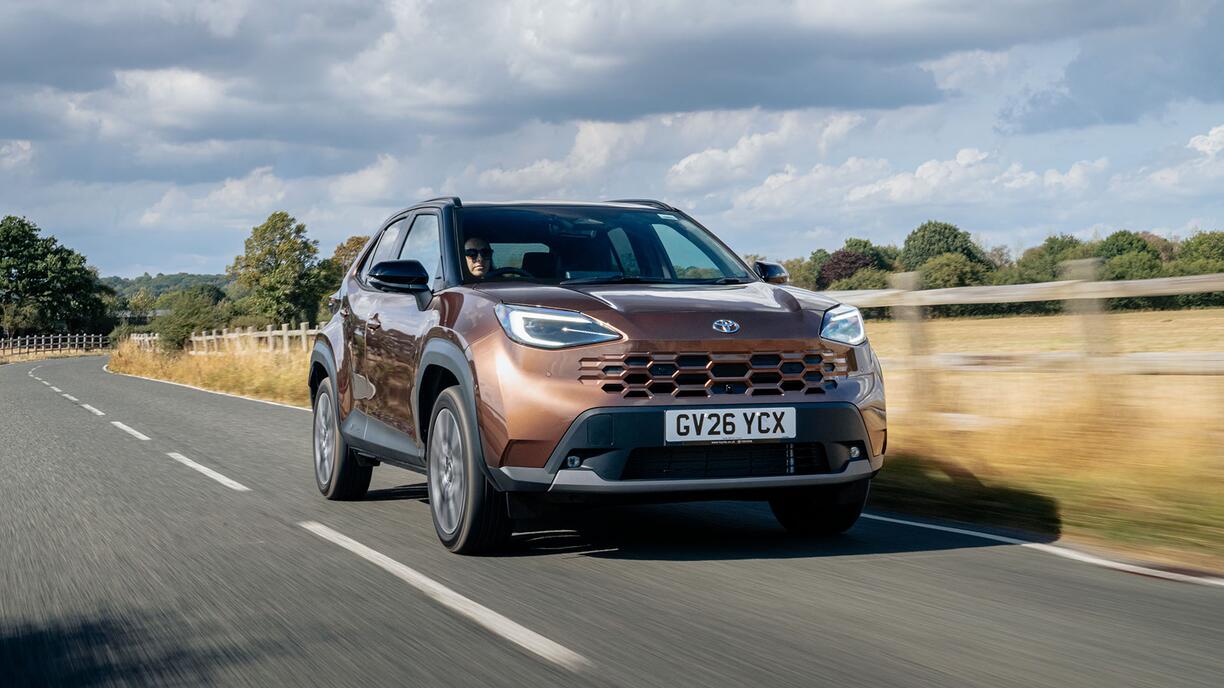
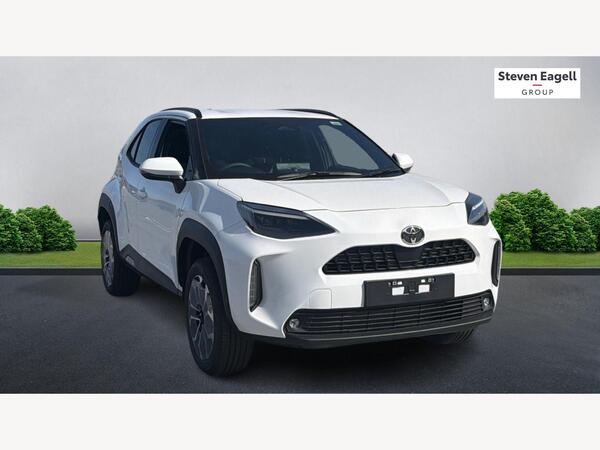
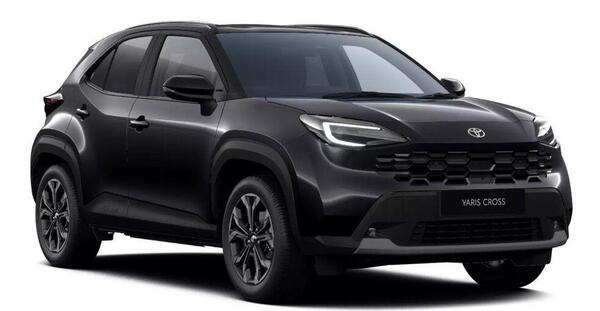
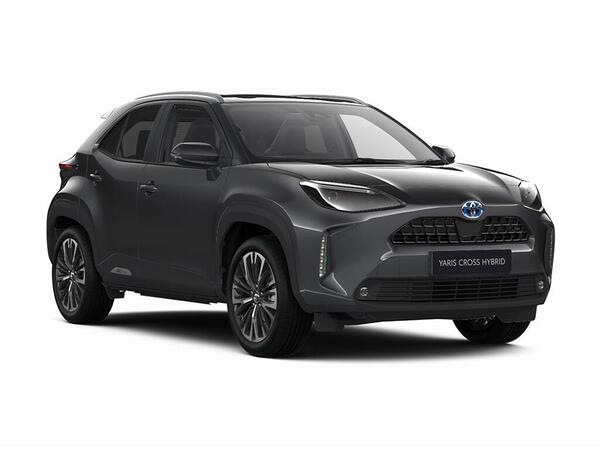
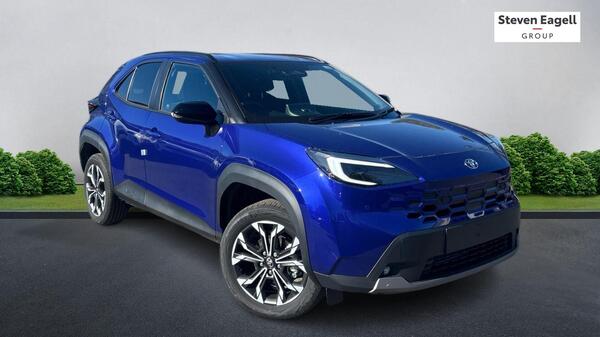
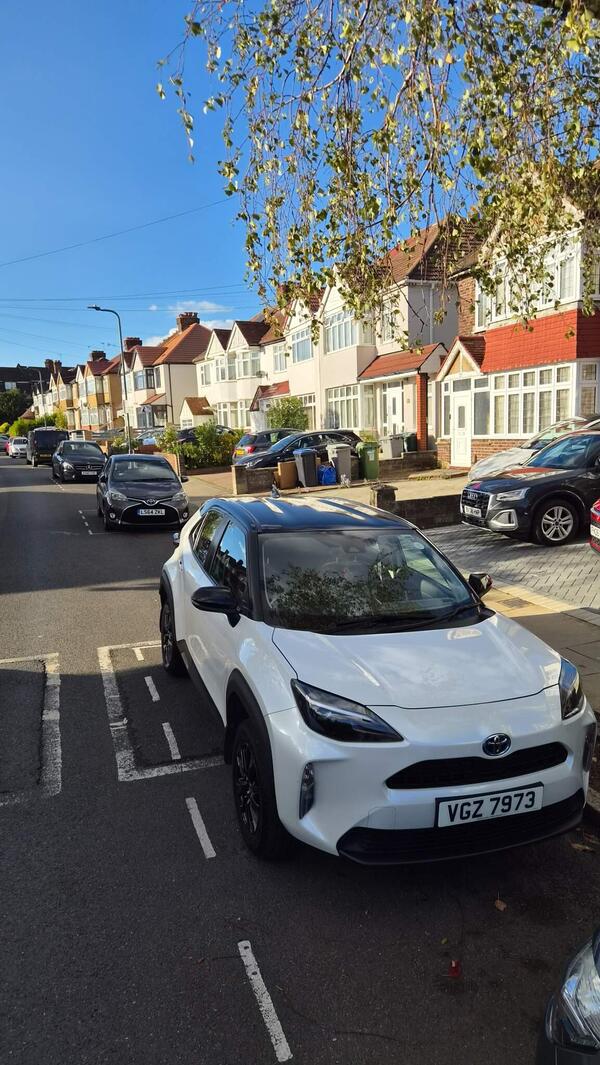
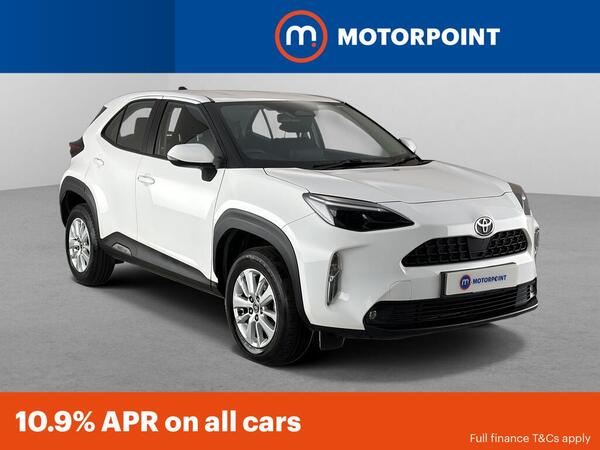
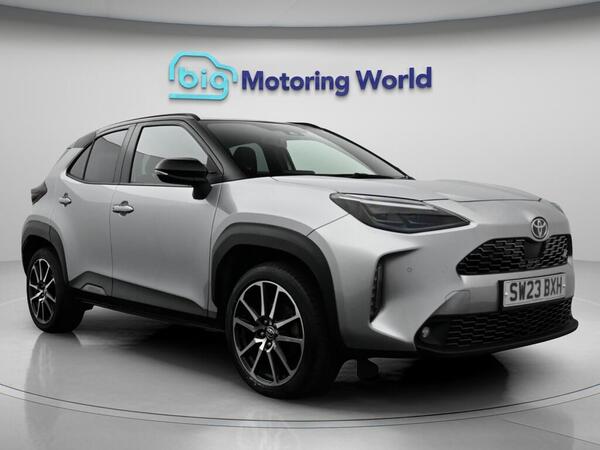
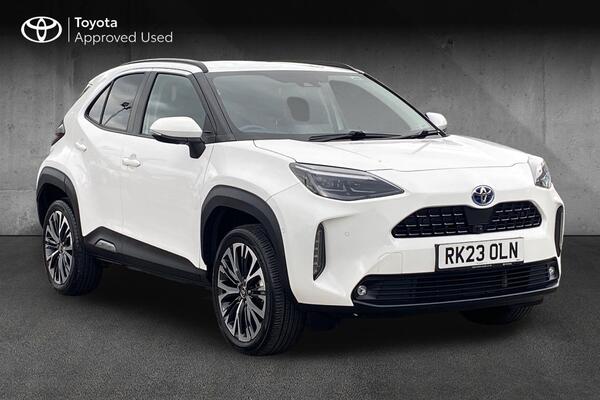
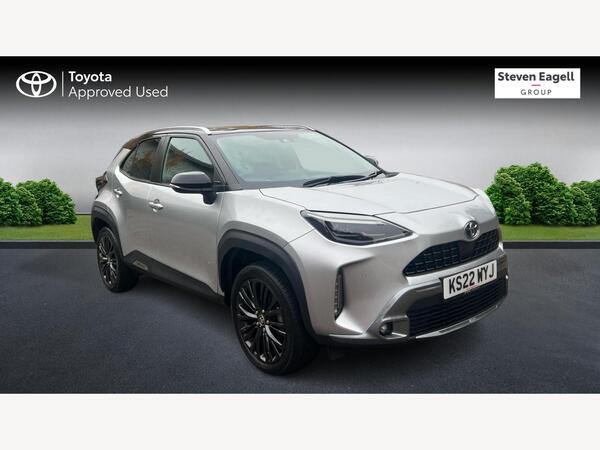
Toyota has an SUV for every occasion, and the Yaris Cross is the smallest of the bunch; compact enough for city streets, yet more practical than the Yaris hatchback. Now Toyota has given it a fresh face and more kit to help it stand out against increasing competition, but is it enough? The Yaris Cross remains a solid, no-nonsense option with its efficient hybrid system, strong residual values and a decent amount of equipment. However, it lacks the pizzazz of a Peugeot 2008, and it is expensive compared to rivals like the Renault Captur. Meanwhile, for a relatively small extra cost you could have a much more premium Lexus LBX – sorry Toyota, I’d still choose your fancier cousin any day of the week.
The Yaris Cross is a compact car with a hybrid system capable of around 60mpg, though you can’t plug it in, so it is still heavily reliant of its petrol engine. At brand level Toyota has taken steps to reduce its environmental impact including recycling components from end-of-life vehicles into new parts at its ‘Circular Factory’ in Derbyshire. However, it still has a long way to go. Only 28 per cent of global factory energy comes from renewables and Toyota’s target to be carbon neural by 2050 is a whole decade behind Volkswagen’s deadline of 2040.
Running costs for a Toyota Yaris Cross
“Toyotas tend be more expensive to buy than their rivals, but they generally have better residual values – the Yaris Cross is no exception to this rule”
While company car drivers won’t get the Benefit in Kind incentives available for choosing a car with a plug, the 'self-charging' hybrid system in the Yaris Cross is capable of around 60mpg so it should be very cost-effective when it comes to fuel. Toyotas tend be more expensive to buy than their rivals, but they generally have better residual values – the Yaris Cross is no exception to this rule. Prices are higher than the Renault Captur, Vauxhall Mokka, Peugeot 2008 and Ford Puma, however Autotrader data predicts the Yaris Cross will deprecate at a much slower rate and even after six years it is likely to retain around 50 per cent of its original value. It’s a similar story with the Yaris Cross’s swankier cousin, the Lexus LBX, though and, given it’s not drastically more expensive than the Toyota, the allure of a more premium badge is hard to ignore.
Expert rating: 4/5
Reliability of a Toyota Yaris Cross
“You’ll unlock a further year of cover each time you get your car serviced by Toyota until it is 10 years old”
Toyota has a very solid reputation for reliability, and it has sold millions of hybrids globally. However, owners have widely reported the 12V battery (used to start the car and power electrical systems like keyless entry) in the previous Yaris Cross had a habit of going flat, so hopefully Toyota has addressed this issue with this facelifted model, though only time will tell. For peace of mind the Yaris Cross comes with a three-year standard warranty, but you’ll unlock a further year of cover each time you get your car serviced by Toyota until it is 10 years old.
Expert rating: 4/5
Safety for a Toyota Yaris Cross
“You'll need to upgrade to the higher trims to gain useful extras like 360-degree cameras and blind spot monitoring”
All versions come with Toyota’s latest suite of safety systems including adaptive cruise control, lane keeping assistance, and emergency braking with pedestrians and cyclist recognition. All well and good, but my test car did a lot of binging and bonging, and I found the chime for every speed limit change particularly annoying – especially when it kept telling me about limits in adjoining roads. These can be turned off, but they’ll come back each time you turn the car on. You'll need to upgrade to the higher trims to gain useful extras like 360-degree cameras and blind spot monitoring, and you’ll also get the Advance Parking Assist feature capable of parking the car for you. It’s certainly not for the faint hearted. I had several false starts where I cancelled the manoeuvre due to the Yaris Cross’s speed and its proximity to other cars. However, once I found an emptier section of the carpark, I relaxed enough to let the Yaris Cross safely reverse into a space.
Expert rating: 4/5
How comfortable is the Toyota Yaris Cross
“All but the entry-level models get electric lumbar support to help on longer journeys, and I appreciated the heated seats in my GR Sport trim test car”
Most people should be able to find a comfortable driving position with the higher stance giving good visibility of the road ahead. All but the entry-level models get electric lumbar support to help on longer journeys, and I appreciated the heated seats in my GR Sport trim test car. Toyota has tweaked the suspension to make the Yaris Cross more engaging to drive, however I felt this came at the expense of comfort. While stiffer set-up dealt with larger speed bumps well and it helped the car feel planted in the corners, it was less good at soaking up smaller imperfections in the road surface, and this was not helped by the larger wheels and firmer seats fitted to my car. Toyota also says it has worked to reduce the amount of wind, road and engine noise creeping into the interior, though the levels of all three were higher than I would have liked. In better news while rear head- and legroom are not the Yaris Cross’s forte, the boot is larger than the Lexus LBX and the Vauxhall Mokka making it a more practical option.
Expert rating: 3/5
Features of the Toyota Yaris Cross
“While GR Sport trim gets all the gear and a sportier look, but don’t go expecting GR Yaris-inspired performance upgrades to match its meaner design.”
Toyota has rejigged the four trims – Icon, Design, Excel and GR Sport – providing each with more kit as standard. Lower trims are reasonably well-equipped with useful touches like keyless entry, a reversing camera and wireless Apple CarPlay and Android Auto connectivity. Higher grades gain larger wheels and nice-to-haves including a larger infotainment system, a powered tailgate, a customisable driver display and a wireless phone charging – although your phone will slip off the charger every time you go around a corner, so you’ll want to keep a wire handy anyway. I liked the 360-degree camera view in my test car and I was a fan of the physical buttons, though the Yaris Cross still trails the Renault Captur’s more modern design and Google-powered tech. Excel trim is the plushest option with a part-leather upholstery, heated front seats and a heated steering wheel, while GR Sport trim gets all the gear and a sportier look, but don’t go expecting GR Yaris-inspired performance upgrades to match its meaner design.
Expert rating: 4/5
Power for a Toyota Yaris Cross
“With no need for charging cables, balanced steering and impressive economy, the Yaris Cross should be a doddle to live with”
Toyota’s self-charging hybrids are well-known for being efficient and easy to use, and the Yaris Cross fits the mould here. Toyota has made various tweaks to help the car eke out as many miles from a tank of petrol as possible, and you can feel the car changing the regenerative braking force depending on driving conditions. All versions now come with 130 horsepower, so the only choice you need to make is whether you want to go ultra-frugal with the front-wheel drive option or add the extra reassurance of all-wheel drive. My front-wheel drive test car was perfectly sure-footed on wet motorways and slippery leaf-covered roads. The performance figures may be nothing to write home about, but the Yaris Cross never felt sluggish and, unlike hybrid systems from Renault, there was no jarring gap in performance when the engine took over from the electric motor. However, while the power delivery itself was smooth, the engine’s loud song and dance doesn’t provide the most soothing soundtrack. Still, with no need for charging cables, balanced steering and impressive economy, the Yaris Cross should be a doddle to live with.