Are train operators banning e-bikes?
E-bikes and trains look like the perfect combination but are train operators running scared with bans and restrictions?
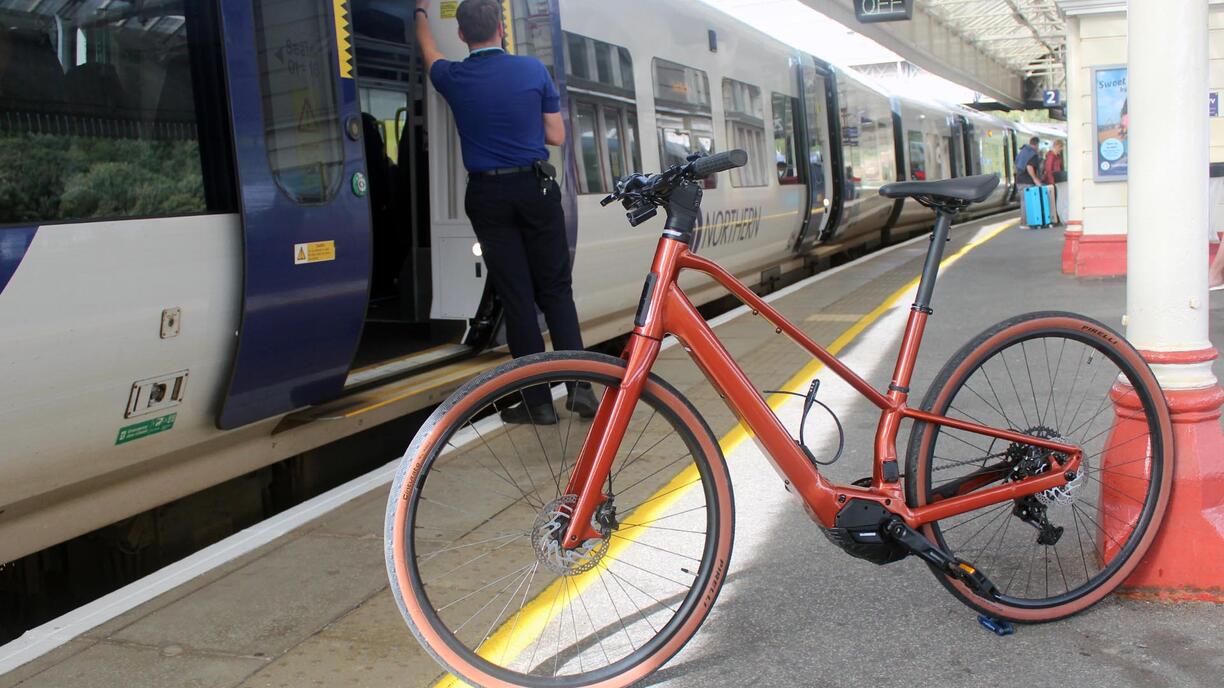

For commuters trying to beat urban congestion the combination of an electric bike and train travel is a great way to make the most of multimodal transport. You ride to your local station, zip onto a train, and coast through the final mile to your desk without breaking a sweat or paying a congestion charge. And at weekeneds you can set off on a longer ride without having to worry about paying for petrol or parking.
Sadly, those journeys are now facing serious friction. Across the UK rail network, a growing patchwork of bans, restrictions, and confusing station signs has left e-bike owners wondering if their two-wheeled daily driver is about to be turned away at the platform. What started as a targeted crackdown on e-scooters has erupted into a wider debate over fire safety, regulation, and the future of greener travel.
Battery fears versus legal e-bikes
Where does all the tension stem from? Rightly or wrongly, it’s the perceived fire risk of the batteries. As electric bikes use lithium-ion batteries, (yes like the ones in your phone), they’re at risk of something called thermal runaway. This is a chain reaction from a single cell which is damaged or overheating, generating enough heat to cause cells next to it to fail and ultimately resulting in an explosion or oxygen-independent fire. So yes, you can see why train operators might be concerned.
The problem with lumping all e-bikes with this reputation is that legal electrically assisted pedal cycles (EAPCs) from reputable brands undergo rigorous battery testing and have systems in place to prevent thermal runaway from occurring. If a cell is deformed or not working as it should, then the entire battery essentially shuts off. The main issue therefore lies with unregulated and illegally modified e-bikes, and these account for the vast majority of e-bike battery fires.
Because train guards and station staff cannot easily inspect every battery's safety certification some operators have resorted to outright bans rather than trying to police compliance on the fly.

Confusion for commuters
The result for commuters is a chaotic mosaic of rules, depending on where they live and which train company they use. Here at the time of writing are some examples.
- TfL & Metro Networks: Transport for London (TfL) and regional operators like Merseyrail have instituted strict bans on non-folding e-bikes and converted e-bikes across large parts of their networks.
- National Rail mainline services: Most major long-distance operators still permit legal EAPCs, provided they fit standard cycle spaces and reservations are made. However, peak-time restrictions and space limits remain tight.
- Station bike parking: A recent incident at Leeds Station, where signs briefly appeared suggesting a total station-wide ban on e-bikes before being removed highlighted how uncertain the situation has become for passengers.

Campaigners fight back
Cycling organisations, including Cycling UK, have voiced strong opposition to blanket e-bike train bans, calling them a "huge backward step" for sustainable transport.
Campaigners point out the clear double standard, given passengers are routinely allowed on trains carrying laptops, phones, power banks, and mobility scooters, all powered by lithium-ion batteries. Banning factory-built, legal e-bikes, they argue, penalises law-abiding e-bike owners for the proliferation of unregulated, illegal conversion kits sold online.

The legislative horizon
The long-term solution likely lies in Parliament rather than on train platforms. The government is in the process of introducing tighter legislation aimed directly at the sale of illegal e-bike conversion kits, dangerous battery imports, and modified "monster" e-bikes, but this could take years to pass in Parliament and will be difficult to police.
However, by choking off the supply of ‘dodgy’ batteries at the market level, authorities hope to restore confidence in e-bike safety, thus giving rail operators the reassurance they need to keep their doors open to two-wheeled passengers.

What can you do?
Check operator rules before boarding. If you haven't bought an e-bike yet, consider a folding e-bike from a well-known brand. Folding models are more likely to be permitted during peak hours and on underground/metro systems.
Keep it road-legal. Ensure your bike clearly displays its EAPC compliance label showing the 250W limit/15.5 mph assistance limit. Avoid DIY throttle kits or unbranded replacement batteries.
Never charge your bike on board. Plugging e-bike batteries into train passenger sockets is strictly prohibited by almost all train operating companies.
Reserve your spot early. For mainline train travel bike spaces are strictly limited, often to as few as two bicycles (electric or not) per train. Always book your cycle space alongside your seat reservation.
