Advice
How fast do e-bikes go?
The speed of an e-bike is partly governed by legislation, and partly by how fast you can pedal! Here’s why…
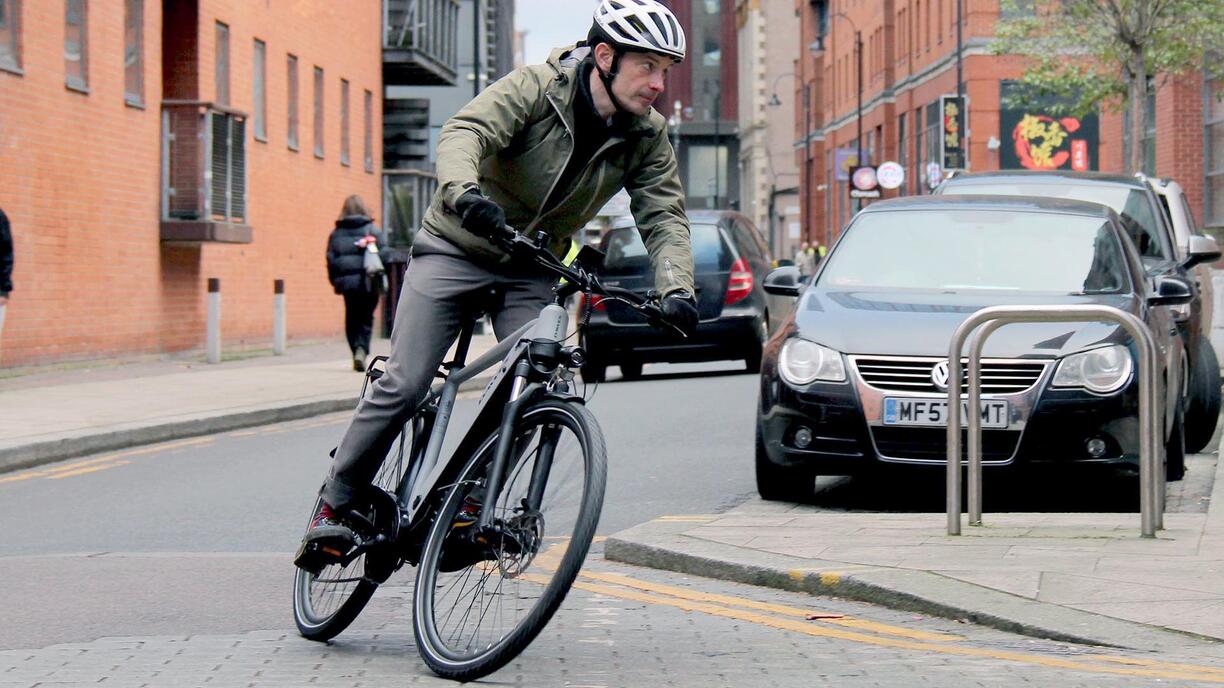

Electric bikes are becoming increasingly popular, from electric mountain bikes for shredding the trails for recreation to electric cargo bikes for taking your kids to school, carrying the weekly shop or similar. But how fast can they actually go? And what is the legislation controlling them?

What is an electric bike and how are they different to standard bikes?
The main difference between an electric bike and a non-electric bike is, of course, the addition of a motor and battery. Whether it be powered by a hub, friction or frame-mounted mid-drive motor, if the bicycle offers powered assistance to the pedals, it is classed as an electric bicycle in the UK.
Electric mountain bikes come as either hardtails with suspension forks only or full-suspension, just like their non-electric counterparts. But the componentry can differ. E-bikes naturally put more force through their drivetrains, so chains need to be tougher to withstand this extra torque.
When it comes to urban or commuter bikes, e-bikes make it far easier to carry panniers and extra weight on the bike as you won’t feel it as much when you’re riding. And the electric system also benefits those riding cargo bikes, as moving heavy loads is far easier.
Electric folding bikes are typically heavier than their non-electric counterparts, but you can still buy e-folders under 15kg.
Electric mountain bikes come as either hardtails with suspension forks only or full-suspension, just like their non-electric counterparts. But the componentry can differ. E-bikes naturally put more force through their drivetrains, so chains need to be tougher to withstand this extra torque.
When it comes to urban or commuter bikes, e-bikes make it far easier to carry panniers and extra weight on the bike as you won’t feel it as much when you’re riding. And the electric system also benefits those riding cargo bikes, as moving heavy loads is far easier.
Electric folding bikes are typically heavier than their non-electric counterparts, but you can still buy e-folders under 15kg.

How fast CAN an electric bike go?
How long is a piece of string? Technically an electric bicycle is still a bicycle, and beyond the legally mandated assistance limit of 15.5mph, there is no maximum speed an e-bike can be pedalled to. The difference is, it’s just under your own power after you exceed 15.5mph.
Just for context the fastest speed ever recorded on a pedal cycle in the UK was 174mph, set in 2021 by Neil Campbell at Elvington Air Field in North Yorkshire. However, this was set under specific conditions and behind a vehicle to help with aerodynamics … so please don’t try and replicate this down your local hill!
Just for context the fastest speed ever recorded on a pedal cycle in the UK was 174mph, set in 2021 by Neil Campbell at Elvington Air Field in North Yorkshire. However, this was set under specific conditions and behind a vehicle to help with aerodynamics … so please don’t try and replicate this down your local hill!

How fast can electric bikes legally go?
An electrically assisted pedal cycle or EAPC can assist riders up to 15.5mph, and in UK law is defined as a pedal cycle, and as such, does not need to be taxed or insured, nor do riders require a license to ride them.
EAPCs qualify as such as long as the electrical assist is only activated when the rider pedals. It cannot be operated via a throttle alone (beyond walking assistance of 3.7mph), nor without pedalling input from the rider.
In addition to this restriction, there is also a maximum nominal power of 250W from the motor, of which it can only assist up to speeds of 15.5mph. Beyond that the assistance must cut out.
If an electric bike can assist to speeds higher than 15.5mph, then it is legally classed as an e-moped and subject to different laws and regulations. If you’re found to be riding a non-road legal e-bike on public roads, you can be subject to a £1,000 fine, get points on your driving licence and risk the possibility of the bike being seized. It’s important to note that to operate an EAPC you should also be at least 14 years of age.
EAPCs qualify as such as long as the electrical assist is only activated when the rider pedals. It cannot be operated via a throttle alone (beyond walking assistance of 3.7mph), nor without pedalling input from the rider.
In addition to this restriction, there is also a maximum nominal power of 250W from the motor, of which it can only assist up to speeds of 15.5mph. Beyond that the assistance must cut out.
If an electric bike can assist to speeds higher than 15.5mph, then it is legally classed as an e-moped and subject to different laws and regulations. If you’re found to be riding a non-road legal e-bike on public roads, you can be subject to a £1,000 fine, get points on your driving licence and risk the possibility of the bike being seized. It’s important to note that to operate an EAPC you should also be at least 14 years of age.

What motors do electric bikes use?
The most popular types of motors you’ll see on electric bikes in the UK are mid-drive (where the motor is in the frame) and hub-drive. Hub-drive motors sit in the wheel hub, either in the front or the rear wheel, and work by spinning the wheel directly, rather than providing propulsion through the bike’s drivetrain.
Hub-drive motors are more commonly used on e-bikes that don’t require as much torque or power, such as e-folders or e-road bikes. They can also be quite lightweight.
A mid-drive motor, however, is built into the bottom bracket area of the bike frame, and works by powering the bike’s chainring and so more force goes through the drivetrain of the bike. They are often more efficient and offer more torque and peak power – usually on electric mountain bikes or things like e-cargo bikes.
Hub-drive motors are more commonly used on e-bikes that don’t require as much torque or power, such as e-folders or e-road bikes. They can also be quite lightweight.
A mid-drive motor, however, is built into the bottom bracket area of the bike frame, and works by powering the bike’s chainring and so more force goes through the drivetrain of the bike. They are often more efficient and offer more torque and peak power – usually on electric mountain bikes or things like e-cargo bikes.

What brakes do electric bikes have?
The vast majority of e-bikes use disc brakes these days, which are better suited to the higher forces going through the bike when you slow down. That being said, at the cheaper end of the scale or e-bikes where weight saving is a priority (like folding bikes) it’s not uncommon to still see traditional rim brakes.
Even within disc brakes there are variations because this is the bike industry and, of course, there isn’t just one standard! There are different fitments (flat mount or post mount, for example) and then mechanical versus hydraulic. More expensive e-bikes will use hydraulic disc brakes and some may even come with ABS (automatic braking systems) like cars or motorbikes. They’re more popular on the continent, however, particularly on S-Pedelecs, which are e-bikes able to assist up to 20mph typically found in countries where legislation permits them.
Even within disc brakes there are variations because this is the bike industry and, of course, there isn’t just one standard! There are different fitments (flat mount or post mount, for example) and then mechanical versus hydraulic. More expensive e-bikes will use hydraulic disc brakes and some may even come with ABS (automatic braking systems) like cars or motorbikes. They’re more popular on the continent, however, particularly on S-Pedelecs, which are e-bikes able to assist up to 20mph typically found in countries where legislation permits them.
