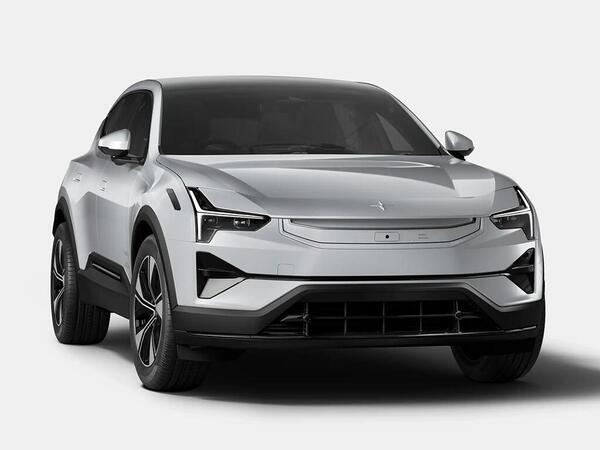
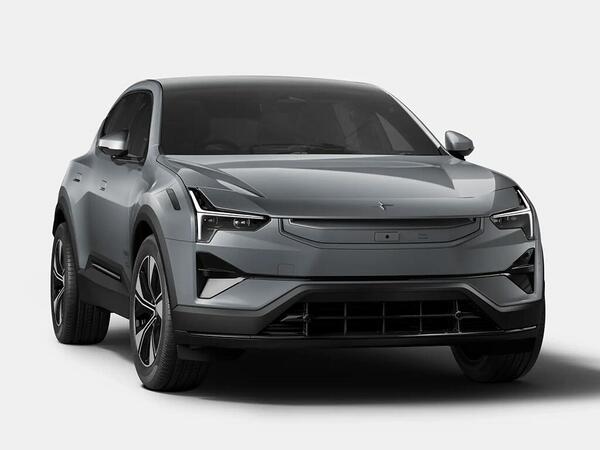
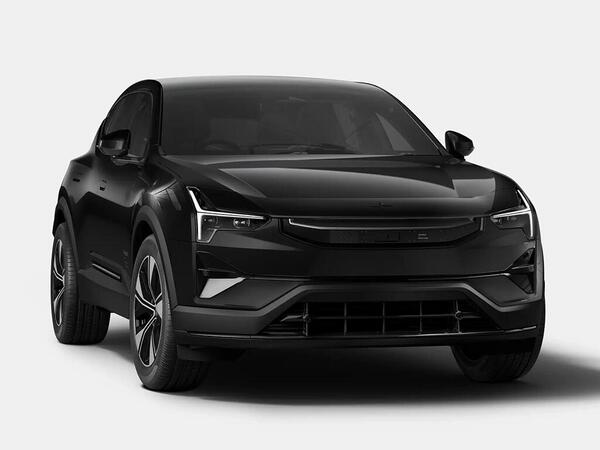
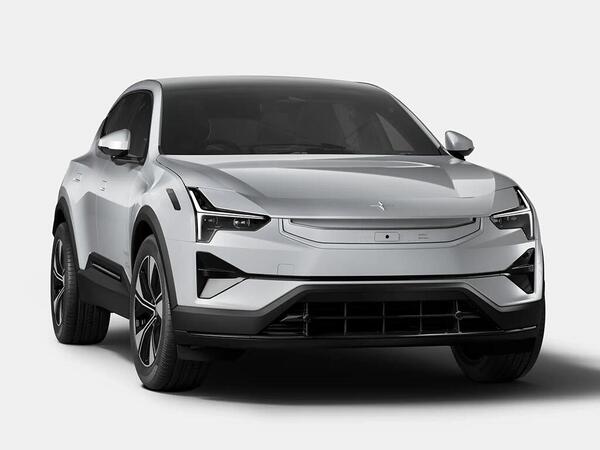
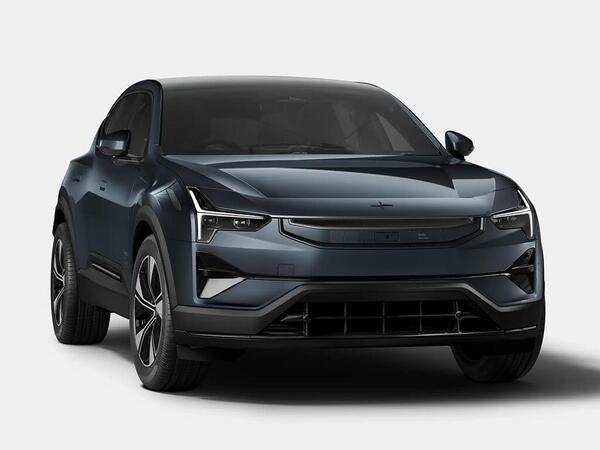
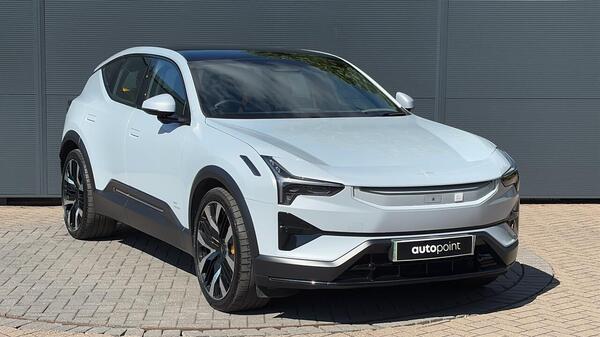
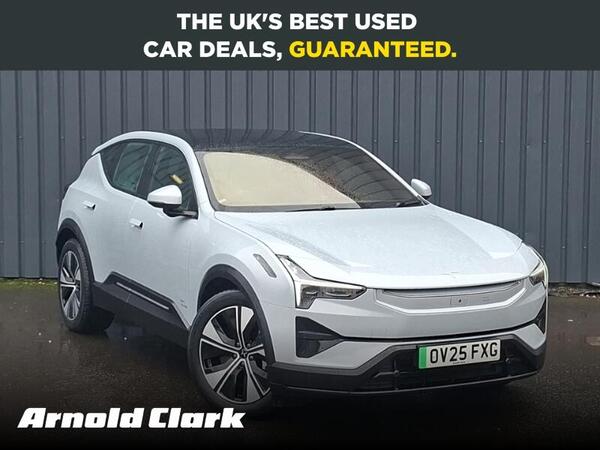
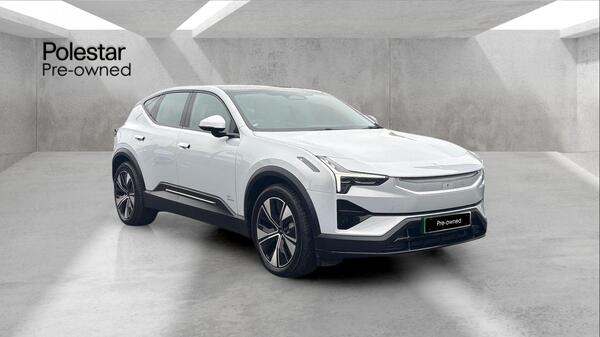
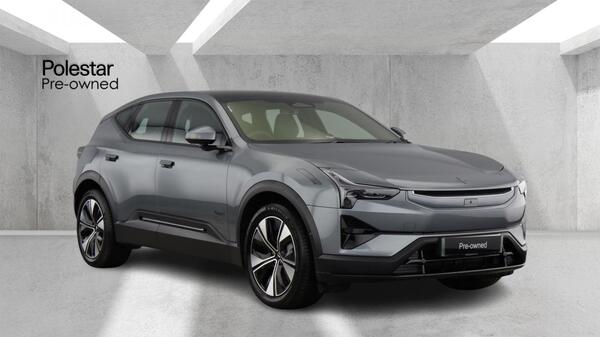
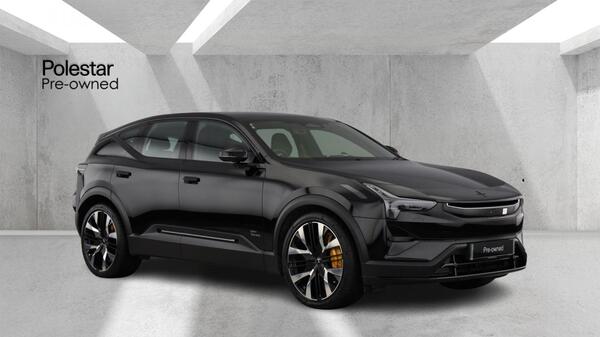
The Polestar 3 may have only been around a couple of years, but the sporty SUV has now had a major overhaul. While the Scandi chic design has been left untouched, under the surface new batteries, motors and tech provide more power with a longer range and faster charging speeds further sweetening the deal. Now with an official range of almost 400 miles (although call it closer to 300 miles in the real world), this large electric car blends power and poise to create a fast, refined and practical family-size SUV. But how does it stack up against other luxury rivals? While it may not be as plush as the BMW iX, or as fun as the Porsche Cayenne Electric, the Polestar 3 still offers a strong combination of style, space and sustainability kudos.
Sustainability is at the core of Polestar’s ethos and, in the interests of full transparency, Polestar is one of the few brands to publish a comprehensive life cycle analysis report for each of its models. To help reduce emissions Polestar uses 100 per cent renewable electricity in all its manufacturing plants and it imposes high standards on suppliers, further reducing the carbon footprint of the materials it uses. More broadly Polestar is targeting carbon neutrality by 2040. Meanwhile, its hugely ambitious Polestar 0 project aims to produce a fully climate-neutral car where all greenhouse gas emissions are eliminated from the supply chain and production. The Polestar 3 is manufactured in China and the USA using renewable electricity and Polestar has also reduced the carbon emissions created during the production of the aluminium and batteries it uses. However, we have docked one point here because the Polestar 3 is a big and heavy SUV so, despite Polestar's best efforts, this model still has a larger carbon footprint than the smaller models in the range.
Running costs for a Polestar Polestar 3
“Don’t forget Vehicle Excise Duty (VED) now applies to electric cars and you’ll also have ’luxury car tax’ to pay”
While the most expensive version of the Polestar 3 pushes six figures, the pricing for all variants is broadly in line with premium rivals like the Mercedes EQE, Audi SQ6 e-tron or BMW iX. If you have the facilities to charge at home on a dedicated EV tariff, then running costs should be kept to a minimum. On the flip side, public charging will be considerably more expensive, but Polestar’s latest tech enables rapid charging from 10 to 80 per cent in as little as 22 mins, assuming you can find a DC charger capable of providing 350kW of power. Company car drivers will of course get the added Benefit In Kind advantages for choosing an EV. However, don’t forget Vehicle Excise Duty (VED) now applies to electric cars and you’ll also have ’luxury car tax’ to pay as the 3 costs over £50,000.
Expert rating: 3/5
Reliability of a Polestar Polestar 3
“The latest 2026 model is now ‘brainier’ than before, with eight times the processing power of the original car”
The Polestar 3 remains a relatively new model so it’s still too soon to judge long-term reliability, but shared underpinnings with the Volvo EX90 provide some reassurance the mechanical parts are tried and tested. For further peace of mind Polestar provides an industry standard three-year/60,000-mile warranty while the battery gets a separate eight-year/100,000-mile cover. However, there were a few early reports of glitchy software, though hopefully these have now been resolved by over-the-air (OTA) updates. Additionally, the latest 2026 model is now ‘brainier’ than before, with eight times the processing power of the original car.
Expert rating: 3/5
Safety for a Polestar Polestar 3
“Polestar undoes a lot of its good work by putting most of the car’s controls through the central touch-screen, which can be very distracting to use whilst driving”
The Polestar 3 comes with an extensive list of safety features, including lane keeping assistance, driver attention monitoring and collision warnings, along with the useful stuff like blind spot monitoring and adaptive cruise control. These systems are powered by 12 ultrasonic sensors and one front radar which constantly work to prevent a mishap. Should the worst happen, the presence of nine airbags and a reinforced steel cage is immeasurably reassuring. Yet, despite all of this, Polestar undoes a lot of its good work by putting most of the car’s controls through the central touch-screen, which can be very distracting to use whilst driving and we’ve docked a point from the safety score to reflect this.
Expert rating: 4/5
How comfortable is the Polestar Polestar 3
“We weren’t too keen on having to use the touch-screen and steering wheel buttons to set up the wing mirrors and steering wheel – at least memory settings mean you’ll only have to do this once”
The interior remains suitably stylish with its calming minimalist vibe. There’s plenty of space wherever you are sitting, with ample head- and legroom for all. The seats are characteristically cocooning and by default you’ll get vegan upholstery made using vinyl and recycled polyester. Alternatively animal welfare-certified wool or Bridge of Weir leather are available as cost options. We like the large panoramic roof which lets in plenty of light, and we are impressed by the large boot which provides plenty of luggage space and features a clever configurable floor allowing you to divide the space in two. Doing this reveals a hidden compartment below and creates useful hooks for shopping bags. There’s also an additional space under the bonnet for storing cables out of the way. Most people should be able to find the perfect driving position, although we weren’t too keen on having to use the touch-screen and steering wheel buttons to set up the wing mirrors and steering wheel – at least memory settings mean you’ll only have to do this once. Out on the road the Polestar 3 is quiet and refined. Moving up from the entry-level rear motor model you’ll gain active air suspension, which can be adjusted to favour comfort or handling dynamics. All modes cope decently with uneven surfaces, although even on the softest setting and despite Polestar saying it had specifically tweaked the car to improve comfort, the ride remains on the firmer side, and it doesn’t fare so well with larger bumps or potholes.
Expert rating: 4/5
Features of the Polestar Polestar 3
“The Performance version turns things up a notch by adding entirely yellow seatbelts with matching brake calipers – extra power aside, this alone feels worth the upgrade”
A large central screen controls most of the car’s functions. This has a logical layout, but it is still fiddly to use whilst driving. For example, if you want to change the car’s driving characteristics the required menu has lots of large, animated widgets, but the area you need to actually press is frustratingly small. We do like the built-in Google maps, the head-up display and the crystal-clear Bowers & Wilkins sound system, though. Each trim level gets a unique wheel design while the Dual motor gains a yellow stripe on each seatbelt. However, the Performance version turns things up a notch by adding entirely yellow seatbelts with matching brake calipers – extra power aside, this alone feels worth the upgrade. This 2026 update also brings a revised choice of moody paint colours, and we are particularly drawn to the metallic Krypton green, which we’d pair with the new tan leather upholstery option.
Expert rating: 4/5
Power for a Polestar Polestar 3
“For most everyday driving needs the Polestar 3 is an undeniably fast and competent choice”
To keep things simple the Polestar 3 is offered in three guises – Rear motor, Dual motor and Performance – all of which are pretty self-explanatory with increasing power as you move up the grades. We haven’t driven the entry-level rear-wheel drive model yet, but we have tested the two all-wheel drive versions. These are both as spritely as you would expect providing sports car rivalling performance, albeit without the edge-of-your-seat thrills. The Performance model’s 680 horsepower provides acceleration which is so smooth and effortless we overtook a slow-moving vehicle on a B-road without our passenger even noticing it had happened – proper blink-and-you’ll-miss-it stuff. However, in the firmest of the three settings the steering feel remains lighter than we would have liked and, while Polestar has done an admirable job of hiding the car’s weight, the bulk does become apparent as you slow down for a corner, so it’s not quite as dynamic as its looks might suggest. Yet, for most everyday driving needs the Polestar 3 is an undeniably fast and competent choice.