Mitsubishi L200 vs Ford Ranger PHEV
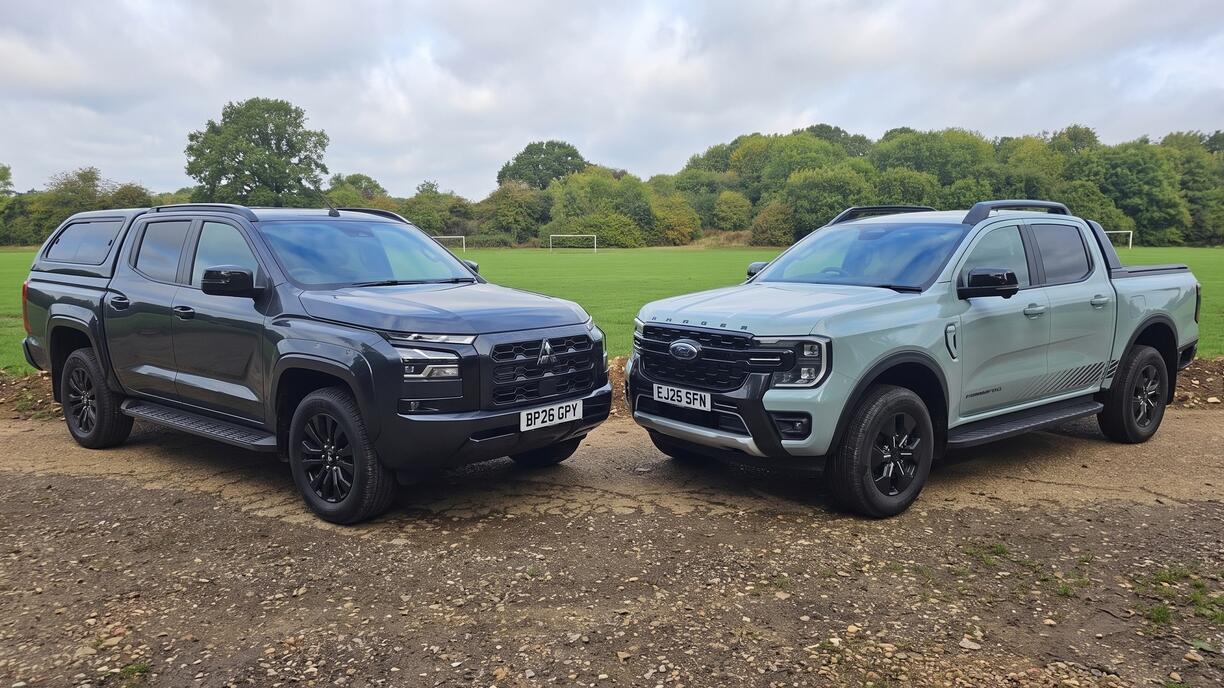
The Mitsubishi L200 and Ford Ranger PHEV pick-up trucks offer different visions for the future of pick-up trucks… which one would you choose?

Words by: Tom Roberts
Published on 7 October 2026 | 0 min read
The UK pick-up truck market is going through a bit of an odd period with tax changes and new entrants hitting the market. And two of its present-day contenders are painting different visions for the future.
First up, we have the Ford Ranger PHEV, a partially electrified pick-up that STILL offers the load carrying, towing capabilities and off-road muscle the Ranger is known for. The PHEV even outperforms its diesel siblings on and off the road, pairing a great drive with Ford’s trademark cabin experience. Price-wise it commands a premium over its diesel variants, but justifies that by being pretty gosh darn fabulous.
And then we have Mitsubishi making its return to the UK with the seventh-generation L200. The new L200 sticks firmly to a diesel powertrain, providing good off-road performance and solid practicality. Its pricing makes it a compelling choice in the middle of the current pack of pick-up trucks available in the UK, with its handsome styling, good levels of safety and comfort tech, and balanced on-road manners.
Here’s how they stack up head-to-head at a glance:
Category | Mitsubishi L200 | Ford Ranger PHEV |
Powertrain | 2.4-litre turbo diesel | 2.3-litre EcoBoost petrol and 75 kW electric motor powered by an 11.8 kWh battery |
Starting price (ex VAT) | ~£36K | ~£39K |
Maximum payload | 1,092 kg | 1,040 kg |
Warranty length | Five years / 62,500 miles | Three years / 60,000 miles, and an eight-year / 100,000-mile battery warranty |


Cargo and practicality
So, the Mitsubishi L200 is a double-cab, which means seats for up to five adults. Its payload-carrying capabilities range slightly between 1,025 kg on its Barbarian trim levels and 1,092kg on Titan models. The load bed measures 1.5 metres long, 1.54 metres wide, and 526 mm deep, which is wide enough for a standard Euro pallet. Some nice practical touches include wide sidesteps, rear bumper foothold, tie-down loops, and a 3,500kg braked towing capacity. The only quibble is that the tailgate locks separately from the vehicle doors.
Meanwhile, the Ford Ranger PHEV is also a double cab with a payload max hovering around 1,040 kg and a braked towing limit of over 3,000 kg. The load floor is over 1.6 metres long and 1.2 metres wide between the wheel arches. The standout features include Ford’s Pro Power system (a V2L system providing built-in electrical outlets for powering tools or coffee machines, for example) and a sliding loading rack in the flagship Stormtrak model’s cargo space.


Interior tech and comfort
The Mitsubishi L200 does a good job of balancing durability and comfort, featuring supportive front seats, good rear legroom, and quite a bit of storage. It features a nine-inch touch-screen with wireless Apple CarPlay, Android Auto, and a 360-degree camera. There are dedicated physical buttons for climate control, steering wheel switches, and a rotary dial for 4x4 modes – all very easy to use and far better than the digital interfaces SOME pick-ups make us use. The top trims add wireless charging, dual-zone climate control and heated front seats.
And, the Ford Ranger PHEV delivers the usual high-end cabin dominated by a much bigger infotainment screen with Apple CarPlay and Android Auto… though the screen's portrait orientation and straight-out placement can cause neck strain if you’re following a map. As for the rest of the cabin, it features double glove boxes, pop-out dashboard cup holders, physical climate-control switches and wireless charging. Upgrading to higher trims adds electrically adjustable, heated leather seats.


Ride, handling and performance
The L200 is powered by a 2.4-litre twin-stage turbo diesel engine which translates to good on-road driving, but it really shines off-road. However, trim levels will dictate your 4x4 drive systems with Titan models using the Easy Select 4WD system, with the Barbarian trim upgrading it to the multi-mode Super Select 4WD-II system… which is ace.
Being a hybrid, the Ranger PHEV packs a clever system that combines a strong 2.3-litre EcoBoost petrol engine with a 75kW electric motor and an 11.8kWh battery, providing 26 miles of silent electric-only range. The added battery weight gives the truck a slightly lower center of gravity, resulting in confident cornering with minimal body roll. And it handles difficult terrains like gravel and mud well.


Safety and security
Okay, so the L200 doesn’t have an official Euro NCAP rating just yet… but it’s packed with safety tech, such as Adaptive Cruise Control, Forward Collision Mitigation, Lane Departure Prevention, Lane Change Alert, Blind Spot Warning, and Driver Attention Alert… although the driver fatigue system’s bings and bongs are quite aggressive. Minor quibble though. The bouncy ride when unladen can be a bit off-putting at times, but it’s not a major problem.
But the Ranger PHEV has a platinum Euro NCAP rating (the best a vehicle can get) and provides good safety systems like emergency braking, extensive airbag coverage, blind-spot monitoring, and driver alerts (which aren’t obnoxious). The added bonus that comes with the extra weight the hybrid powertrain adds to the truck makes it feel planted and stable on the road.


Verdict

