Mercedes-Benz Vito Sport-X vs Vauxhall Vivaro GS
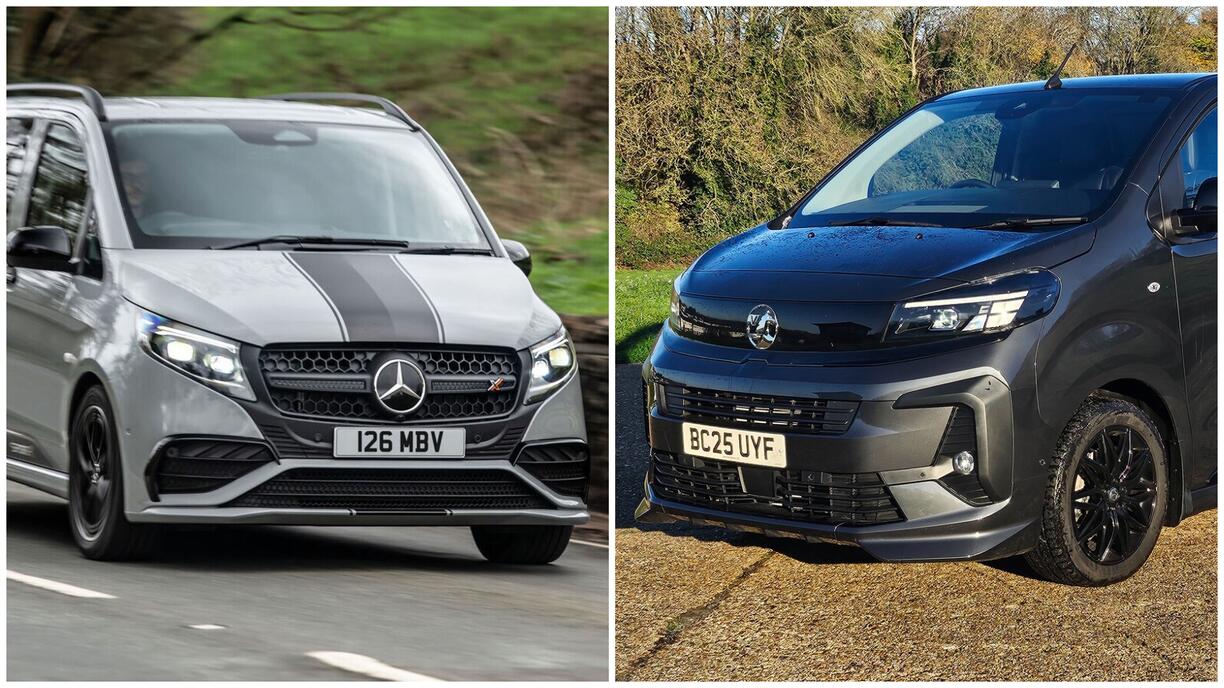
The Mercedes-Benz Vito Sport-X and Vauxhall Vivaro GS go head-to-head in a tussle between two flagship vans

Words by: Tom Roberts
Published on 23 September 2026 | 0 min read
Top-tier ‘flagship’ vans have gained momentum in the medium van market – maybe not in terms of sales volume, but certainly in terms of how many are available from a variety of manufacturers. These types of van typically blend the hard-working practicality of a base vehicle with enhanced exterior styling, maybe a bit of plush cabin tech, and overall improved comfort levels.
In our latest head-to-head van comparison we put the Mercedes-Benz Vito Sport-X and the Vauxhall Vivaro GS in the spotlight for a top-trim tussle. Before we get going, have a look at the table below for an at-a-glance comparison to get an idea of what the two vans offer.


Feature | Mercedes-Benz Vito Sport-X | Vauxhall Vivaro GS |
Powertrain options | 2.0-litre turbo diesel (automatic) | 2.0-litre turbo diesel (six-speed manual / eight-speed automatic) or electric (209-mile WLTP range) |
Starting price (ex VAT) | ~£57K (ex VAT) | ~£42K (ex VAT, diesel) / ~£48K (ex VAT, electric) |
Load volume | 3.6 cubic metres (L2) to 4.1 cubic metres (L3) | 5.3 cubic metres (panel van), 4.0 cubic metres (crew van) |
Maximum payload | Up to 556 kg (L2) / up to 733 kg (L3) | 1,100–1,300 kg (diesel) / 900–1,000 kg (electric) |
Warranty length | Three years / unlimited mileage (plus renewable MobiloVan cover up to 30 years) | Three years / 100,000 miles (first year unlimited), and eight-year / 100,000-mile battery warranty on electric versions |
Cargo and practicality
The Mercedes-Benz Vito Sport-X is offered as a five-seater crew van in L2 and L3 body lengths, prioritising passenger transport over cargo. It can carry load volumes between 3.6 and 4.1 cubic metres (depending on which length you choose), with payloads ranging from 556 kg on the L2 to 733 kg on the L3. The removable rear bench allows extra room when needed, and access is via a large rear tailgate. It can tow up to 2,000 kg as standard.
The Vauxhall Vivaro GS, meanwhile, can carry more weight boasting impressive payload figures of 1,100 to 1,300 kg on diesel models and 900 to 1,000 kg on electric variants. Towing capacity matches the Merc at up to 2,500 kg on the diesels (1,000 kg for electric). However, the GS is restricted strictly to the shorter L1H1 body size, capping internal load height at just under 1.4 metres and load volume ranging from 4.0 to 5.3 cubic metres depending on whether you opt for a crew van or panel van. Practical touches like dual side sliding doors, 180-degree rear opening doors, and a standard load-through bulkhead add to its practicality.


Interior tech and comfort
Stepping into the Vito Sport-X is a premium experience, swapping the standard van’s front bench for individual heated sport seats trimmed in black eco-leather, dark grey suede, and orange stitching. Tech highlights include a heated steering wheel, wireless phone charging, semi-automatic air conditioning, Apple CarPlay, Android Auto, and ambient interior lighting. The piano-black trim and brushed silver accents look plush (even if fingerprints show up quite quickly), though the touch-sensitive steering wheel volume control remains a minor annoyance we constantly moan about.
The Vauxhall Vivaro GS is no less premium with hand-crafted, perforated eco-leather seats with red diamond stitching and embossed GS logos, a heated steering wheel, heated driver’s seat, and dual-zone climate control. It features a 10-inch digital instrument cluster alongside a 10-inch central touchscreen with sat-nav, wireless smartphone mirroring, keyless entry, and a folding centre seat that reveals a functioning desk. Minor drawbacks include slow windscreen demisting in winter and the transmission tunnel intruding on the middle passenger’s legroom.


Ride, handling and performance
The Mercedes-Benz Vito Sport-X is driven by a 2.0-litre four-cylinder diesel engine paired with the company’s 9G-TRONIC nine-speed automatic gearbox. It feels nippy, responsive, and composed whether navigating tight lanes or cruising at speed. The driving position and supportive sports seats mean it doesn’t really feel like you’re driving a traditional commercial vehicle. The only real downside we detected on our test runs was a spongy brake pedal that required a firm push to activate.
The diesel Vivaro GS vans pack a 2.0-litre turbodiesel engine under the bonnet outputting either 143 horsepower (six-speed manual) or 178 horsepower (eight-speed automatic), as well as a fully-electric variant with a 209-mile WLTP range. The 178 horsepower automatic version we tested is responsive and smooth with minimal lag at higher speeds. Handling is good with the suspension stiffening nicely under load without becoming overly unsettled when unladen… though the steering is lighter at times and can feel floaty in the diesel models.


Safety and security
Mercedes has equipped the Sport-X with Active Brake Assist, Blind Spot Assist, Attention Assist, Active Lane Keeping Assist, and Intelligent Speed Assistant, alongside parking sensors and a reversing camera… to name but a few of the ADAS highlights. Security is enhanced with an alarm system and interior monitoring sensors. Best of all, driver alerts are not at all imposing, but are still loud enough to let you know something needs your attention.
The Vivaro GS also comes packed with ADAS features including blind-spot monitoring, lane-departure warnings, automatic emergency braking, forward-collision alerts, electronic stability, and hill-start assist. The GS trim upgrades safety further by adding a 180-degree parking camera, front sensors, and additional thorax side airbags for impact protection.


Verdict
Flagship, top-trim vans like our two sparring vehicles here are hard to compare without pondering on their price. Ultimately, your decision to buy, lease or finance one will come down to just how much you want to drive a van that will serve as a workhorse while looking incredibly striking.
The Vivaro GS is the more affordable option, and perhaps the more practical choice if you need something to look good and work hard, but the Vito Sport-X is everything you’d expect from the three-spoke brand with ‘premium’ being its whole personality.
We hate labouring a point, but price is a big player in the decision-making process… especially on vans like these.