Feature
Inside Pirelli’s tyre design: emotion, engineering, and the road ahead
We talk to Dario Marrafuschi, Pirelli’s Motorsport Director, on the creativity and craft that goes into designing and building their tyres.

Words by: Andrew Woodhouse
Published on 4 March 2026 | 0 min read
Behind every Pirelli tyre is a blend of engineering precision and creative intuition. Few people sit closer to that intersection than Dario Marrafuschi, Pirelli’s Motorsport Director and one of the key figures shaping how Pirelli thinks about design today.
As part of the team responsible for translating performance, technology and brand heritage into physical form, Marrafuschi’s role isn’t just about how a tyre performs on the road or track, but how it communicates that speed, control and identity through form, proportion and detail.
As part of the team responsible for translating performance, technology and brand heritage into physical form, Marrafuschi’s role isn’t just about how a tyre performs on the road or track, but how it communicates that speed, control and identity through form, proportion and detail.
In this interview, we spoke with Marrafuschi about the often-overlooked creative discipline behind tyre design: the balance between constraint and invention, the craft hidden in industrial processes, and how Pirelli’s long history in motorsport and innovation continues to influence the way it designs for the future.


Where tyre design begins
When you start developing a new tyre, what comes first? Is it a performance target, a driving feel, or a problem you’re trying to solve?
Dario Marrafuschi: When designing a new tyre, we have two kinds of products: replacement-oriented products and original equipment-oriented products. Original equipment means tyres fitted to new cars, where our customers are the manufacturers and we receive specific target letters that we must achieve.
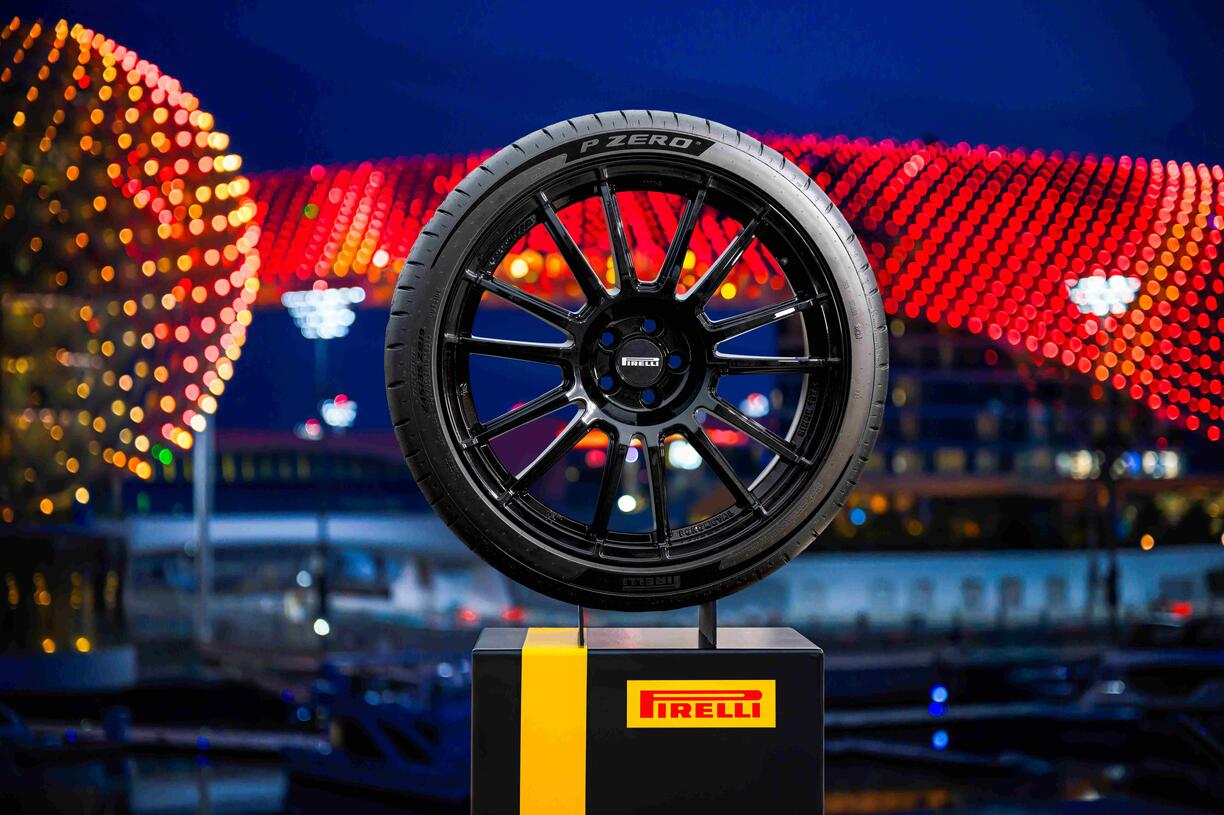
On the replacement market, we have more freedom. We work closely with marketing to understand the market, automotive trends, and what the DNA of a new product should be. If I had to answer directly, I would say it is driving feel that guides us. We are perceived as an emotional brand. If you drive a P Zero, you realise you are driving a P Zero. That’s our motto.
On the replacement market, we have more freedom. We work closely with marketing to understand the market, automotive trends, and what the DNA of a new product should be. If I had to answer directly, I would say it is driving feel that guides us. We are perceived as an emotional brand. If you drive a P Zero, you realise you are driving a P Zero. That’s our motto.
Turning feel into engineering decisions
When you translate something subjective, like steering feel or confidence, how do you turn that into a measurable design decision?
DM: Over the last five to ten years, we have made intense use of driving simulators. A driving simulator is an incredible tool to translate subjective feeling into objective performance. It allows us to simulate a tyre before physically building it, which shortens development.
More importantly, the simulator puts the human being in the loop as a sensor – the driver, the vehicle, and the tire as one system. You create a strong link between driver feeling and objective targets. It’s a very powerful tool.
More importantly, the simulator puts the human being in the loop as a sensor – the driver, the vehicle, and the tire as one system. You create a strong link between driver feeling and objective targets. It’s a very powerful tool.
How expectations have changed
From your perspective, how have the expectations of a good tyre changed over the last five or ten years?
DM: Our design criteria evolved into what we call eco-safety design. In short, we’re overcoming the traditional trade-off between sustainability and performance. Through virtualisation and materials research, we’ve kept our emotional DNA while becoming a reference in eco-friendliness.
Today’s tyres have much lower rolling resistance, reduced wear rates, and very high braking and safety performance — without sacrificing anything else. This is true for current products and even more for the next generation.
Today’s tyres have much lower rolling resistance, reduced wear rates, and very high braking and safety performance — without sacrificing anything else. This is true for current products and even more for the next generation.

The details drivers never see
Is there a specific design detail that most people miss or wouldn’t notice, but you focus on when producing tyres?
DM: There are many details the end user does not notice. For example, tires with more than 50 per cent sustainable materials only have a logo on the sidewall to tell you that, but you wouldn’t otherwise know.
Talking technically, details like bead design — the part connecting tyre and rim — are crucial for force transfer, yet invisible. Contact pressure distribution is another example: an uneven footprint causes wear and poor handling, but nobody sees it. Many people don’t even think about the footprint at all. The tread design also hides a lot of technology. Take all-season tires: the sipes you see are actually 3D-shaped. That shape allows traction on snow while locking under braking, acting like a solid tread. These details are invisible but critical.
Talking technically, details like bead design — the part connecting tyre and rim — are crucial for force transfer, yet invisible. Contact pressure distribution is another example: an uneven footprint causes wear and poor handling, but nobody sees it. Many people don’t even think about the footprint at all. The tread design also hides a lot of technology. Take all-season tires: the sipes you see are actually 3D-shaped. That shape allows traction on snow while locking under braking, acting like a solid tread. These details are invisible but critical.
Hitting the target every time
Do tyres ever end up being different from how you originally imagined during development?
DM: In recent years, we have been very accurate in achieving our targets. For original equipment tyres, we do not receive homologation* unless all targets are met. Internally, we never launch a product that doesn’t meet our standards.
We rely heavily on simulations to understand how design levers interact, followed by strong physical testing for validation. We don’t close the process unless we’re confident all targets are met. *Tyre homologation means that a specific tyre has been officially developed for a particular vehicle and approved by the car manufacturer for use on that model.
We rely heavily on simulations to understand how design levers interact, followed by strong physical testing for validation. We don’t close the process unless we’re confident all targets are met. *Tyre homologation means that a specific tyre has been officially developed for a particular vehicle and approved by the car manufacturer for use on that model.
Learning from the past
Is there a historic Pirelli tyre or project that still influences how you make product decisions today?
DM: Technically, things are very different now, but our mindset and legacy remain. When designing the latest P Zero, we kept in mind the driver feeling that defines it. The same applies to Cinturato.
Some technical concepts also come from the past — rally experience, Formula One, and even early projects like the Lancia S4. Materials and ideas often come from motorsport and are transferred to road products.
Some technical concepts also come from the past — rally experience, Formula One, and even early projects like the Lancia S4. Materials and ideas often come from motorsport and are transferred to road products.


The hardest compromise
What is the hardest compromise you have to make when designing a high-performance road tyre?
DM: Honestly, cost. High-performance tires require high-quality materials and precise processes. But performance means safety, and we don’t compromise on that. We even produce high-performance tires with over 50% sustainable materials, like the P Zero Trofeo RS for the McLaren W1.
We keep an eye on cost to make products accessible — not only for supercar owners.
We keep an eye on cost to make products accessible — not only for supercar owners.
Benefits drivers don’t realise
What capability do modern tyres have that most drivers don’t realise they are benefiting from?
DM: Rolling resistance is about half what it was ten years ago, but users don’t really feel that directly. What they do feel is better silence, better braking, and all-season performance. The energy savings are there, even if people don’t have a direct comparison.
Sustainability built in
When you look at sustainability, how has that changed the way you design a tyre?
DM: It hasn’t changed, it’s built in. Sustainability is part of our core values, embedded in materials development, target setting, rolling resistance reduction, and production. Most factories now run on 100% sustainable electricity. It’s part of the process.
The digital future of tyres
Looking ahead, what excites you most as a product creator?
DM: Connectivity. Electrification opened the door to digital integration. With Cyber Tyre technology, tires can communicate with the vehicle and infrastructure, transmitting data for safety and road condition monitoring. The tyre is becoming digital, and that’s very exciting.
Designing for emotion
Finally, emotionally speaking, what kind of journey do you want to take drivers on over the next ten years?
DM: It depends on the product. Some drivers want a racing-style connection to the road, others want comfort and isolation. Trofeo RS aims to deliver racing-style road feel, while Cinturato focuses on comfort — like driving on a cushion. That is why we have a diversified product range. Each product line has a specific emotional mission.