Farizon SV vs Vauxhall Vivaro
The all-electric Farizon SV goes up against the stalwart Vauxhall Vivaro in our latest van versus van tussle
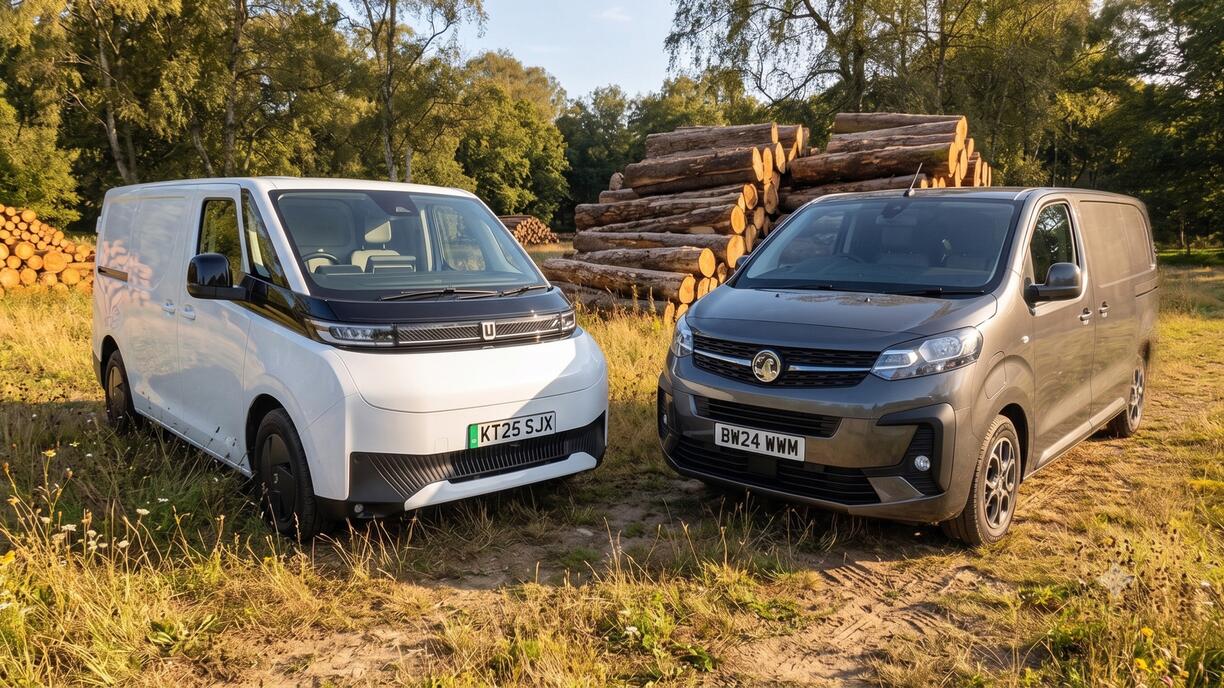

Words by: Tom Roberts
Published on 7 July 2026 | 0 min read
Key stats at a glance
While both vehicles hit the one-tonne payload ‘sweet spot’, for want of a better phrase, they both approach dimensions and powertrains completely differently. Check out the table below:
Feature | Farizon SV | Vauxhall Vivaro |
Powertrain | Electric | Diesel and electric |
Price (Ex VAT) | £40-50K | £30-40K |
Load volume | Up to 13 cubic metres | Up to 6.6 cubic metres |
Max payload | Up to 1,400 kg | Up to 1,335 kg |
Warranty | Four years / 120,000 miles | Three years / 100,000 miles |
Cargo and practicality


The Farizon SV was built from the ground up as an EV and therefore isn't an existing van platform converted to carry an electric powertrain – it was built to be this. Its load space scales from the standard L1H1 up through its height and lengths options to provide an expansive maximum load volume of 13 cubic metres, effectively competing with the Ford Transit large van!
The Vauxhall Vivaro, meanwhile, is slightly tighter but takes an ‘optimised’ approach to using its internal space to provide a maximum load volume of 6.6 cubic metres – very in line with conventional medium vans. However, the van’s single roof height limits internal load height to just under 1.4 metres, BUT can have two side sliding doors that make the load space incredibly accessible.
Interior tech and comfort


The Farizon SV’s cabin looks modern, particularly because of a striking orange-gold dashboard bar and its large infotainment screen. Standard kit level is high because there’s only one trim level. However, the dashboard plastics feel slightly fragile, its cabin storage cubbies are surprisingly small, and while Apple CarPlay worked smoothly from day one Android users were left dealing with a clunky screen mirroring app before Farizon fixed this with an over-the-air update.
The Vauxhall Vivaro has a cabin that feels substantially upgraded… that’s the impact of a good facelift across all Stellantis medium vans. Both Apple CarPlay and Android Auto work seamlessly on its 10-inch touch-screen, paired with a matching digital driver's information cluster behind the steering wheel. The fabrics on the seats are hardy and the plastics tough, and it feels like a highly functional and storage-filled space designed for a working vehicle. The only ‘watchout’ is the central touch-screen faces straight into the cabin rather than being angled toward the driver, which other medium vans have long since addressed with dashboard redesigns.
Ride, handling and performance


Driving the Farizon SV is a glimpse into the future. Its drive-by-wire tech means there’s no mechanical link between you and the steering or brakes. Farizon has weighted the system well so it feels ‘normal’ to drive… though we did notice a microscopic delay in pedal response from time to time. 200 miles of range on a full charge is easily achievable even in sub-zero temperatures, leaving you with minimal range anxiety to deal with. The suspension does feel quite bouncy when unladen, but when you’ve got some weight in the back it all settles down... a bit.
Meanwhile, the Vauxhall Vivaro in diesel form packs the Stellantis 2.0-litre diesel engine under the bonnet, and It feels robust while achieving around 34–38 mpg. In electric format, the Vivaro feels smooth and reassuringly planted to the road. Regardless of powertrain, the Vivaro corners well for its size and its suspension also settles comfortably with some weight on it. Just on the diesel manuals, you do have to get used to the spring-loaded clutch pedal which will need a purposeful press.
Safety and security


The Farizon SV is packed with standard tech thanks to its well-equipped single trim level. It has a 360-degree camera, lane-keeping assist, emergency braking, and a sensor package in the load space to prevent you from accidentally overloading the vehicle. The only thing to note is the driver alerts are highly sensitive and can become intrusive with their loud bings and bongs.
The Vauxhall Vivaro leans heavily into visibility tech alongside its good standard safety equipment list. You get things like intelligent speed assist and blind-spot detection, and you can spec the vehicle to include a digital rear-view mirror that projects a live camera feed onto a screen that looks like a rear-view mirror completely bypassing the solid steel bulkhead blocking your rear view.
It’s worth noting that both vans have achieved five-star Euro NCAP safety ratings.
The verdict


Choosing between these two comes down to the inevitable factors: your budget, charging options and your appetite for innovation. You’ll buy the Farizon SV if you want to drive a ground-up electric van with massive maximum load volumes and a strong four-year/120,000-mile warranty. It is more expensive up front but it’s a great zero emission van that should work for most businesses. And you’ll buy the Vauxhall Vivaro if you’d prefer a more normal medium van offering a familiar and highly-accessible load space, predictable diesel reliability or solid electric range (depending on your choice of powertrain) and a highly functional and durable interior.
Like we said… it’ll come down to your appetite.