Autotrader e-bike glossary
E-bike curious? Swot up on all the jargon and tech you might need to know before taking the plunge!
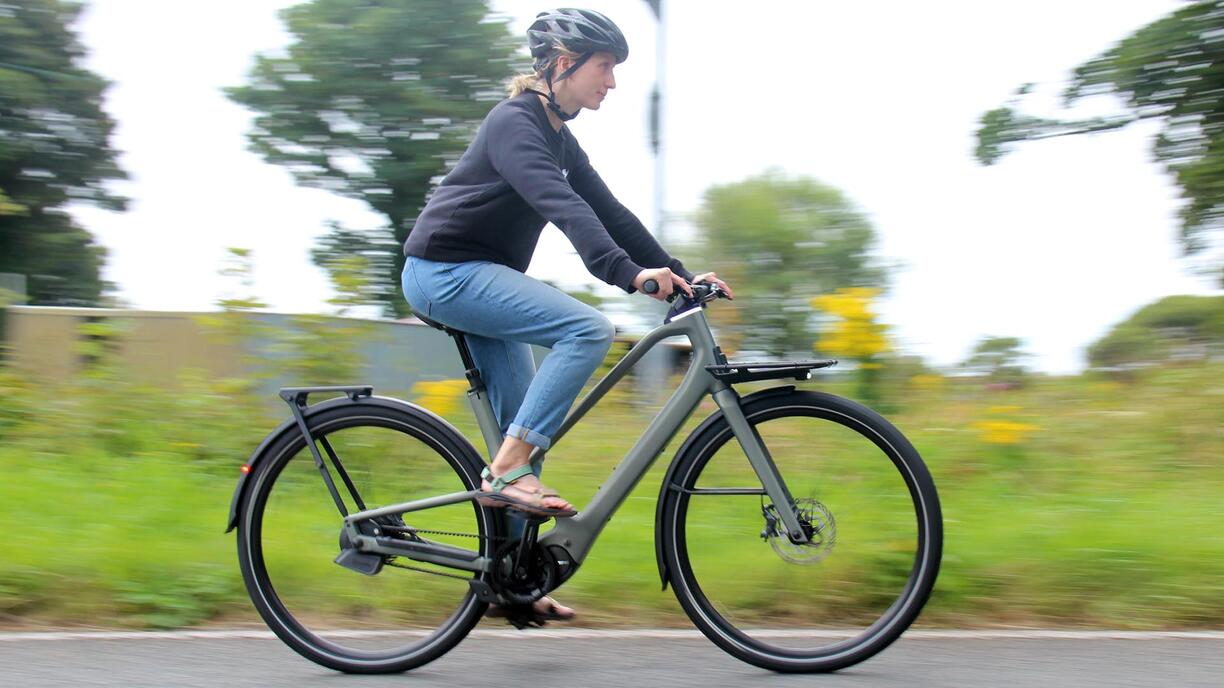

Electric bike terminology can be a bit overwhelming. There are so many parts to a bicycle, and that’s before adding in the complexity of a motor and battery. And every year there seems to be a new standard, a new device or type of bike, and it can be difficult to keep up. So, here’s our jargon buster to help you understand the basics of bikes and make buying one seem a little less scary. Divided by category, here are some of the terms you may encounter when reading our reviews or shopping for an e-bike. And what they actually mean! Skip to:
Types of e-bike and what they’re for
Batteries, motors and drive systems
Sizing, suspension, frames and geometry


Types of e-bike and what they’re for

Analogue bike: An ‘analogue’ or unassisted bike is your traditional pedal cycle, which comes without a motor, or any sort of electrical assistance.
Road bike: Typically comes with drop handlebars, narrower tyres and is best suited for riding on tarmac.
Gravel bike: Designed for gravel roads, fire tracks and bridleways, gravel bikes come with either flat or drop bars and more of a road bike geometry. They can take wider tyres than road bikes, and often come with mounting points for bags and racks.
Mountain bike: A bike is built for off-road and trail riding. They usually come with suspension, either at the front or at both ends and are designed with off-road riding in mind.
City bike: A city bike is, as the name suggests, one designed to be ridden in urban areas. It often comes with a step-through or low-step frame design, and the possibility of carrying luggage on racks.
Hybrid bike: This is the kind of bicycle that can be ridden on both asphalt and off-road. Typically, it comes with flat bars and wider, knobblier tyres than a city bike and a suspension fork.
Trail bike: A type of mountain bike, a trail bike strikes a balance between weight, suspension travel and speed and is built for all-round riding Enduro bike: These sit between trail bikes and downhill bikes, and built to be pedalled across tough terrain but can also be ridden uphill without too much trouble.
Downhill bike: Designed to be ridden downhill, unless you’re a bit of a sadist and want to try pedalling it uphill, a downhill bike is a long-travel mountain bike for the toughest tracks.
Hardtail: A type of mountain bike (or hybrid) with front suspension forks but a more conventional ‘rigid’ frame, hence the name.


Batteries, motors and drive systems

Derailleur/mech: A derailleur is the mechanism pushing the chain into different gears. The front derailleur (if your bike has one) switches between the chainrings, whereas the rear derailleur (or rear mech) switches between cogs on the cassette. Which is to say, the cluster of cogs on the back wheel.
Hub gears: Rather than using an external drivetrain, hub gears are housed inside the centre of the wheel. They typically use enclosed planetary gears to adjust the resistance.
Hub motor: Typically found on urban, road and some gravel electric bikes, as the name suggests hub motors are built into the hub of a wheel. It works by spinning the wheel which propels the bike forwards.
Belt drive: An alternative to a more traditional metal chain, a belt drive is a reinforced polymer belt with flexible teeth. It connects to the crankset and a cog at the rear wheel, and is often paired with hub gears. Benefits include reduced maintenance and less chance of oil on your clothes!
Frame/mid-motor: An e-bike where the electric motor is integrated into the frame, directly assisting the cranks and chainring and generally more efficient and powerful than a hub motor.
Battery size: Battery size is measured in Watt-hours, or Wh. E-bike batteries typically range from 250Wh for folding or more casual e-bikes, to over 800Wh for mountain bikes.


Sizing, suspension, frames and geometry

Bottom bracket: The lower section of the frame holding the axle and bearings on which the cranks and pedals turn - on some e-bikes this is integrated into the motor and drive unit to assist your pedalling.
Headset: The bearing assembly that connects the fork to the frame and on which the handlebars turn. It generally comprises two bearings - upper and lower.
Toptube: More traditionally known as the ‘crossbar’ this is the tube connecting the top of the headtube to the seat tube. Depending on the type of bike frame, it may be more sloped, and on ‘step-through’ frames, it will be angled much lower so you can lift your inside leg over the bike rather than have to swing it over the back.
Chainstay: A bike’s chainstay is the frame tube that runs parallel to the bike’s chain. There are two, one on each side of the rear wheel and they work to connect the bottom bracket to the rear dropouts.
Downtube: The downtube is the part of the frame that connects the head tube to the bottom bracket. Standover: A bike’s standover, or standover height, is the distance between the ground and the highest part of the bike’s top tube.
Reach: A bicycle’s reach is the measurement between the centre of the bottom bracket and the centre of the head tube. It’s an important measurement to know how stretched out a rider may be.
Suspension fork: Typically a telescopic front fork with some manner of shock-absorbing mechanism within to smooth out rough terrain or road surfaces for improved comfort and control.
Suspension travel: This is how much travel the fork and/or shock has. It’s measured in millimetres and the longer the travel, the more the bike can handle rough terrain.
Suspension adjustment: When buying a bike with suspension, it’s key to set it up to your weight, riding style and the type of terrain you’ll be riding. There are three main types of settings to adjust, comprising sag, rebound damping and compression damping. And if that sounds complicated … it can be!
Geometry/frame angles: This relates to the angles and lengths of a bicycle’s frame tubes, which in turn influences comfort, fit and handling. Adjustable geometry: Typically seen on full-suspension mountain bikes, this feature enables riders to frame adjust angles, ride height and other parameters according to their tastes and type of terrain they’ll be riding.


Wheels, tyres, brakes and controls

Handlebar: Alongside being the location of the brake levers and gear shifters, a handlebar is the steering mechanism that you use to change direction on the bike. Stem: The bit connecting the bike’s handlebar to the fork and frame.
Flat/riser bars: Horizontal bars generally found on mountain and city bikes offering a more upright riding position and placing your hands further apart for increased control. These can be – as the name suggests – flat or with varying degrees of upward or rearward sweep according to the bike’s purpose or style.
Bar ends: Sometimes fitted into the ends of flat handlebars, these offer a different hand position for cruising or climbing.
Integrated cables: Cables and hydraulic hoses connect the controls on the handlebars to gears, brakes and similar and, on many modern bikes, are hidden within the frame. This looks neat but can be fiddly when it comes to maintenance.
Disc brakes: Much like car and motorcycle brakes, disc brakes use pads and rotors attached to the wheel hub. There are two types: mechanical, which are found on lower-end bicycles, and hydraulic (or hydraulically assisted), which are more powerful.
Rim brakes: A more traditional bicycle braking system, using rubber blocks squeezed against the wheel rim via a cable to a lever on the handlebar.
Wheel sizes: Generally speaking bigger wheels are faster, while small wheels are more suited to kids’ bikes or folding bikes. On road or city bikes these are typically measured in metric sizes, ‘700C’ the most common. Mountain bikes, BMXs and kids’ bikes often use imperial measurements, with 27.5-inch (also listed as 650B) and, more recently, 29-inch now the most common. MX or ‘mullet’ set-ups have mixed sizing, with a bigger wheel at the front than at the back.
Tubeless tyres: Fans of inner tubes, look away now! Tubeless tyres use an airtight seal against the wheel rim rather than an inner tube to inflate the tyre. To keep punctures at bay, liquid sealant is poured into the tyre which seals and protects against punctures. They can be a faff to set up and require more upkeep but have some significant performance advantages.
Quick-release wheels/bolt-through axles: The axle is the metal rod the wheel spins on and connecting it to the frame or forks. This can be secured by bolts on the end or a ‘quick-release’ lever, while high-performance road and mountain bikes use various types of ‘bolt-through’ configurations threading directly into the frame or forks.

