One month with a… Kia PV5 Cargo
From emptying lock-ups, to driving to the Commercial Vehicle Show and more, Tom’s tested the Kia PV5 Cargo in the real world – want to know how it did?
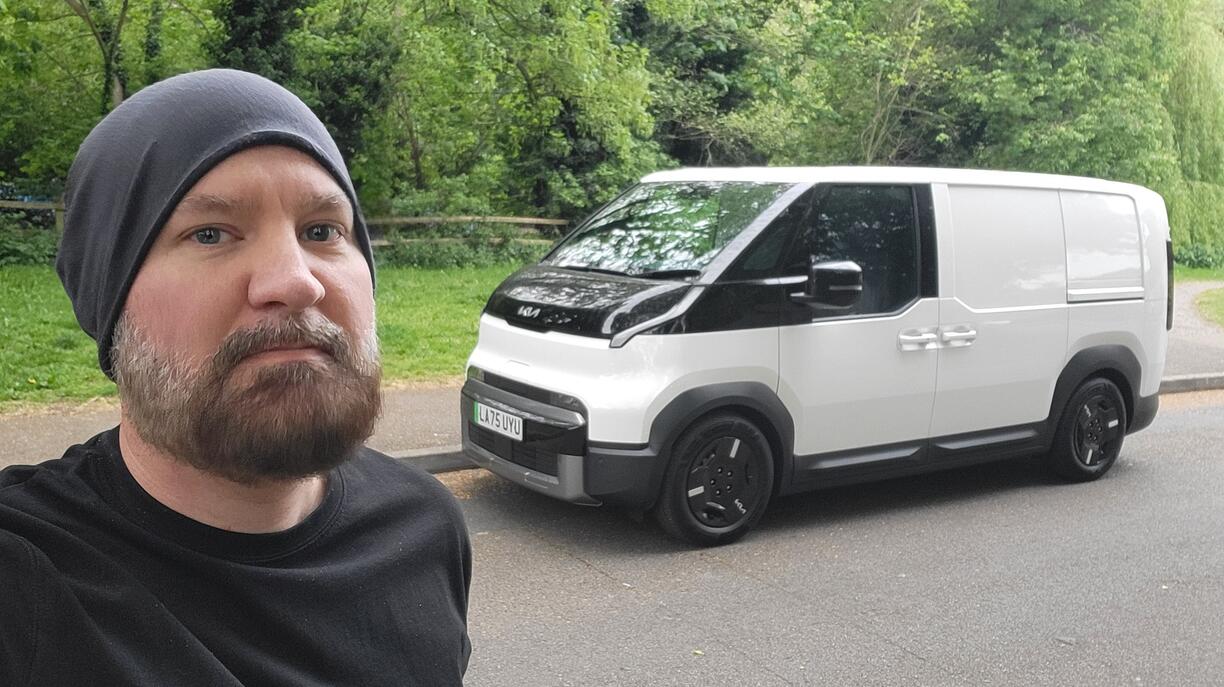

Words by: Tom Roberts
Published on 28 April 2026 | 0 min read
Small electric vans come in all sorts of shapes and sizes, but it’s hard to name one in recent years that’s rocked the market as much as Kia’s PV5 has. Available as an MPV in its Passenger guise and as a panel van in its Cargo format, the PV5 was born from Kia apparently deciding one day that it had proved itself as an electric car manufacturer and the next logical challenge was making a van. The Passenger version is essentially a big electric car (something Kia knows how to make), while the Cargo version is a small working vehicle (something Kia definitely didn’t know how to make).
While the Kia PV5 Cargo is a near-perfect small electric van priced so competitively it undercuts some diesel vans, there are some compromises. For example, the driving position is high, yet visibility is limited at the peripherals by a double A pillar. The load space is practical, but the rear door’s top latch housing sticks out and I’ve bumped my head on it more times than I can count. And the maximum range of nearly 260 miles is only available on models with the biggest battery fitted. However, the tech and spec on all trims is high, with things like reversing cameras and parking sensors included from entry level up. The cabin is a comfortable place to spend time while you enjoy a very smooth drive. It boasts a five-star Euro NCAP safety rating and a seven-year/100,000-mile warranty. It also sports a futuristic look and feel with sweeping lines, interesting headlight design and cool wheels. In short, it offers a lot and definitely has a few of the established van brands nervously looking over their shoulders.
I’ll admit to being skeptical when the PV5 was first revealed, but have a read of my reviews linked above and you’ll see I rate it highly. For what it’s worth, I’ve been reviewing vans for nearly a decade and am struck by how good a van Kia has made on its first go. And I’m not alone – the PV5 has scooped countless awards and even set a Guiness World Record – but I’ve wanted to give it some real-world tests of my own since the first time I drove the PV5 Cargo in Oslo. So I have.
Skip to:

What is it?
Who's testing it?
We like:
- Reliable 250-mile-plus range - Striking design inside and out
We don't like:
- Banging our head on the rear door’s top latch - Roof aerial scraping on car park height limiters
Part one - Lock-up emptying and Commercial Vehicle Show

The load space is accessible by two rear doors and two side sliding doors, which made loading and unloading an absolute piece of cake. It didn’t matter how I parked or where, we could access our cargo from any side of the van. About the only quirks Kia’s first panel van has are a very slim load floor between the rear wheel arches and the rear door’s top latches hanging into the opening. The thinner portion of the load floor is just a minor quibble, but I bumped my head on the latches so many times despite knowing they were there – it felt like I had to stoop lower each time and STILL have a 50/50 chance of hitting my head. The side doors were my preferred access point and they’re wide enough to get most items in and out. Our lock-up was located in an industrial estate a few miles away from the new house, and allowed a short test of the van’s handling on roads packed with other commercial vehicles. The PV5 Cargo is small and agile, able to squeeze into most parking spaces and down even the tightest utility roads in and around warehouses. And my word, this van draws interest! I can’t count the number of people who came up to have a look at it while I was working at the lock-up. Everyone I spoke to (the vast majority being tradespeople collecting materials from their own lock-ups) made a comment on how great it looks, they all liked the cabin and most were surprised at how big the load space is for a van of its size. This van helped me move the last items into my new home, so it’s always going to have its place in my memories. The fact I was able to do it in two loads was a bonus. The only annoyance I encountered was the roof aerial fin scraping on the car park's height restriction bar... something I'm pleased to have discovered is being fixed in the updated version coming out next year. The next significant test was my journey to and from Birmingham for the 2026 Commercial Vehicle Show – a 180-mile round trip. The vehicle’s potential 260-mile maximum range is reliable and I didn’t need to stop for a charge on either journey. I started with a full battery indicating 248 miles of range and ended my journey home with 89 miles still left in the ‘tank’. Most of the journey is on the M1 and M6 motorways, and I expected less usable range due to the sustained higher-speed driving. Here’s the maths. The PV5 Cargo’s total battery size is 71.2 kWh, we started at 100 per cent charge with 248 miles of available range, and used 77 per cent of that charge to drive 180 miles. Miles driven divided by charge used (54.82 kWh) gives us the final score of 3.28 miles per kWh, which is pretty good going at sustained speeds of 60 mph for a couple of hours each way with the aircon on. When I got home it went straight onto the home charger and was back to 100 per cent charge for the princely sum of ‘significantly less than a fiver’ thanks to my home charging tariff. Most importantly, it was a comfortable drive, smooth and quiet, and I experienced no back or neck pain… a testament to the van’s good ergonomic design. Roll on part two.

