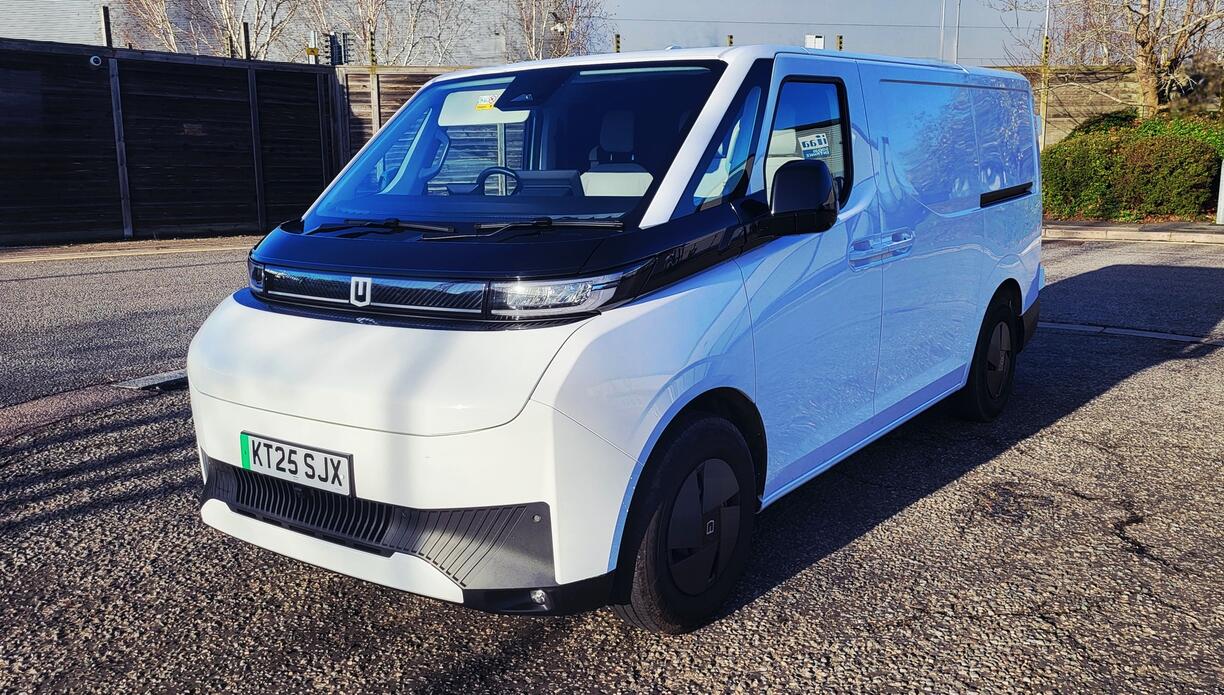
Electric vans built from the ground up to be electric vans, not just a retrofitted diesel platform, don’t come along very often. And then the Farizon SV and Kia PV5 Cargo showed up in the same year. While the PV5 Cargo sits somewhere between small and medium vans in size, the Farizon SV sits somewhere between medium and large vans providing one-tonne-plus payloads, a large cabin for three people, decent ranges and flexible load volumes. We first drove the SV at UTAC Millbrook in 2025 and were impressed by its handling on the track, but now it’s with us for a real test on UK roads. It features interesting drive-by-wire technology, making it something of a first in the van world, with no physical link (beyond wires) between the driver controls for steering, braking or acceleration and the mechanisms that carry them out. The L1H1 model we reviewed is more akin to a Ford Transit Custom in size, while the longer and higher-roofed models offer load volumes comparable to a Ford Transit. Its only glaring downside (on paper) is its high pricing of £40-50K (excluding VAT), pegging it above vans like the Ford E-Transit Custom. That said, the four-year warranty, high equipment and safety levels, and a striking exterior should draw a crowd. Our time with the SV showed it to be a well-equipped vehicle with a high safety specification, relatively good drive quality and functional cargo space. Ultimately, any company willing to give their van a name like ‘Super Van’ (yes, that’s what ‘SV’ stands for) clearly has confidence.
Depending on the size SV you choose, load volumes range from over seven to 13 cubic metres… putting it in an odd middle ground between medium and large vans. We were loaned an L1H1 (shortest length, lowest roof) model, but there are three lengths and roof heights to choose from meaning the van can be as long as six metres and as high as 2.5 metres if you want it to be. There is only one trim level, so no matter which SV is chosen you get everything. Payloads range from just over one tonne to nearly 1.4 tonnes depending on the vehicle size and battery chosen. Rear access is provided by two 50/50 split doors (180-degree-opening as standard, 270-degree-opening as a paid option) and one sliding door on the passenger’s side… and this is where an interesting feature lies. There’s no B-pillar on this side of the vehicle, meaning if you open the passenger door and side door there’s just the bare side of the bulkhead. The benefit is a wider opening for side loading, but the compromise is the passenger’s seat belt being mounted directly on the passenger door itself. The SV is also capable of towing up to two tonnes on a braked trailer and up to 750 kg on an unbraked trailer. The load space also has a 240V plug socket for use with power tools or any other vehicle-to-load needs you might have. There’s little to fault in terms of practicality and cargo carrying. Being slightly larger than normal medium vans means it offers larger volumes and payloads, so the fact it takes up more room on the road and in parking spaces is something to keep in mind… it’s not a deal breaker.
Expert rating: 4/5
Interior
At first glance, the SV’s cabin looks spacious and modern with its single driver seat and dual passenger bench seat. The design is broken up pleasantly by an orange-gold plastic bar running across the middle of the dashboard, which is nice. However, material quality on the dashboard is not brilliant, with the drinks holder drawer and flip-out compartment on the centre console feeling like they might break. Storage also isn’t great with some door cubbies that aren’t quite big enough for a big bottle of water and no dash-mounted cup holders at all. The glovebox is also small. This is undoubtedly because Farizon wanted more space for people and it’s a trade-off you’ll have to experience for yourself before signing on the line. The infotainment system is quite good, the screen being big and clear, but connectivity and option searches are fiddly. While Apple CarPlay is included Android Auto is not, and the CarBitLink app provided so you can connect an Android phone was awful. However, the seats are comfortable and the driving position is high. But, and it is a big but, everything works and everything fits with every shortcoming feels like it’s been made to benefit something else. Frankly, we can think of worse vans to spend time in.
Expert rating: 3/5
Running costs
Its competitive all-electric range is dictated by battery size starting at 177 miles and maxing out at 247. The cost of the vehicle will depend on which battery and vehicle size you choose with that combination also impacting on your maximum range. We found the regenerative braking modes, even at their lower settings, were good at putting miles back into the battery and we didn’t feel much in the way of range anxiety. Charging speeds are comparable to most other electric vans allowing for a rapid charge from 15-80 percent in around 40 minutes. Charging at home will only cost as much as your home energy tariff dictates, while charging in public will be more expensive. The higher £40K-plus (ex VAT) acquisition costs can also be broken down by finding a good finance or lease deal. Finally, service intervals are just 12 months compared to alternative vehicles and their 24-month intervals, so that’s one thing to factor into your thinking.
Expert rating: 3/5
Reliability
It’s way too early to comment on long-term reliability, but the four-year / 120,000-mile overall warranty speaks for itself, it’s also worth noting that this is a Geely vehicle and the company already has a big service and parts presence in the UK. While not as long as some, such as Kia’s seven-year warranties, Farizon’s warranty is a clear indication that it wants drivers to feel confident while driving the SV. It also helps that the batteries are covered by their own eight-year / 120,000-mile warranty. For fleets and smaller businesses alike, a warranty term that exceeds the ever-popular three-year lease term is always welcome.
Expert rating: 3/5
Performance
The SV performs quite well as a load-carrying electric panel van. We were most impressed by how reliable the range readouts were. We expect range loss in cold weather, but saw around 200 miles on a full charge in sub-zero temperatures. The regenerative braking also helped keep the range up even while we ran the heaters inside the cabin. Range aside, the SV has enough space in the cabin to be comfortable for three people and a sizable load space for cargo. The side door’s lack of B-pillar makes loading from the side easier than in most other vans, although the passenger seat belt mounted on the door is a bit odd… just remember to unclip the belt before opening the door. We learned that the hard way.
Expert rating: 3/5
Ride and handling
You’d never guess this was a drive-by-wire van. Through clever use of tech, Farizon has weighted the steering and pedal controls to make it feel… well… normal to drive. There is a slight (VERY slight) lag between pressing a pedal and its response, but you get used to it all very quickly, and there are safety redundancies in place should the drive-by-wire system fail. The regenerative braking settings are about the only quibble we have. The lowest is still pretty harsh, with the highest setting providing a single-pedal driving experience with just a bit too much lurching to a halt for our taste. However, they do add good mileage back into the battery… another compromise, but perhaps not an unwelcome one. It does make an artificial floaty noise below 20 mph, but that’s good for pedestrians to know you’re there, and at higher speeds the wind noise can be a bit louder than you’d expect. The suspension can feel a bit too bouncy when driving unladen, but 350 kg in the back stiffens everything up and reduces that feeling significantly. We’d recommend a serious test drive before you buy one.
Expert rating: 3/5
Safety
The SV is one of the safest vans on the road thanks to its suite of safety systems earning it a five-star Euro NCAP rating. Standard equipment on all models includes driver monitoring, speed limiting, lane-keeping assist, emergency braking, 360-degree camera, parking sensors, hill-descent control and lane-change assist. It also has a sensor package in the load space to stop you from overloading it. The driver alerts are very intrusive and annoying, but it’s a good show from a new van manufacturer to pack a van with so much safety tech.
Expert rating: 5/5
Equipment
One thing the SV offers is significant amounts of equipment. You get everything on every model… the reversing camera, sensor packages, safety tech, a big infotainment screen, a bench seat, and more. Take a look through the other sections of this review and you’ll see what we mean. There’s little to want above what’s given. Perhaps the only quibble would be not putting 270-degree-opening rear doors on the van as standard.
Expert rating: 4/5
Why buy?
You’ll buy the Farizon SV because you like how it looks, its many different size options and high equipment levels. Yes, it’s more expensive than some electric vans out there, but you do get a lot for the money. But we all know pricing is key, and for some it might cost too much when diesel vans and smaller electric vans undercut it so significantly. We urge people to test drive the SV before making a decision, it’s the only way to be sure it will work for you.