Fiat 500
New from £12,245 / £214 p/m

About the Fiat 500
- Cute, cheeky looks
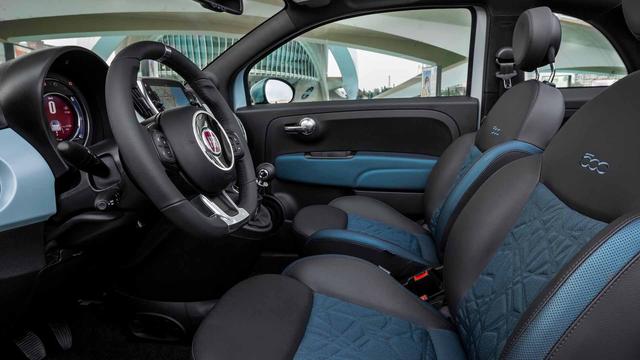
- Retro-styled interior
- Low running costs
La dolce vita on four wheels. Full of style and verve, passion and loving detail, this is the car for our times. It’s got to be the fully electric 500e: you’re not going to drive to Scotland in this dinky package anyway, so the decent range of 199 miles is molto bene. Has one of the most carefully, stunningly designed interiors out there with lots of sustainable materials. Makes us want to wear polka dots and buy flowers at the market.
Is the Fiat 500 Hatchback a good car?
Read our expert review

Words by: Ivan Aistrop

Additional words by: Auto Trader
"The Fiat 500 is getting on a bit now but has been updated with a new 'mild hybrid' engine on all models other than those with the 'Dualogic' automatic gearbox. The new engine is impressively refined and uses a fancier start-stop system to help save a bit of fuel around town but you'll have to wait a while yet for the full electric 500. As it stands the 500 trades heavily on nostalgia and still looks cute but feels somewhat crude compared with newer rivals. Click here for our Expert Review of the brand-new, all-electric version of the Fiat 500."
Read the review by category
Running costs for a Fiat 500
3/5
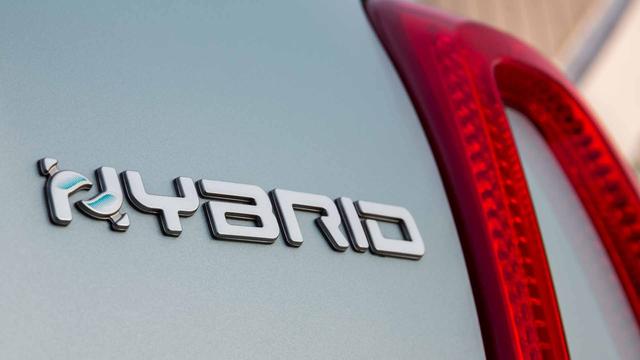
Making hybrids viable in the cost-conscious city car segment is a tough challenge for manufacturers but Fiat has successfully grasped the nettle and breathed fresh life into its long-lived 500 with an electric kick. It isn’t a full hybrid like a Prius, rather it’s small electric motor combined with a new 1.0-litre petrol for a small power boost and more sophisticated start-stop system to save fuel in city driving. It’s broadly equivalent to the outgoing 1.2 for power but Fiat claims CO2 reductions of nearly a fifth and says the small extra cost of the system will repay itself in savings on tax and petrol within the first year of ownership. The purchase price is competitive too, being a few hundred pounds more than a Toyota Aygo but comparable with a VW Up while better on fuel and emissions. Bargain hunters, meanwhile, can seek deals on the remaining stock of the outgoing 1.2 and TwinAir versions. If you're serious about saving on running costs you may be better off with the all-electric Fiat 500e, though. It looks similar but is, in fact, an all-new car - click here for our full Expert Review.
Reliability of a Fiat 500
3/5
Fiat currently holds a solid mid-table position in the manufacturer rankings of Warranty Direct’s Reliability Index, and as an individual model, the 500 fares pretty well, too. It’s worth noting, though, that almost half the faults reported centre around axle and suspension problems. The car comes with a three-year/unlimited mileage warranty, which is competitive by class standards, although some rivals – like the Hyundai i10 and Kia Picanto – are a lot more generous.
Safety for a Fiat 500
3/5
Standard safety kit includes front, side and curtain airbags, plus another to protect the driver’s knees. Stability control, hill start assist and tyre pressure monitoring are also standard. All but the most basic trim get fog lights and parking sensors too. But, compared with more up to date alternatives like the Hyundai i10, there’s no escaping the Fiat 500 is showing its age and it lacks the autonomous emergency braking, blind spot warnings and other active safety features buyers now take for granted.
How comfortable is the Fiat 500
2/5
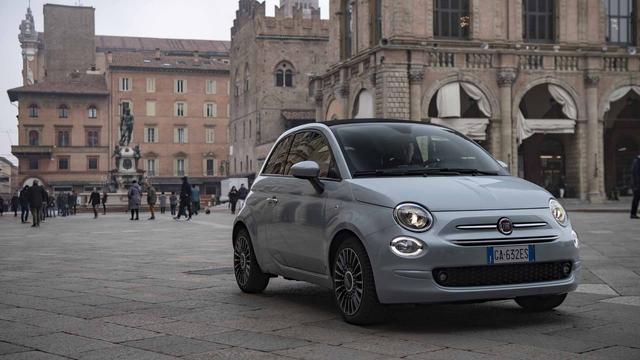
True, the streets of Bologna where we tested the new 500 Hybrid are pretty terrible with big potholes and lots of cobbled sections but, from previous experience, the ride has never been a strong point on any surface. Put simply it feels crude and hard work on the urban streets it should shine on, while lacking refinement beyond city limits. It’s not helped by a driving position so high it feels like you’re sitting on a bar stool, no reach adjustment in the wheel and seat cushions too short for longer-legged drivers. The steering is also unnaturally light while the hybrid system’s regeneration means inconsistent braking that can be hard to judge. For all that it’s still a fun car to zip around in, the character counting for a lot. Obviously, you can’t expect a city car to have tons of space but, even by the standards of its class, the 500’s cabin is pretty cramped and the lack of a five-door option is limiting. Some of the ergonomics are pretty bad too, the fact you can easily mistake the seat height adjuster for the handbrake just one example. In summary the 500 still looks chic but there’s no escaping the style comes before substance, both in the way it goes and how comfortable it is to be in.
Features of the Fiat 500
3/5
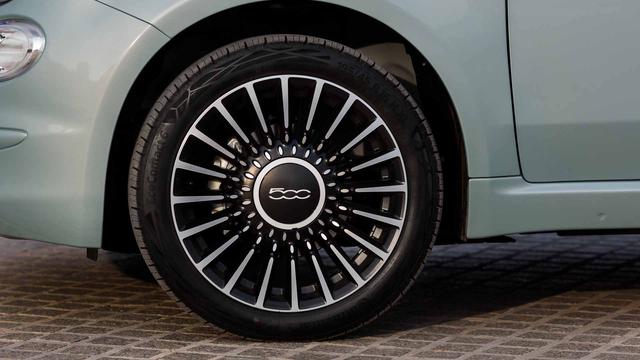
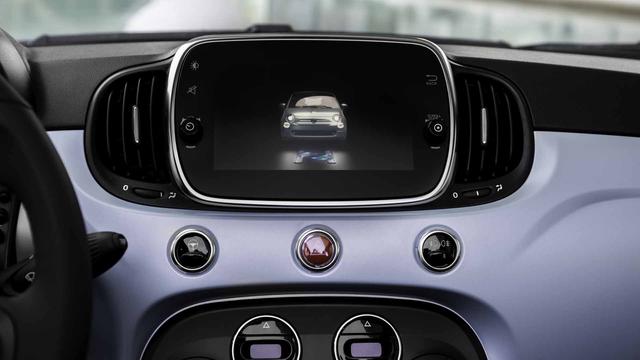
The 500 has been on sale for a long time now and Fiat is constantly tweaking the model line-up and offering new options and special editions to keep it fresh. Customisation of paint, interior trim, wheels and decals are a big part of the 500 offer too and there’s a bewildering array of choice here. One consistent theme is that the most basic model in the range really is that, but you could argue that’s true to the original 500’s minimalist roots. Realistically though you’re likely to want the air conditioning, DAB, Bluetooth, parking sensors and other modern conveniences you get as you move up the trim levels. A decent sized touchscreen is standard on all but the most basic model, some versions including navigation too but all featuring Apple CarPlay and Android Auto if you’d rather use phone-based apps instead.
Power for a Fiat 500
3/5
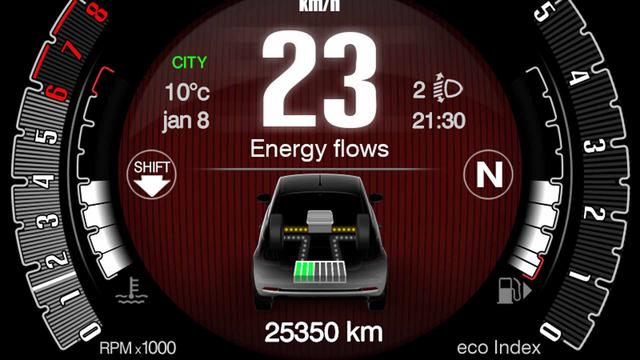
We were fans of the basic 1.2-litre this new hybrid model replaces and, for all the downsizing and fancy tech, the power output and performance are comparable. The five-speed gearbox on the outgoing model is now a six-speed for improved flexibility and Dualogic branded automatic is still available but only with the old engine. For all the hybrid hype the 500 is fundamentally a regular petrol-powered city car with a fancy starter motor, though the new engine is commendably smooth and what power there is can be appreciated throughout the rev range. You need to apply yourself if you’re to fully realise the benefits of the hybrid system, however, the ‘sailing’ function only working if you shift out of gear and coast up to the lights in neutral. If you do that it’ll cut the petrol engine below 20mph, only restarting it when you dip the clutch to select first and pull away. How many drivers will be bothered to go to the effort is open to question. You may still find versions of the 500 available with the previous model year engines, these comprising the non-hybrid 1.2-litre with 69 horsepower and the 85 horsepower version of Fiat’s neat two-cylinder turbocharged TwinAir. The latter is distinctive and pulls more strongly than the 1.2 but isn’t the smoothest or most refined engine in the world. Running costs for both are pretty similar, at least by official numbers. You can get the 1.2 with the Dualogic automatic gearbox too, though this isn’t the slickest system of its kind and it suffers on fuel consumption and emissions. There is also now a brand-new electric Fiat 500, which is based on a brand new platform. Click here for our Expert Review. Meanwhile, the feisty Abarth versions remain on sale but these are best considered a standalone models aimed at a more enthusiast crowd.
Lease deals
These deals are based on terms of 8,000 miles, for a 36 month lease with a 6 months initial payment.
Standard equipment
Expect the following equipment on your Fiat 500 Hatchback. This may vary between trim levels.
Other vehicles in the 500 family
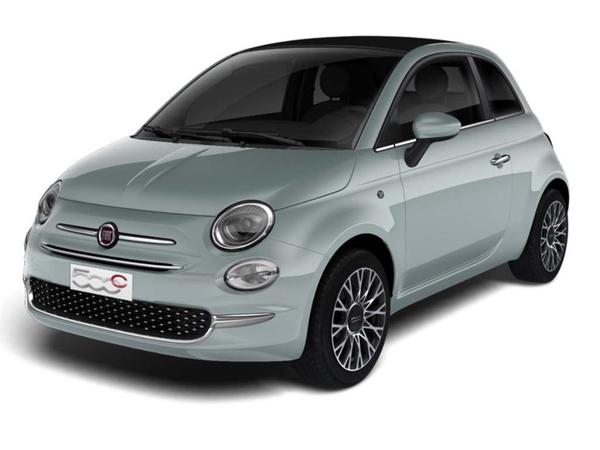
500C Convertible
Cute, cheeky looks
Retro-styled interior
New mild hybrid engine
Related articles and reviews
Fiat 500 Hatchback (2020 - ) review
Read all about the new Fiat 500, a 'mild hybrid' boost for improved fuel consumption and emissions helping to keep the retro-themed favourite relevant against fresher rivals
Fiat 500 hatchback (2008 – ) expert review
Read the Fiat 500 hatchback (2008 - ) car review by Auto Trader's motoring experts, covering price, specification, running costs, practicality, safety and how it drives.
Your questions answered
Monthly rentals ('payments') are not an offer of credit. Payments are based on offers available today which may be withdrawn or varied at any time in the future without notice.
Contract Hire ('Leasing') is subject to status and approval and is only available to UK residents aged 18 and over. Vehicle must be returned with no more than fair wear and tear to avoid further charges. You will not own the vehicle. Excess mileage charges and return conditions apply.
Auto Trader Limited (Firm Reference Number: 735711) is a credit broker and not a lender. Auto Trader Limited introduces you to Autorama UK Ltd (Trading as Auto Trader leasing), which acts as a credit broker in its own right. Autorama UK Ltd, Maylands Avenue, Hemel Hempstead, HP2 7DE (Firm Reference Number: 630748) may go on to introduce you to one of a limited number of funders. Autorama UK Ltd will typically receive a commission or other benefits from the funder as a result of this introduction.
Autorama UK Ltd is an Auto Trader Group Plc company.
Vehicles are subject to availability and may vary from images shown.