Close message

Nissan LEAF hatchback (2011 – ) expert review

By Andy Goodwin & Andy Pringle, 16th April 2013

The verdict

The Nissan LEAF is the first all-electric car which can realistically compete with established, conventional engined hatchbacks like the Focus and Golf. Its range is enough for 95 per cent of UK driver’s daily needs.

Interested in this car?

View new Find used

Expert rating:

4.1

Pros

  • No tailpipe emissions
  • Fully charged for under £5
  • As practical and good-to-drive as its rivals

Cons

  • Expensive to buy
  • Limited 124-mile range
  • Quirky looks will distance it from some buyers

Full Review

1. Exterior

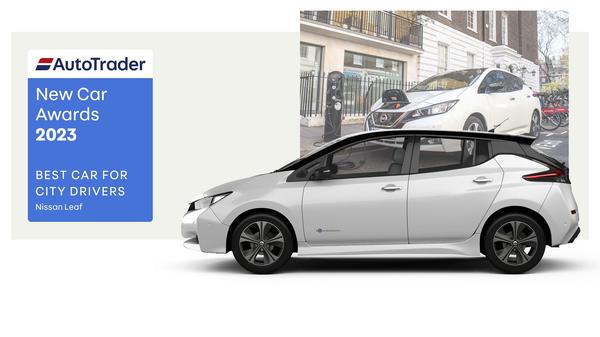
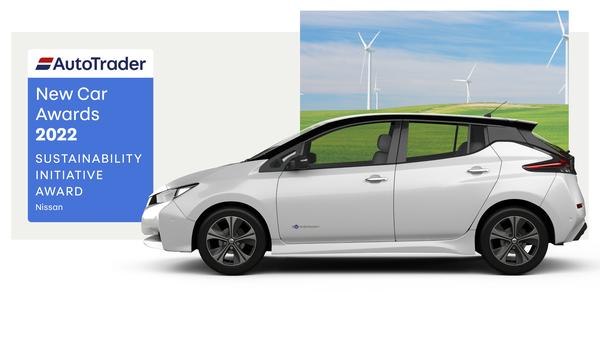
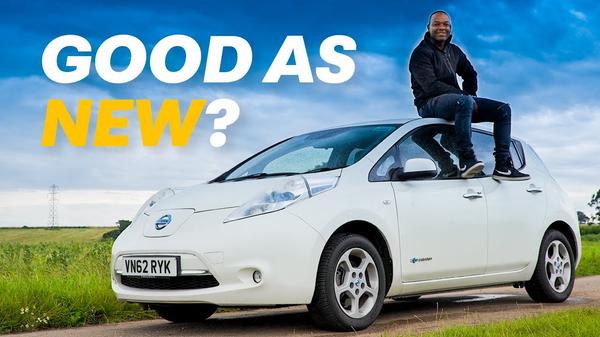
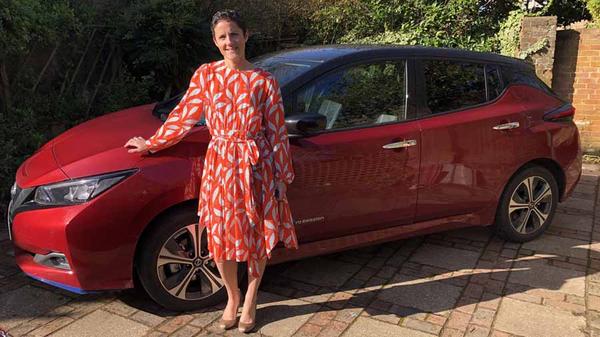
The Nissan LEAF isn’t conventionally attractive, but finding out the exterior design of almost every component was done to reduce wind noise and improve airflow furthered our respect for this intriguing car. Its headlamps stand proud of the bonnet to channel air around its door mirrors, while a rear bumper diffuser and flat undertray smooth air under the car. In fact, the whole car is shaped to cut through the atmosphere as easily as possible. In keeping with the theme of electricity, its Nissan badges are all painted blue, even in the middle of its alloy wheels, and there are lots of Zero Emission badges too.

Our rating: 3

2. Interior

When the Leaf was first launched, Nissan covered most of the interior surfaces in beige upholstery and plastic, which gives it a fresh and modern feel, but may require some extra TLC to keep it looking good. However, as part of the 2013 facelift, a darker interior was introduced. The central console is unique to the LEAF and a step above Nissan’s similarly priced models. Nissan has recognised this is a car which will appeal to a wider variety of buyers than a normal hatchback, with many stepping out of more expensive luxury models, and raised its game accordingly. There’s a big touchscreen for the sat-nav, media system and vehicle information, with good, clear graphics. Start the car and the noise of a petrol or diesel engine firing up is replaced by a pleasant jingle similar to turning on a mobile phone, while the all-electronic instruments dance into life. The speedometer is in a separate binnacle just below the windscreen, making it easy and safe to keep an eye on.

Our rating: 4

3. Practicality

A major hurdle in electric vehicle (EV) design has been the large size and weight of batteries that provide the power. Only now are advances in technology making them small enough to leave the rear of the car free for passengers and luggage. The LEAF is the first electric car which can compete toe to toe with its competitors in this regard. Its 370-litre boot is on a par with what you’ll find in the Volkswagen Golf, while the rear seats feel more spacious than those in the Alfa Romeo Giulietta.

Our rating: 3

4. Ride and handling

The Nissan LEAF is incredibly easy and relaxed to drive thanks to light steering and a complete lack of gearchanges. It’s no sports car, but handling is better than you might expect. The batteries are fitted in the car’s floor, below the rear seats and boot, keeping the centre of gravity very low in the car and weight more evenly spread between the front and back wheels.

Our rating: 4

5. Performance

With around the same pulling power as a Porsche Boxster, delivered as instantaneously as you press the throttle, the LEAF is no slouch. It accelerates seamlessly – there are no gears – and it’s as happy accelerating briskly at higher speeds, say from 50 to 70mph, as it is picking up speed around town. Its official range is 124 miles, but this will change depending on your driving style, the roads you drive on and the temperature. Steep hills and high speed motorway runs, for example, will drain the battery more quickly. Driving at a variety of speeds on A, B and dual carriageways the trip computer told us we had a range of around 80 miles, so 100 should be achievable with a gentler right foot. Re-charging your car from a conventional home socket takes seven to eight hours, while a public or home-fitted quick charger can replenish the LEAF to 80 per cent capacity in under 30 minutes.

Our rating: 4

6. Running costs

Leaf buyers have a crucial choice to face: whether to buy the car outright (including the battery) or to buy the car and then lease the battery on top. Leasing the car cuts the purchase price of the car by £5000, so the range starts below £16,000 (including the government’s £5000 incentive), and the batteries cost from £70 per month on top. The precise cost depends on your mileage, but that £70 gets you 7500 miles of motoring per year for three years. Buying the car as a whole package with the batteries isn’t cheap, but the LEAF can justify its price tag partly thanks to it being so well equipped. That and the fact it costs nothing to tax (thanks to 0g/km of CO2 emissions) and around £2 to charge fully using a night time electricity tariff. Company car owners might be even more tempted, as the Benefit-In-Kind (BIK) tax for the LEAF is £0. Even in a thrifty Volkswagen Golf 2.0TDI BlueMotion, BIK costs thousands more than that annually.

Our rating: 5

7. Reliability

While the LEAF’s reliability is a small step into the unknown, buyers shouldn’t be too worried. The fundamental components of an electric motor and batteries, with no conventional gearbox, should require very little (if any) maintenance. Nissan has an excellent reputation for the skills of its engineers, with cars ranging right up from the Nissan PIXO city car to the four-wheel drive Nissan GT-R supercar.

Our rating: 4

8. Safety

The Nissan LEAF has a full complement of airbags and is fitted with anti-lock braking (ABS), brake assist and electronic stability programme (ESP). Because it’s so quiet, the LEAF also has a sine-wave sound system which makes a sweeping high-low sound in front of the car at speeds below 17mph to alert pedestrians to its presence. It’s barely audible inside the cabin, where a hum from the motor and tyres is all that can be heard.

Our rating: 4

9. Equipment

In common with most of Nissan’s cars, the LEAF comes in three trim levels, Visia, Acenta and Tekna. The most basic models come with 16-inch steel wheels, black mirror caps and halogen headlights, as well as front foglights and a four-speaker audio system with four speakers. However, we think it’s worth stepping up to the mid-range Acenta trim, which has alloy wheels, Nissan’s Carwings telematics system, a rear-view monitor, remote charger and heating activation, a six-speaker sound system, body-colour mirrors and automatic lights with follow-me home lighting. Acenta models also have a quick-charge port, rain-sensing wipers and electric folding door mirrors, while top Tekna model adds LED headlamps, a Bose sound system, leather seats, 17-inch alloy wheels and Nissan’s Around View Monitor, which uses a network of cameras to display an overhead view of the car on the dash-mounted screen – invaluable when parking.

Our rating: 5

10. Why buy?

Rarely has the reason to buy a car been so clear cut – the Nissan LEAF moves electric cars on a significant step. While it’s certainly not cheap by hatchback standards, many will be amazed Nissan can actually sell such a technologically advanced car for its relatively affordable price. It’s no exaggeration to say the LEAF could be the car to bring electric vehicles to the masses.

Our rating: 5

Expert review 4.1stars

  • Exterior3
  • Interior4
  • Practicality3
  • Ride and handling4
  • Performance4
  • Running costs5
  • Reliability4
  • Safety4
  • Equipment5
  • Why buy?5

It’s no exaggeration to say the LEAF could be the car to bring electric vehicles to the masses