Nissan Micra hatchback (2010 – ) expert review
By Jack Carfrae and Adrian Higgins, 12th July 2011
The verdict
The Nissan Micra offers practical, low-cost transport and is cheap to run. It's bettered in most other areas by more accomplished rivals though.
Interested in this car?
Pros
- Low prices make it good for those on a budget
- Impressive fuel economy and low emissions
- Easy to drive with a good turning circle
Cons
- Ride and handling lags behind rivals
- Cabin quality is below par for the class
- Similarly priced rivals are better all-rounders
Full Review
1. Exterior
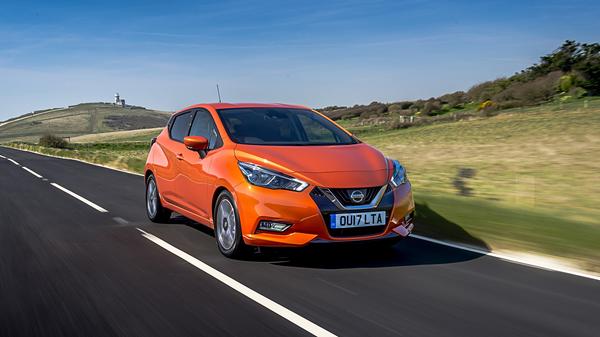
The latest Nissan Micra is a car sold all over the world, which means it needs to appeal to every market with very little modification. That has made the styling appear rather bland, and it lacks the distinctive look of its predecessor, in fact the unassuming car resembles the ‘bubble’ model before that. This Micra has a curvy look with its large headlights giving it a doe-eyed face. The DIG-S version comes with aerodynamic, fuel-saving touches including a rear spoiler.
Our rating: 2
2. Interior
There’s definitely a sense that the Micra has been built down to a price inside the cabin. While other hatches in the Micra’s class – even similarly priced budget models like the Kia Picanto – have durable feeling dash materials, the Micra’s don’t purvey a feeling of quality. The plastics are hard, scratchy and shiny – they generally lag behind those of key rivals. Getting comfortable can also be a problem, as the steering wheel only adjusts for rake and there’s no seat height adjustment on basic models.
Our rating: 2
3. Practicality
It may be smaller than most superminis, but the Micra offers a decent amount of space inside. Head and leg room is sufficient for a pair of adults to sit in the back in comfort, and it’s not bad in the front either. The 265-litre boot is a reasonable size, but not class leading and, though most versions come with split-folding rear seats, the entry-level models miss out on them, which hampers loading and general practicality.
Our rating: 3
4. Ride and handling
Around town, the Micra is reasonably competent. The suspension is set up well enough to tackle modest bumps at low speeds. However it’s also quite soft, so the Micra quickly becomes bouncy and unsettled at anything more than urban speeds. That uneasiness translates to faster roads, where the Micra feels unsecure at motorway speeds and bouncy on potholed back roads. The Nissan’s saving grace is a very light gearshift and steering action. It’s not confidence inspiring when driving enthusiastically, but it’s very easy to manoeuvre and the turning circle is impressively tight, so it’s handy around town.
Our rating: 3
5. Performance
The entry level 79bhp version of the Micra’s 1.2-litre three cylinder engine offers requires 13.7 seconds to cover 0-62mph, 14.5 if you opt for the CVT automatic gearbox. This may be a little slow for some tastes, and while the completely revised 97bhp DIG-S (Direct Injection Gasoline – Supercharger) version might not exactly get the pulse racing, it covers the 0-62mpg sprint in 11.3 seconds and it’s perky where it needs to be, in town, and is surprisingly refined on faster roads.
Our rating: 3
6. Running costs
A choice of frugal engines, each boasting low emissions are the Micra’s strongest assets. Opt for the 79bhp manual and you’ll enjoy average fuel economy of 56.5mpg and CO2 emissions of 115g/km. The version with a CVT automatic gearbox isn’t quite as frugal, but it’s far from a gas-guzzler, with figures of 52.3mpg and 125g/km. The DIG-S which goes on sale in September 2011 is expected to start from £11,000, a £2,000-plus premium over the entry-level version – however, Nissan’s justification is that motorists get diesel-level performance for sub-diesel prices. And the significant upside is tax-free, Congestion Charge-free motoring thanks to CO2 emissions of just 95g/km. It also returns 66mpg.
Our rating: 4
7. Reliability
Nissan has always enjoyed a strong reliability record and the Micra has been associated with durability for a long time. However, the low-grade cabin materials in this latest model don’t feel built to last. The previous Micra finished 75th overall in the 2010 JD Power customer satisfaction survey, which despite its previous accolades, could have been better. Owners also described its build quality as less than perfect.
Our rating: 3
8. Safety
Anti-lock brakes, stability control and six airbags come as standard, which is quite impressive for a supermini in this price range. The Nissan also achieved a four-star safety rating in the Euro NCAP crash tests. This isn’t bad, but there are a number of other rivals on sale that can boast a five-star rating.
Our rating: 4
9. Equipment
Entry-level Visia models are very basic indeed. Alloy wheels, air conditioning and seat height adjustment for the driver aren’t supplied, but Bluetooth phone connectivity is standard on all models. Things improve with the mid-spec Acenta model, which adds all of those key components along with cruise control and fog lamps. Parking sensors, sat-nav and automatic lights and wipers come with the top-spec Tekna models.
Our rating: 3
10. Why buy?
The Nissan Micra offers very low running costs, along with a low list price and it has a reasonable amount of safety equipment for the money.
Our rating: 2
Second opinion
Expert review 2.9stars
- Exterior2
- Interior2
- Practicality3
- Ride and handling3
- Performance3
- Running costs4
- Reliability3
- Safety4
- Equipment3
- Why buy?2
Our recommendations
Best on a budget:
Micra 1.2 Visia
It’s basic, but the Visia model is very cheap
Best-seller:
Micra 1.2 Acenta
Mid-spec model offers the best value and equipment for the money
Blow the budget:
Micra 1.2 Tekna
Priciest in the range but with the most equipment
A frugal engine and low emissions are the Micra’s strongest assets. Opt for the manual version and you’ll enjoy average fuel economy of 56.5mpg and CO2 emissions of 115g/km.