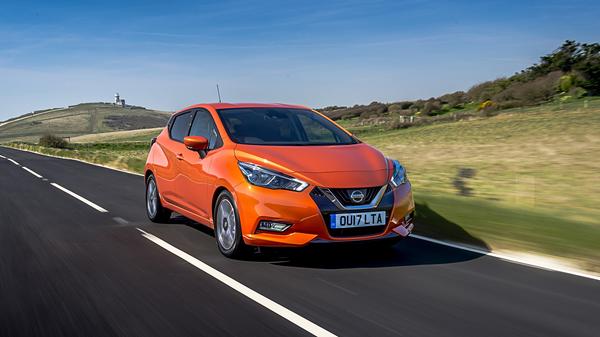
Nissan Juke hatchback (2010 – ) expert review
By Stuart Milne, 31st January 2011
The verdict
The Nissan Juke is a supermini-sized hatchback which looks like a tough 4x4. It is exceptional value for money and well built.
Interested in this car?
Pros
- Striking looks
- Lots of equipment
- Well priced
Cons
- Interior plastics feel low-rent
- Firm ride
- Quirky looks not for everyone
Full Review
1. Exterior
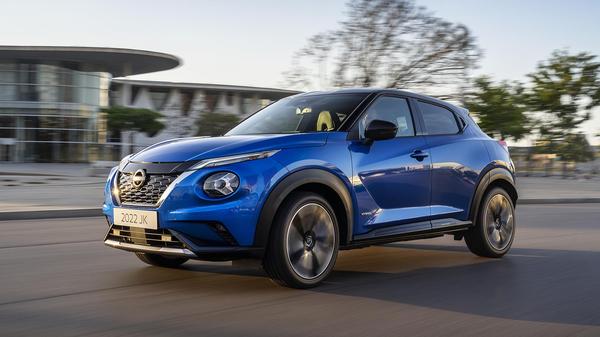
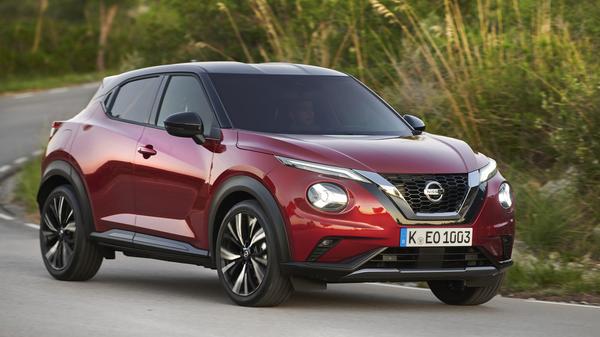
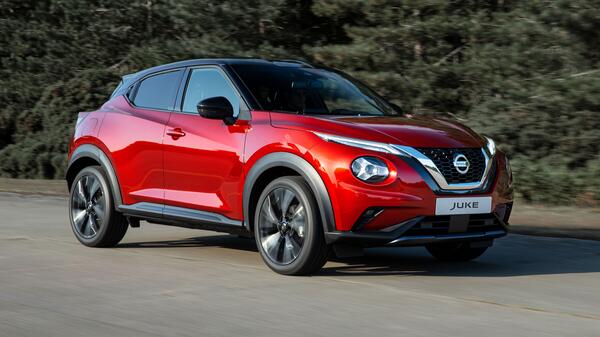
There’s no mistaking the Nissan Juke – it looks unlike anything else on the road, with its huge front headlights and sidelight pods high on the bonnet. The rear is more conventional, although its rear lights are another standout feature. The sides are full of curves; something that’s not often clear in pictures. The Juke is as high as many 4×4s, but thanks to its supermini width and height, it’s still town-friendly.
Our rating: 5
2. Interior
The Juke’s interior isn’t as striking as the bodywork, although a colour-coded centre console which has been inspired by a motorcycle fuel tank is a high point in an otherwise sober interior. The plastics used for the dashboard and door panels are hard and lack the tactility of more upmarket rivals, although for the car’s affordable purchase price there are few complaints. The door handles are metallic which gives a more upmarket feel, while the dials are clear and easy to read.
Our rating: 3
3. Practicality
The Juke works best with two adult passengers up front and a couple of children or luggage in the back. There’s plenty of space in the front, although it feels as the large centre console robs space. Rear space suffers with the car’s sloping, coupe-like roofline reducing headroom and the narrow side windows makes the rear seats feel claustrophobic. The boot is small, measuring just 207 litres, while the Skoda Yeti offers nearly twice that, and even the Alfa Romeo MiTo and Citroen DS3 offer around 70 litres more space. The Juke’s seats fold flat and there’s some additional storage space under a false floor. It also has a tight turning circle, making it ideal for urban driving.
Our rating: 2
4. Ride and handling
Given the 4×4-like ride height, the Juke is surprisingly agile The steering is light and isn’t as positive or communicative as the Juke’s traditional hatchback rivals which is the biggest barrier to a sporty drive. There’s a reasonable amount of roll around bends, but the firm ride and jiggles the whole car on poor road surfaces. At lower speeds it’s less of a problem.
Our rating: 3
5. Performance
Three engines are available in the Juke: two 1.6-litre petrols and a 1.5-litre diesel. The entry-level model is the 1.6-litre non-turbo which develops 115bhp and 116lb/ft of pulling power which is good for an 11 second 0-62mph time and a 111mph top speed. This engine, with its short-geared, five-speed gearbox needs to work hard at motorway speeds, making it a noisy unit. The 1.6-litre turbo comes with a six-speed gearbox for a more relaxed cruise and the extra power provided (187bhp and 177lb/ft) cuts the 0-62mph time to 8 seconds and raises the maximum to 134mph. The diesel unit isn’t as refined as the best in class, but with 110bhp it matches the low-power petrol engine for performance. An on-board computer optimizes steering feel and accelerator pedal response on most models.
Our rating: 3
6. Running costs
Starting at less than £13,000, the Nissan Juke is excellent value for money, particularly given the level of equipment the car comes with. The diesel offers the lowest daily running costs – 134g/km of CO2 and an average of 55.4mpg – but the engine is significantly more expensive, so the car needs to cover a lot of miles before the price premium is recouped. The 1.6-litre petrol emits 147g/km and returns 44.8mpg and represents the best value for most drivers, while the turbo’s emissions increase to 159g/km and consumption rises to 40.9mpg – four-wheel drive models increase the running costs further. It’s likely the Juke will retain a sizeable chunk of its original price due to its desirability.
Our rating: 4
7. Reliability
Despite some of the interior trim feeling a little fragile – the centre console can be moved from side-to-side – the Juke feels like a solid car. The low-power 1.6 and 1.5 diesel engines have been offered in other models, so most niggles should be fixed. Nissan has a good reputation for building tough cars.
Our rating: 4
8. Safety
The Nissan Juke hasn’t been rated by the EuroNCAP crash test experts but the car’s foundations are shared by the Renault Clio, which scored a full five star rating. Six airbags, ISOFIX child seat anchors, whiplash-reducing front headrests, anti-lock brakes with electronic brakeforce distribution, brake assist and electronic stability programme is fitted as standard to all models.
Our rating: 4
9. Equipment
Three equipment grades are available in the Juke range: Visia, Acenta and Tekna. All models feature remote central locking, front and rear electric windows, electric mirrors, alloy wheels and air-con. The Acenta model adds Nissan Dynamic Control System, which adjusts steering and accelerator pedal feel, Bluetooth, cruise control and large alloy wheels. Tekna models include sat-nav with a rear parking camera, automatic headlights and wipers and leather trim.
Our rating: 5
10. Why buy?
The Juke is bought by lovers of its funky looks, but beneath an unusual face sits a extremely well-priced and equipped car that makes an ideal round-town runabout.
Our rating: 4
Expert review 3.7stars
- Exterior5
- Interior3
- Practicality2
- Ride and handling3
- Performance3
- Running costs4
- Reliability4
- Safety4
- Equipment5
- Why buy?4
Our recommendations
Best on a budget:
Juke Acenta 1.6
Not the cheapest, but superbly equipped
Best-seller:
Juke Visia 1.6
Decent equipment levels with an attractive price
Blow the budget:
Juke Tekna 1.6 DIG-T CVT 4×4
Power, grip and plenty of kit
Starting at less than £13,000, the Nissan Juke is excellent value for money