Land Rover Defender car review - Auto Trader UK - Features - News and Reviews Hub


Auto Trader

Land Rover Defender car review

Land Rover Defender car review  - Feature Image

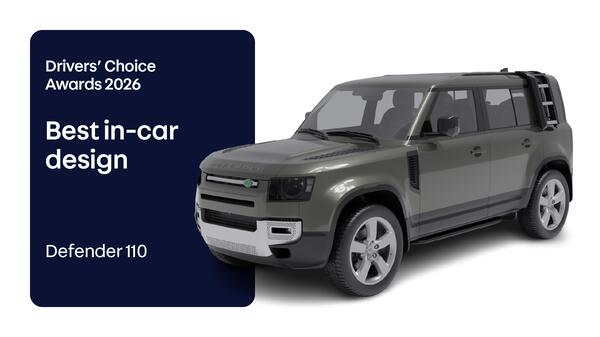
Model tested: Land Rover Defender 110 Station Wagon XS
Price as tested: £28,495
Range price: £19,480 - £28,495
Insurance group as tested: 13
Insurance group range:  12-13
Date tested: November 2007
Road tester: Adrian Higgins

Auto Trader Ten Point Test rating: 74%

Sixty years of motoring has seen the Land Rover Defender become a British icon and one of the most recognisable vehicles in the world.

Improvements to the 2007 Land Rover Defender are intended to make it more capable on and off-road.

We drove one for a week to see how it performed.


Looks | Looks Inside | Practicality |Ride and Handling | Performance
Running Costs | Reliability | Safety | Equipment | X-Factor


1. Looks

One of the most recognisable cars on the road and a British icon to boot. The shiny, silver one we drove probably turned as many heads as any car we’ve borrowed and we received an enthusiastic headlight-flashing response from other owners. But most Defender buyers aren’t going to care about that as the models they buy aren’t going to be shiny for long. It looks brilliant, classic and modern in a single shell. The bonnet has been updated for the 2007 version too.

10/10

2. Looks inside

Land Rover says the 2007 version of the Defender features the biggest changes to the interior in its history. Unsurprisingly for the 4x4 most likely to be found off-road, everything is functional, and angular. It’s an interior which looks like it means business. The model we drove was kitted out with black leather and while the luxury contrasts with the vehicle’s workhorse nature it looks very cool. Land Rover’s improvements over the outgoing model include new surfaces which are more resistant to scuffing and a two-handed passenger grab to provide support on challenging terrain. The information displays are easy to read and the controls are simple and do a job. However, some of the controls are knocking on a bit with elements including the indicator stalks and door lock pins inherited from decades-old British Leyland models such as the Austin Metro. Everything feels as chunky and rugged as the exterior appearance.

8/10

3. Practicality

This is the practical face of Land Rover. Permanent four-wheel drive delivering power exactly where it is needed, combined, with electronic traction control, anti-lock brakes, an incredibly tough aluminium exterior, super-strong chassis and great towing capability to deliver one of the world’s most capable vehicles. The model we drove featured seven seats, five of which could be folded to increase the load area. There is little space in the front, but overall, for practicality, there are few models which can touch the Defender.

9/10

4. Ride and Handling

Serious 4x4 vehicles inevitably have to trade-off some of their on-road talents against the off-road performance. We drove the Defender in town and on motorways and were pleasantly surprised at the level of comfort. However it has to be emphasized that if you’re not looking to spend a lot of time off-road with your Defender you should seriously consider other models in the Land Rover range and beyond. Land Rover says this model is 30 per cent quieter than its predecessor but it will still seem noisy, especially at speed, if you’re accustomed to cars aimed more at road use. Vague steering means driving at speed requires care, as does cornering.

4/10

5. Performance

It’s not for the 0-60mph or the top speed that buyers seek out the Defender. Other performance figures come into play here. The 2007 model features an all-new 2.4-litre diesel engine which can deliver 90 per cent of its power from as little as 2,200rpm through an all-new six speed gearbox. But it’s not all about brute strength. The engine is also 30 per cent quieter than the outgoing model. In addition the Defender boasts a wading depth of 500mm, with 314mm ground clearance and a maximum gradient of 45 degrees.

8/10

6. Running Costs

The model we drove’s average fuel consumption is 25.7mpg, though this will be less for off-road use. Carbon emissions of 291g/km means the Land Rover Defender falls within car tax band G which currently means a £300 annual tax bill, rising to £400 in April.

6/10

7. Reliability

Land Rover as whole finds itself at the wrong end of the Reliability Index. However, it’s worth tempering that information with the use Land Rover Defender owners put their cars to – which is a bit more demanding than the trials and tribulations faced by most cars.

8. Safety

Great 4x4 capability, and, on some models, traction control and anti-lock brakes are the main means of keeping you safe and sound.

5/10

9. Equipment

Land Rover Defenders have a broad range of body shapes and three trim levels to suit their use. We drove the top of the range Land Rover Defender 110 Station Wagon XS which features heated front seats and air conditioning. County models come with a stereo radio and single CD.

6/10

10. X-Factor

Off road-ability. The Land Rover Defender made its debut in 1948 and 18 million models later it’s still going strong. Improvements to the vehicle mean on-road journeys are more comfortable but it is off-road that the Land Rover Defender is a star.

10/10