Toyota Verso car review
Model tested:
Toyota Verso 2.0 D-4D 130 TR
Toyota Verso 1.8 Valvematic TR
Price as tested: £18,945, £18,745
Insurance group as tested: N/A
CO2 emissions as tested: 178g/km
CO2 emissions range: 143-178g/km
Company car tax %: N/A
EuroNCAP result: N/A
Date and place tested: March 2009, Lisbon, Portugal
Road tester: Andy Goodwin
Until now the Toyota Verso MPV has been based on the Corolla hatchback, in the same the way the Ford C-Max is based on the Focus.
The recipe was fairly straightforward; take the underpinnings of a successful hatchback and stretch the proportions upwards and slightly outwards, creating a more spacious and family orientated car.
But this time Toyota has bucked the trend and built the Verso from scratch.
Is it a better proposition as a result? Andy Goodwin travelled to Lisbon to spend time in all of its seven seats and find out.
View images of the Toyota Verso:
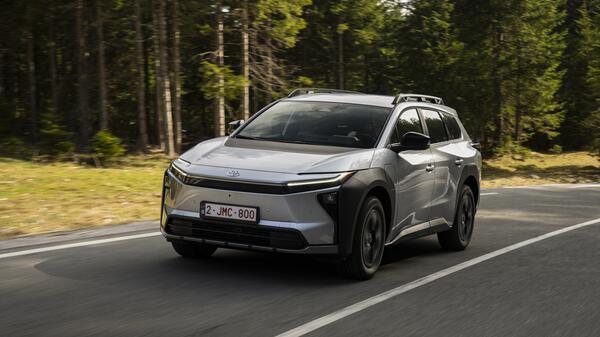
The first thing you notice about the new Toyota Verso is it looks like it has been designed more distinctly and elaborately than before. This is more of a model in its own right, not just a super-sized corolla.
The Toyota family face, with big headlights and protruding grille is still present and correct, but it's when you step to the side and see the strong 'character line' flowing from the front wheels and up the rear pillar to the spoiler the Verso looks best.
There are seven seats in the cabin, which can be folded up and down with one hand to transform the Verso from van to passenger car, or something in between.
The first five seats are big enough for adults to sit in comfort, but the rearmost two are more suited to kids.
Three engines will be available from launch, which form part of Toyota's 'Optimal Drive' line-up of conventional engines with reduced emissions.
The 1.8-litre petrol produces 145bhp and 180NM of pulling power, while it's claimed to emit 165g/km and achieve 40.4mpg on the combined cycle.
We expect the 2-litre D-4D 130bhp to be the big-seller and it's an economical engine, returning 51.4mpg on the combined cycle while emitting 143g/km. We found it very smooth and quiet, with adequate power for relaxing progress. It accelerates from 0-62mph in 11.3 seconds.
The quickest model in day-to-day driving is the 2.2-litre D-CAT with 148bhp and 340NM of pulling power. But it's only available with an automatic gearbox, which harms its emissions and economy (41.5mpg and 178g/km).
While Toyota says the Verso has been designed with driver enjoyment in mind, it's the excellent ride quality which will prove most impressive, rather than sharp handling.
Rough tarmac, potholes and speed bumps are dealt with extremely well, and it's a satisfyingly relaxing car to drive at a reasonable pace.
But, push harder and the light steering is uncommunicative and the Verso has less body control than a Mazda 5 or Ford C-Max.
Toyota knows customers in this segment see safety as a top priority and the Verso is designed to score five-stars in the tougher new EuroNCAP crash tests.
It has seven airbags as standard, active anti-whiplash head restraints, ABS, stability control, traction control and hill-start assist.
Three specifications will go on sale in the UK: T2, TR and the range-topping T Spirit.
Toyota expects more than 70 per cent of customers to opt for the mid-spec TR, which is fitted with Bluetooth, auxiliary connection for MP3 players, leather steering wheel, electric windows, front foglights and 16-inch alloy wheels.
The Toyota Verso has earned its right to be a standalone model, and it's all the better for it. A stylish new design, user-friendly and flexible interior and excellent safety record will make it a safe bet for many families.

RSS