Do women cause more congestion than men?
18 November 2008 Vijay Pattni caught up with Tom Vanderbilt – author of book ‘Traffic’ – on why women cause more traffic than men… Tom Vanderbilt is sitting in his London publishers’ office with a wry grin. “My new book – Traffic – covers a lot of driving myths and patterns I’ve noticed.” And one of these patterns is the controversial finding that women cause more congestion than men. Battle of the Sexes – it’s on In the book, Tom says: “Women make roughly double the number of what are called ‘serve-passenger’ trips – that is, they’re taking someone somewhere that they themselves do not need to be.” Tom says because women often leave later for work than men, they tend to travel smack bang in the peak hours of congestion, with these trips taking place in small, local streets with lots of signals and turning movements. Honk if you hear me But there’s more to separate the sexes when we get behind the wheel. “Men honk more than women, and men and women honk more at women”, Tom explains in his book. And be careful when travelling abroad – a study across several European countries found drivers were more likely to honk (beep your horn) when the stalled driver ahead had an identity sticker indicating they were from another country than when they were fellow nationals. Merging with The Sopranos
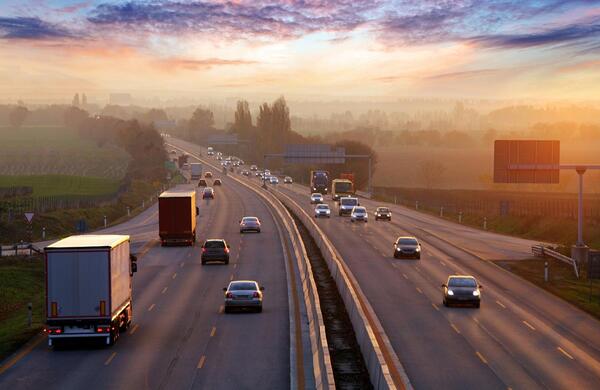
“It was a really mundane moment on the New Jersey highway”, Tom (pictured right) laughs in his American accent. “It reminded me of the opening credits from The Sopranos. I came to some construction where two lanes merge into one. “Most people merge quickly and a long queue develops, and you always get those few people who push their way right to the front and everyone else is sitting there thinking – ‘what are they doing?’” Tom ended up being one of those people – and merged at the very last minute. “Afterwards I ended up posting my ‘late-merging’ on the internet asking if early merging was good, or if late merging was better.” But doing a little bit of investigating, Tom found some startling stats. “Apparently, you could get a 15 per cent better flow of traffic if you took out the early merging sign and went to the merge point one-on-one.” The human touch Tom did flag up one important psychological effect of jumping behind the wheel. “There’s a whole idea of being cut off from the world when you’re in a car – you lack loads of human signals. “In terms of traffic and congestion, one of the biggest things is that when you’re in a car, you’re lacking consequences for your actions. “You can act like a complete idiot or drive like a maniac – and unless you get a speeding ticket or crash, you don’t really get penalised at all.” But he has a solution: “Perhaps if you misbehave, you get a lot of negative feedback”. Drive slow, travel fast Most people think driving faster means getting there quicker – but Tom has found otherwise. “A study in Los Angeles found that the highest flow of cars over a certain distance actually happened at between 50mph and 60mph – not 80mph or higher. “We still drive thinking that the faster we go the quicker we’ll get there. But the closer you drive to someone, the less information you get back about the traffic stream ahead.” And he issues a word of warning about braking. “All you have to do is tap your brakes and it creates a massive chain reaction. “Also, brake lights are really hard to gauge – are they really coming to a dead stop, or are they just lightly tapping them? It creates a lot of uncertainty which then makes shockwaves in traffic.” The writing’s on the wall Tom points to a traffic survey on London’s Kensington High Street in the mid 1990s – road planners decided to remove a large percentage of road signs from the street, including pedestrian guard rails - these apparently make the road more distinct from the pavement which means cars travel faster. And the results were astonishing. “Three years after the Kensington High Street scheme”, Tom says, “there was something like a 40 per cent reduction in accidents. “Around 90 per cent of the road signs had been taken down for the scheme.” So why do we have so many road signs? “A lot of those signs exist because people are afraid of legal action – especially in the US at least – if something goes wrong.” Safety in 4x4 numbers Are there any driving stereotypes which Tom has found? “Somehow BMW drivers came out better in the crash ratings. “I’ve also read studies where people who drive SUVs and 4x4s tend to talk more on their mobile while driving. I think the study points to the fact that with a big 4x4 or SUV, you generally feel safer on the road, and therefore adopt a more casual driving style. “Also, because you’re sitting quite high up in an SUV, you think the car right in front is a lot further away than it really is. “So if you find yourself being tailgated by a 4x4 driver, it might be because they think you’re further away – it’s bit of an optical illusion.” Tom Vanderbilt’s book – “Traffic – why we drive the way we do (and what is says about us)” – is available to buy now priced at £20. |
Page 1
CELEBRITY INTERVIEWS
- Exclusive interview: Ken Livingstone
- Richard Hammond "I nearly quit" interview
- Exclusive interview: Danielle Lloyd
- Exclusive interview: Top Gear’s James May
- Top Gear's original 'Stig': exclusive interview
- Interview: Pink Floyd star Nick Mason
- Sally Traffic: "I flashed my driving examiner"
- Interview: Vicki Butler-Henderson
- Exclusive interview: Ross Kemp
- “I could have been Lewis Hamilton”
ESSENTIAL AUTO TRADER LINKS
RSS FEEDS 
Receive the latest news and features directly to your internet browser or RSS reader.
Find out more and how to subscribe

Tom’s new book explores the myths behind congestion, traffic and road safety – but why did he write it?

Bookmark this page with: