Mercedes E-Class Ten Point Test
Model tested: Mercedes E 350 CDI BlueEfficiency Sport 4dr
Price as tested: £42,840
Price range: £26,325 - £47,010
Insurance group as tested: 17
Insurance group range: 15-19
CO2 emissions as tested: 205g/km
CO2 emissions range: 137-253g/km
Company car tax range %: 18-35%
EuroNCAP result: TBC
On sale: Now
Date tested: October 2009
Road tester: Andy Goodwin
Auto Trader Ten Point Test rating: 84%
Mercedes claims it’s the most successful luxury saloon manufacturer in the world, producing 10 million cars in the class since 1947.
But, the last E-Class may be a model the company will want to forget, after niggling faults caused many to question the reliability of modern Mercedes’.
The new model has been honed to win doubters back. Tested to destruction all over the world, the new E-Class has proved itself worthy of the three-pointed star behind closed doors. Can it impress us in the real world?
Looks | Looks Inside | Practicality | Ride and Handling | Performance
Running Costs | Reliability | Safety | Equipment | X-Factor
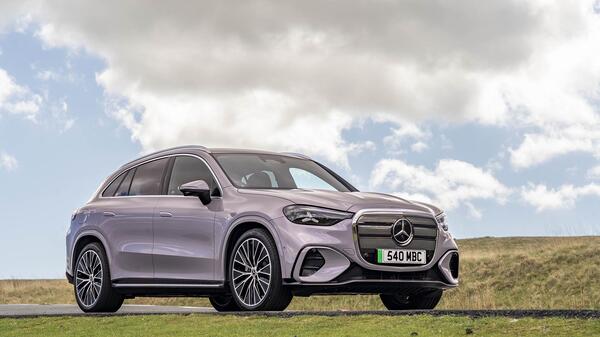
The nose of the all-new E-Class has been sharpened up with a headlight redesign and bigger, more upright grille. LED daytime running lights sit low down in the front grille and add some drama to the front of the car, which is much more aggressive than before. The long bonnet and three-pointed star are present and correct and remind you this Mercedes is the real deal.
8/10
There’s nothing gimmicky about the interior of the E-Class; it’s spacious and comfortable and exudes class without resorting to brash features. The use of dark wood or aluminium trim complements the black plastics and upholstery. The front and rear seats are comfortable over long distances and can be specified with a massaging option and system to automatically adjust the side bolsters as you corner.
Most of the vehicle controls are operated by the central screen and control joystick, leaving the dashboard less cluttered with buttons.
8/10
The E-Class offers excellent space for front and rear occupants, with rear legroom being particularly good. The boot is able to hold 540 litres of luggage (20 more than a BMW 5 Series). There are plenty of places to store items in the cabin, and steering column gear selectors in automatic cars free up space for storage in the central console.
8/10
There are a number of variables which affect the handling of the E-Class. SE and Avantgarde models are fitted with conventional suspension and 16- and 17-inch wheels respectively. Sport models like the car we tested are fitted with stiffer springs and dampers as well as 18-inch AMG alloy wheels. Finally, the E500 is fitted with adjustable air suspension as standard – an option which can be fitted to six-cylinder models.
The car we tested rode comfortably and required very little effort to drive thanks to its light steering. On the motorway the E-Class feels hugely surefooted and relaxed. Mercedes is starting to carve its own niche with the E-Class, and comfort is top of its agenda, while BMW and Audi concentrate more on handling dynamics and driver involvement.
9/10
There’s an engine to suit all driving styles and budgets, so let’s look at the diesels first. There are three new four-cylinder engines; the entry-level 134bhp 200 CDI just about gets the E-Class to 60mph in under ten seconds, while the 168bhp 220 CDI takes 8.6 seconds and the 201bhp 250 CDI takes 7.7 seconds. The V6 350 CDI we tested has 228bhp and a massive 398lb/ft of pulling power, helping it hit 60mph in 6.8 seconds. The acceleration on tap at the flex of your big toe is impressive, especially at higher speeds on the motorway.
The 184bhp, 200 CGI petrol gets to 60mph in 8.4 seconds, while the 201bhp 250 CGI is a second quicker. The V6 350 CGI and V8 500 produce 288 and 382bhp respectively.
8/10
Significant reductions have been made to the engine emissions in the new E-Class line-up, with some models improved by as much as 23 per cent. The new four-cylinder diesel models are particularly impressive, with emissions of 139g/km and economy of 54.3mpg leading the way in the 200 CDI.
The V6 and V8 petrol engines are still as thirsty as you’d expect, and more likely to appeal to private buyers than the fleet-friendly diesel models.
| Model | MPG | g/km CO2 |
|---|---|---|
| 200 CGI | 37.7 | 177 |
| 250 CGI | 37.2 | 179 |
| 350 CGI | 32.8 | 205 |
| 500 | 26.2 | 253 |
| 200 CDI | 54.3 | 137 |
| 220 CDI | 53.3 | 139 |
| 250 CDI | 53.3 | 139 |
| 350 CDI | 40.9 | 181 |
8/10
There were problems with the complicated systems fitted to the last E-Class, which have led to the new model being extensively redesigned and thoroughly tested. After 21 million development miles involving more than 400 test cars, Mercedes is confident the new car will reinstall confidence in the brand.
8/10
The E-Class is expected to perform admirably in crash tests thanks to extensive design measures and the latest safety technology. The E-Class underwent 17,000 simulated crash tests before a real car was ever damaged.
Nine airbags, ABS and stability control are fitted as standard. The bonnet pops up in a pedestrian collision and the car can monitor for potential drowsiness at the wheel. On Avantgarde and Sport trim cars the headlights dip automatically.
10/10
There is a huge amount of equipment available in the E-Class, as you would expect. Even the entry-level SE models get 16-inch alloy wheels, leather-style seats, heated front seats, climate control and parking sensors. Avantgarde cars have lowered suspension, 17-inch alloy wheels, LED daytime running lights, xenon headlights and dimming mirrors.
Sport models have more hugging seats and a more sculpted steering wheel as well as metal pedals, speed-sensitive steering, drilled brake disks, sports suspension and 18-inch AMG alloy wheels.
8/10
The latest E-Class is a return to form for Mercedes in the class it traditionally excels in. Rather than ape the competition, it’s carving out its own niche as the most comfortable and refined German luxury saloon with an understated and elegant class.
9/10


RSS